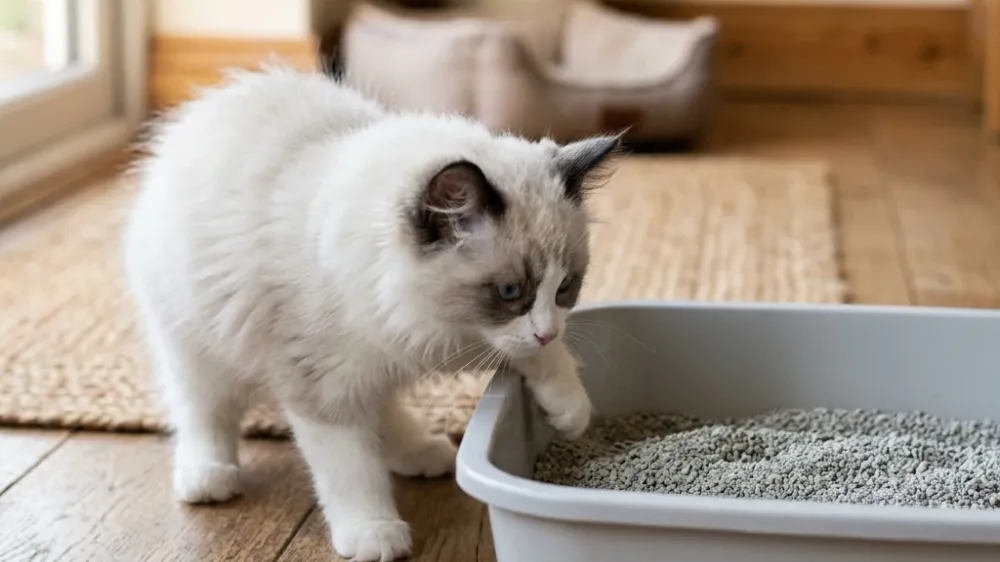
Selecting the right litter for a kitten requires balancing safety, paw comfort, and instinctual digging preferences. Young kittens explore their environment with their mouths, making traditional clumping clay litters potential hazards for animals under eight weeks of age. Choosing a formula that addresses age-specific digestive and respiratory safety makes litter box training smooth and stress-free.
Pet care experts prioritize non-toxic, low-dust materials during early development. A kitten’s respiratory system and digestive tract are small and sensitive, so selecting the proper litter texture and ingredient profile sets the foundation for lifetime litter box compliance.
📋 In This Guide
Safety Guidelines: Kitten Age vs Litter Selection#
Litter requirements change significantly as kittens grow from newborn nursing babies into active juveniles. Selecting the safest material depends directly on your kitten’s developmental stage and age.
Kittens Under 8 Weeks Old#
Very young kittens are curious and often swallow non-food items during early exploration. Clumping litters contain sodium bentonite, a clay compound that expands when exposed to moisture. If an infant kitten ingests clumping clay while grooming or tasting the litter, the material can swell in the stomach or intestines and cause a life-threatening blockage.
For kittens under eight weeks of age, stick exclusively to non-clumping litters made from paper pellets, pine granules, or coarse-grain plant fibers. These materials pass through the digestive system much more safely if accidentally ingested.
Kittens 8 Weeks and Older#
Once a kitten reaches eight weeks of age, their curiosity shifts from tasting litter to focused digging and burying. At this milestone, you can safely transition to fine-grain clumping clay or soft natural litters. Clumping litters simplify daily spot-cleaning and keep the box cleaner, which prevents young cats from seeking alternative bathroom spots around your home.
⚠️ Safety Warning: Avoid using scented clumping clay or silica crystal litters with kittens under eight weeks old. Ingestion of sodium bentonite or synthetic fragrance chemicals can lead to gastrointestinal obstruction or chemical irritation.
Essential Factors When Choosing Kitten Litter#
When evaluating litter formulas for young animals, focus on specific structural characteristics that encourage good habits while protecting physical health.
Dust Control and Respiratory Safety#
Kittens dig aggressively when learning to bury waste. High-dust litters generate airborne particles that land in small nostrils and lungs, leading to sneezing, eye discharge, or chronic upper respiratory irritation. Look for litters labeled 99% dust-free to protect delicate airways.
Texture and Particle Size#
A kitten’s paw pads are soft and sensitive. Coarse pellets, sharp silica crystals, or heavy clay can cause discomfort, leading the animal to avoid the litter box entirely. Fine-grained, smooth textures mimic natural soil and feel soft against small paws, encouraging natural digging behaviors.
Unscented vs Scented Formulas#
While human owners prefer heavily fragranced litters to mask odors, heavy artificial perfumes like lavender, pine, or citrus overpower a kitten’s acute sense of smell. Fragrance additives often drive kittens away from the box. Unscented litters rely on natural carbon, plant enzymes, or high-quality clay to neutralize odor without irritating sensitive noses.
Herbal Attractants#
Some specialty kitten litters include natural herbal scent attractants. These mild scents act as a magnet for young animals, guiding them toward the litter box when they feel the urge to eliminate.
Kitten Litter Types Compared#
Comparing popular litter categories helps clarify which material best fits your home and your pet’s age:
| Litter Type | Age Safety | Dust Level | Odor Control | Clumping Ability |
|---|---|---|---|---|
| Paper Pellets | Safe for all ages (0+ wks) | Extremely Low | Moderate | Non-clumping |
| Pine Pellets | Safe for all ages (0+ wks) | Low | High (Natural Pine) | Non-clumping |
| Clumping Clay | Ages 8+ weeks only | Moderate to Low | High | Excellent |
| Corn / Wheat | Safe for all ages (0+ wks) | Low to Moderate | Moderate | Moderate to High |
| Silica Crystals | Ages 12+ weeks only | Low | High | Non-clumping |
Featured Product Recommendation#
When your kitten reaches eight weeks of age and is ready for a high-performance clumping litter, choosing a formula built specifically for young pets accelerates house-training success.
Dr. Elsey’s Kitten Attract Litter uses ideal granule sizes and a custom herbal blend that naturally attracts young cats to the box. Its low-dust formulation keeps breathing clear, while the firm clumping action makes daily maintenance simple.
Step-by-Step Kitten Litter Box Training Plan#
Teaching a kitten to use their litter box requires consistency, clean gear, and correct timing. Follow this simple process to build permanent bathroom habits:
- Select a Low-Sided Box: Choose a litter box with walls no higher than two to three inches at the entrance so small legs can step in easily without jumping.
- Set Up in an Accessible Location: Place the box in a quiet corner away from noisy appliances, high foot traffic, and household food bowls.
- Place the Kitten in the Box Timely: Set your kitten into the box immediately after meals, right after waking up from naps, and after vigorous play sessions.
- Gently Mimic Digging: Use your finger or gently guide your kitten’s paw to scratch at the clean litter. This action triggers their natural instinct to bury.
- Scoop Daily and Keep Clean: Remove solid waste at least twice per day. Young animals reject dirty boxes quickly and will search for soft rugs or laundry piles instead.
Managing Multi-Pet Households During Litter Training#
If you are introducing a new kitten into a household with existing pets, spatial management is critical. Stress caused by dominant adult cats or curious dogs can disrupt litter box training overnight.
Creating designated containment areas using tools like indoor puppy playpens allows your kitten to adjust safely to their new environment with their litter box, food, and bed all within reach. If you are simultaneously training a young dog in the home, setting up secure management tools like puppy crates keeps dogs out of the kitten’s litter box, preventing dangerous litter ingestion by the dog.
💡 Pro Tip: Maintain the standard litter box rule: provide one litter box per cat in the household, plus one extra box. Place boxes on different floors or separate rooms to prevent territorial guarding.
Frequently Asked Questions#
How often should you completely change kitten litter?#
For non-clumping paper or pine litters, replace all litter and wash the box weekly. For clumping clay litters, scoop solid waste twice daily and complete a full litter swap with a box scrub every two to three weeks.
Can kittens use regular adult cat litter?#
Kittens eight weeks and older can use regular unscented clumping clay, provided the granules are fine and non-abrasive. However, kittens under eight weeks should never use adult clumping clay due to digestive risks if swallowed.
What should you do if your kitten eats cat litter?#
If your kitten swallows a tiny grain during grooming, monitor them closely. If they consume larger quantities of clay or crystal litter, immediately switch them to a non-clumping paper litter and consult your veterinarian to rule out dietary deficiencies or gastrointestinal distress.
Summary: Essential Kitten Litter Action Plan#
Successful litter box training relies on choosing the correct material for your pet’s exact age and growth stage. For kittens under eight weeks, prioritize safety with non-clumping paper pellets. For kittens eight weeks and older, shift to fine-grain, unscented clumping clay with high dust control to simplify cleaning and establish lifelong habits.
Maintain low-sided boxes, place them in quiet locations, and keep the litter consistently clean to ensure your kitten feels safe and comfortable every single day.