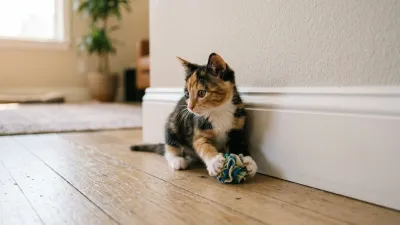
Kittens bite and scratch primarily due to hunting instincts, play aggression, teething discomfort, or overstimulation. When a young pet lacks appropriate feedback from littermates, human hands and feet often become target practice. Stopping this behavior requires immediate behavioral redirection, consistent boundary enforcement, and dedicated interactive play sessions every single day.
Left unchecked, minor play biting in a young kitten converts into hard biting in an adult cat. Animal behaviorists recommend implementing clear physical boundaries during the early developmental window to curb rough play permanently.
📋 In This Guide
Why Kittens Bite and Scratch Hands and Feet#
Understanding the exact root cause of your kitten’s biting habit helps you pick the right behavioral solution. Kittens rarely bite out of malice; their mouthy behavior is almost always developmental.
Play Aggression and Hunting Instincts#
In the wild, young predators spend hours stalking, pouncing, biting, and clawing littermates to build hunting skills. In a home environment, moving fingers, dangling feet, and loose pant legs perfectly mimic small prey. If you use your bare hands to wrestle or tickle your kitten, you train them to treat human skin as a toy.
Teething Discomfort#
Between 3 and 6 months of age, kittens lose their baby milk teeth as permanent adult teeth push through the gums. This process causes significant mouth pain and soreness. Kittens chew on soft and hard items around the room to relieve pressure in their jaws.
Overstimulation and Petting Sensitivity#
Unlike dogs, who often enjoy long physical petting sessions, cats have sensitive skin hair follicles. Extended petting can overwhelm a kitten’s nervous system. When their tolerance limit is reached, they react suddenly by grabbing your hand with teeth or claws to force you to stop.
The 5-Step Protocol to End Kitten Biting and Scratching#
Follow this structured action plan to reshape your kitten’s biting habits without resorting to harsh physical corrections, which only cause fear and distrust.
Step 1: Enforce a Strict “Hands Are Not Toys” Rule#
Never use your fingers, hands, or feet to roughhouse with your kitten. Everyone in your household must follow this rule without exception. If a kitten learns that bare skin is fair game with one family member, they will continue biting everyone else.
When offering affection, keep your hands behind the kitten’s head or stick to chin scratches. Avoid touching sensitive areas like the stomach, back legs, or tail during energetic play moods.
Step 2: The Instant Freeze and Redirect Method#
If your kitten pounces on your hand or foot, immediately freeze all movement. Prey animals run away; when your hand thrashes around or pulls back quickly, it triggers your kitten’s predatory chase instinct and causes them to bite harder.
Once your hand goes limp, slip a suitable kick toy between your skin and the kitten. Redirecting jaw energy onto stuffed toys teaches the kitten where their sharp teeth belong.
Step 3: Vocal Feedback and Brief Separation#
When teeth or claws make contact with skin, make a short, sharp vocal sound like “ouch!” in a clear tone. Instantly disengage, tuck your hands into your armpits, turn your back, and ignore the kitten for 30 to 60 seconds.
This vocal feedback mirrors how littermates communicate when play gets too rough. Just as trainers teach mouth control using a puppy biting fast protocol, immediate social removal shows the kitten that biting ends all fun.
Step 4: Schedule Daily High-Intensity Interactive Play#
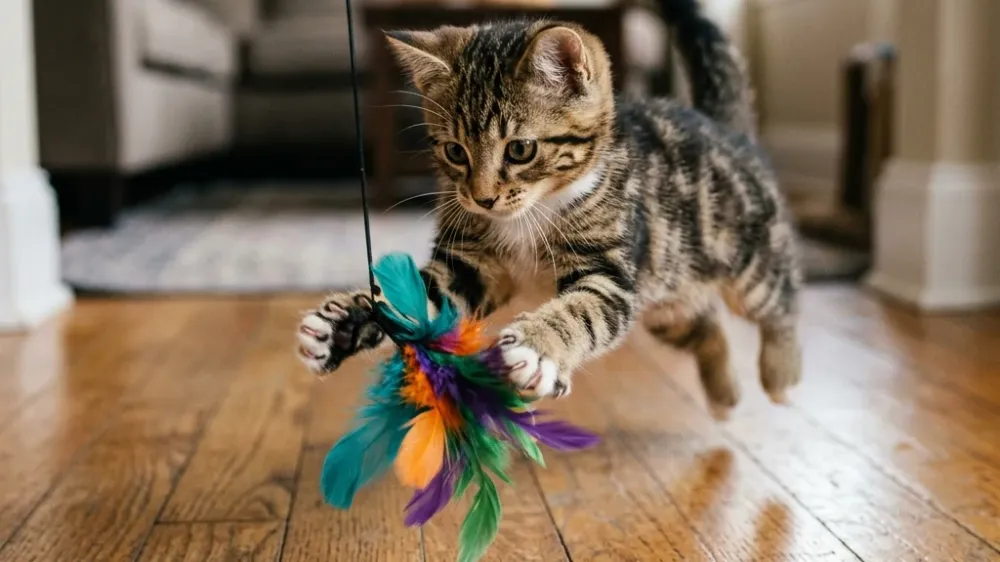
Kittens possess massive reserves of predatory energy that must be burned off. Provide two to three 15-minute interactive play sessions daily using feather wands, fishing pole toys, or ribbon chasers.
Always let the kitten catch the toy at the end of a play session. Finishing with a successful catch allows their predatory cycle to complete, satisfying their mind and reducing random play attacks.
Step 5: Manage Late-Night Energy Outlets#
Kittens frequently experience late-afternoon or late-evening energy spikes. This sudden onset of frantic play, zoomies, and biting often parallels what dog trainers call the puppy witching hour.
To manage evening outbursts, run a vigorous wand-toy play session right before dinner. Feeding your kitten a meal after intense physical activity encourages their natural hunt-eat-groom-sleep cycle, keeping your feet safe when you get into bed.
Kitten Biting Triggers vs Trainer Solutions#
Identifying specific triggers allows you to intervene before your kitten breaks skin. Use this guide to match behaviors to practical fixes:
| Biting Trigger | Typical Kitten Behavior | Trainer Recommended Action |
|---|---|---|
| Play Aggression | Ambushing ankles as you walk down hallways | Carry plush toys in pockets; drop one ahead to redirect movement |
| Petting Overstimulation | Sudden tail twitching, skin rippling, ear flattening | Stop petting instantly; grant physical space |
| Teething Soreness | Gnawing on furniture, electrical cords, or fingers | Offer safe rubber chew toys or chilled catnip plushies |
| Boredom | Swatting at arms while you sit on the couch | Introduce puzzle feeders and daily scheduled wand play |
💡 Pro Tip: Never spray a kitten with water or physically scold them. Physical discipline teaches your pet to fear your presence and causes defensive aggression. Focus entirely on clear redirection and reward-based behavior modification.
How to Handle Teething Scratching and Biting#
Teething requires a specialized approach because the drive to chew is driven by physical discomfort. Behaviorists recommend providing varied textures to soothe tender gums.
- Soft Plush Toys: Heavy-duty kickers allow kittens to sink their teeth in without tearing fabric.
- Safe Rubber Ring Toys: Small rubber chew rings provide firm resistance against erupting molars.
- Cardboard Scratching Posts: Keep both vertical and horizontal scratching surfaces near sleeping areas to encourage proper claw maintenance.
If your kitten has severe biting tendencies during play transitions, review broader behavioral management strategies used in general animal training, such as the fundamentals found in our step-by-step trainer guide for pet biting.
Why does my kitten bite me out of nowhere while being petted?#
This behavior is known as petting-induced overstimulation. Cats have delicate hair follicles that become over-sensitive from repetitive stroking. Watch for early warning signs such as a twitching tail, flattened ears, wide pupils, or tense muscles, and stop petting before the kitten feels forced to bite.
How long does it take to train a kitten to stop scratching skin?#
With strict consistency across all household members, most kittens show significant improvement within two to three weeks. Eliminating bare-hand roughhousing completely and redirecting to Kickeroo toys accelerates results.
Should I use a spray bottle to stop my kitten from biting?#
No, animal experts discourage using spray bottles. Water sprays create environmental stress, elevate overall anxiety, and teach your kitten to avoid you rather than stopping the unwanted behavior. Calm redirection and brief timeouts yield safer, longer-lasting results.
Summary: Action Plan for a Bite-Free Kitten#
To stop kitten biting and scratching, eliminate hand play, keep kick toys accessible in every room, and freeze movement the moment claws touch your skin. Pair daily wand-toy play sessions with structured meal times to burn off predatory energy safely. By offering consistent feedback and appropriate play outlets, your kitten will quickly learn to keep their teeth and claws away from human skin.
💡 Related Guide: If your kitten stalks fingers or ankles, learn practical strategies for redirecting kitten play aggression away from hands and feet using interactive toys.
💡 Related Guide: Explore our in-depth guide on Why Is My Kitten Suckling on Blankets & How to Stop It.