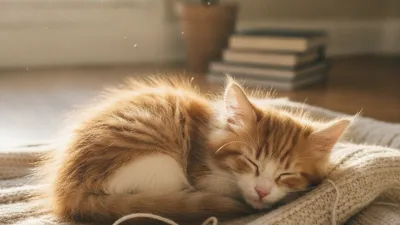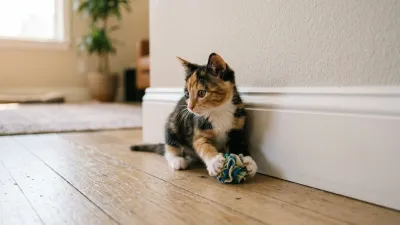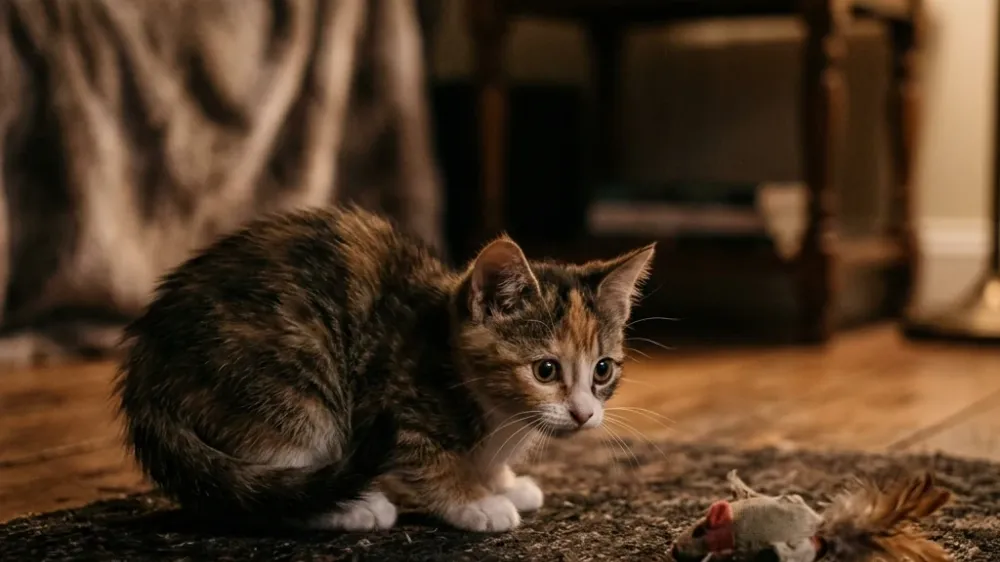
Kitten night zoomies are a result of the natural crepuscular nature of felines, meaning they are most active during the twilight hours of dusk and dawn. This behavior, often referred to by experts as Frenetic Random Activity Periods (FRAPs), is an essential way for a young animal to expend pent-up physical and mental energy. To regain control of your sleep, you must shift your pet’s internal clock by mimicking a natural hunting cycle before bedtime.
Understanding the Midnight Crazies#
Young cats are biologically programmed to hunt in low-light conditions. When they live indoors, they lack the constant environmental stimulation that naturally tires out a wild feline. This leads to an explosion of energy just as you are trying to settle in for the night. Much like how to handle puppy witching hour, kitten zoomies often occur because the animal has reached a threshold of sensory input and needs a physical outlet.
This behavior is not a sign of aggression or a behavioral disorder. It is a sign of a healthy, developing nervous system. However, if left unmanaged, the kitten learns that running across your face at 2 AM is a reliable way to get attention, which reinforces the habit for the long term.
📋 In This Guide
The Play-Eat-Groom-Sleep Routine#
The most effective way to eliminate night zoomies is to follow the feline biological clock. In the wild, a cat hunts, catches its prey, eats, grooms itself, and then sleeps for several hours to digest. You can replicate this by scheduling a high-intensity play session about thirty minutes before you intend to sleep.
Step 1: High-Intensity Interactive Play#
Use a toy that allows the kitten to run, jump, and climb. The goal is to get the kitten panting slightly (which is safe for short bursts in healthy kittens). Avoid using your hands or feet as toys, as this leads to biting issues. If you have experience with dogs, you know that redirecting energy is key, much like the protocols used to stop a puppy from biting hands.
During this session, let the kitten “catch” the toy occasionally to prevent frustration. Ending the session abruptly can leave them overstimulated. Instead, slowly decrease the speed of the toy over five minutes to allow their heart rate to return to normal.
Step 2: The Late-Night Meal#
Immediately after the play session, provide a small meal or a high-protein snack. This signals to the kitten’s body that the “hunt” was successful and it is now time to digest. A full stomach is one of the best sleep inducements for a growing pet. If your pet is vocalizing for food during the night, look at strategies for how to stop puppy barking at night as the principles of ignoring attention-seeking noise are very similar.
Step 3: Grooming and Calmness#
After eating, kittens will naturally begin to groom themselves. This is a self-soothing behavior. During this time, keep the lights low and avoid any further stimulation. If the kitten tries to initiate play again, do not engage. Simply walk away or place them in their designated sleeping area.
| Feature | Active Play (Day/Evening) | Passive Play (Night) |
|---|---|---|
| Goal | Drain energy and build muscle | Mental stimulation without arousal |
| Toys | Wand toys, feathers, laser pointers | Food puzzles, catnip kickers |
| Intensity | High-speed running and jumping | Slow pawing and sniffing |
| Duration | 15-20 minutes | 5-10 minutes |
| Human Role | Active participant | Silent observer |
Environmental Management Strategies#
If your kitten has free reign of the house, every shadow and rustling curtain becomes a toy at night. Managing the environment is just as important as the play routine. Many owners find success by creating a “boring” environment in the bedroom.
Create a Dedicated Sleeping Zone#
Consider whether the kitten should sleep in your bedroom. If they are constantly waking you up, it may be time to transition them to a separate room or a large enclosure. While cats aren’t usually crate trained in the same way as dogs, the principles of how to crate train a puppy overnight can be adapted. Use a large multi-level cat condo where they have access to water, a litter box, and a bed.
⚠️ Safety Warning: Always ensure that any toys left out for solo play at night are safe. Avoid toys with strings, small parts that can be swallowed, or feathers that can be chewed off and choked on when you are not supervising.
Use Vertical Space#
Kittens feel more secure when they have high vantage points. Providing a tall cat tree near a window (with the blinds closed at night) allows them to survey their territory without using your furniture as a racetrack. If they are zooming, they are more likely to stay on the designated climbing structures rather than your bed.
How to React to Nighttime Disruptions#
The most common mistake pet owners make is responding to the zoomies. If your kitten pounces on your feet or meows at the door, and you get up to feed them or shoo them away, you have just rewarded the behavior. Negative attention is still attention.
The Power of Tactical Ignoring#
You must become “dead to the world” when the zoomies start. Do not speak to the kitten, do not push them off the bed, and do not make eye contact. If the kitten becomes too disruptive, calmly pick them up without a word and place them outside the room, closing the door. This is similar to managing puppy separation anxiety, where we teach the animal that being alone is a calm, non-eventful state.
Consistent Feed Times#
Stick to a strict feeding schedule. If you feed the kitten the moment you wake up, they will start waking you up earlier and earlier. Instead, wait at least thirty minutes after you get out of bed to provide breakfast. This breaks the association between you waking up and them getting food.
Frequently Asked Questions#
Why is my kitten more active at 3 AM than during the day?#
Kittens are naturally crepuscular, but they also sleep for up to 20 hours a day. If they are left alone while you are at work without stimulation, they spend all day recharging their “battery.” By the time you are ready for bed, they have a full day’s worth of energy ready to be released.
Will my kitten eventually outgrow the night zoomies?#
Most kittens begin to settle into a more human-compatible sleep schedule as they reach social maturity, around 9 to 12 months of age. However, without proper routine and training, the habit of waking owners for attention can persist into adulthood.
Should I leave toys out for my kitten at night?#
Yes, but only “quiet” toys. Soft plush mice, food puzzle toys, or cardboard boxes are excellent choices. Avoid toys with bells, crinkle paper, or hard plastic parts that make noise against hardwood floors, as these will encourage loud play that disrupts your sleep.
Summary: The Nighttime Success Plan#
To effectively handle kitten night zoomies, follow this consistent daily protocol:
- Increase Daytime Stimulation: Use automated toys or bird feeders outside windows to keep the kitten mentally engaged while you are away.
- The Evening Hunt: Conduct a 20-minute intense play session using a wand toy before your own bedtime routine.
- The Final Meal: Feed a calorie-dense meal immediately following the play session to trigger the digestion-sleep cycle.
- Boring Bedrooms: Keep the bedroom dark and quiet. If the kitten zooms, ignore them completely to avoid reinforcing the behavior.
- Be Patient: It takes roughly two weeks of total consistency for a kitten’s internal clock to adjust to a new routine. Do not give in to 2 AM demands during this transition period.