Short-haired kittens have delicate skin, thin coats, and zero tolerance for painful grooming sessions. While adult cats with short coats can often tolerate standard slickers or deshedding blades, young kittens require gentle, non-abrasive tools that build trust while lifting loose dander and surface hair.
Introducing your kitten to regular coat maintenance early prevents hairballs, distributes natural skin oils, and helps they remain calm during adult grooming routines. Selecting the proper brush type protects sensitive skin while keeping shedding under control.
📋 In This Guide
Top Brush Types for Short Haired Kittens#
Not all grooming tools perform the same function. Understanding the mechanics of each brush category helps you pick the right tool for your kitten’s developmental stage.
1. Soft Natural or Nylon Bristle Brushes#
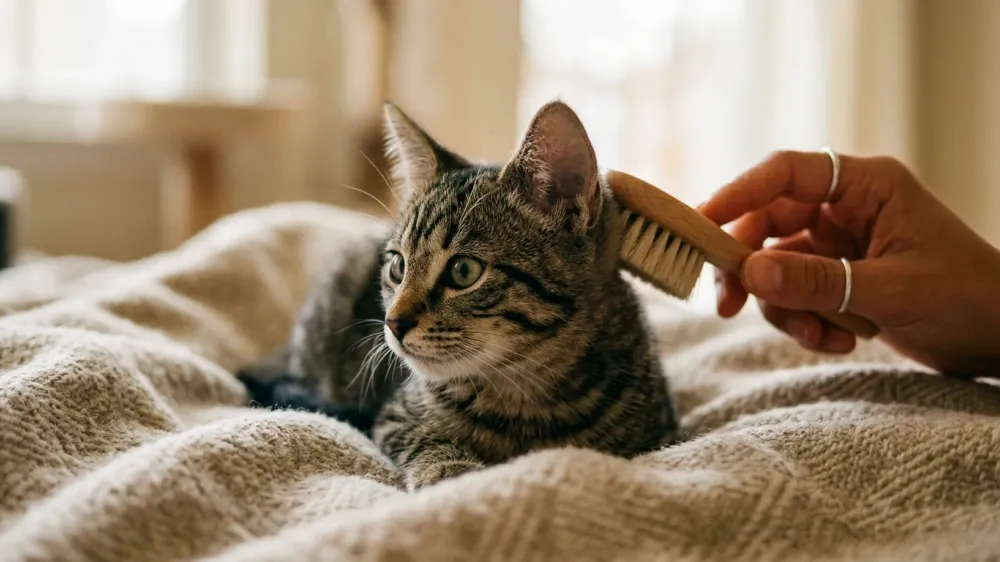
Soft bristle brushes are the ideal starter tool for any kitten under six months old. The densely packed, soft bristles glide over bony ridges along the spine and hips without scratching tender skin.
- Best For: Daily grooming sessions, acclimating skittish kittens to handling, and distributing natural body oils.
- How It Works: Lifts fine surface dust and captures shed hair while delivering a soothing massage effect.
2. Silicone and Rubber Curry Brushes#
Rubber grooming tools use static electricity and pliable nubs to collect dead undercoat hairs without digging into the dermis. Unlike stiff wire pins, rubber fingers flex completely when passing over sensitive areas.
- Best For: Kittens experiencing their first seasonal shed or those who enjoy a gentle massage.
- How It Works: Friction catches loose hairs directly against the rubber surface, which can then be rinsed clean under warm water.
3. Fine-Tooth Flea and Dander Combs#
Even strictly indoor kittens can develop dry dander or pick up stray debris. A metal comb with rounded, closely spaced micro-teeth is an key diagnostic and smoothing tool.
- Best For: Detailed checks around the face, ears, chin, and neck where broader brushes cannot reach.
- How It Works: Separates fine fur down to the root, capturing microscopic debris and tiny tangles before they mat.
4. Grooming Gloves with Gentle Nubs#
For kittens who become defensive or playful when they see a traditional brush handle, a soft grooming mitt is an effective alternative. The glove mimics normal hand petting.
- Best For: Highly energetic or nervous kittens who resist rigid plastic or wooden brush handles.
- How It Works: Textured palm nodules trap shedding fur as you stroke your kitten in continuous, natural motions.
Brush Comparison for Short Haired Kittens#
| Brush Type | Primary Purpose | Skin Sensitivity Level | Ideal Age Range |
|---|---|---|---|
| Soft Bristle Brush | Oil distribution & handling training | Extremely Gentle | 8 weeks & older |
| Rubber Curry Brush | Deshedding & dead coat removal | Very Gentle | 12 weeks & older |
| Fine-Tooth Comb | Dander, debris, & face grooming | Gentle (with rounded tips) | 8 weeks & older |
| Grooming Glove | Distraction-free loose hair pickup | Ultra Gentle | 8 weeks & older |
Tools to Avoid on Young, Short-Haired Kittens#
Using the wrong gear can create negative associations with grooming that last into adulthood. Avoid these tools during early kittenhood:
- Aggressive Deshedding Rakes: Heavy metal deshedding blades can cause brush burn on thin, young coats.
- Uncoated Wire Slicker Brushes: Stiff wire bristles can easily scratch sensitive skin along the spine, hips, and ribs.
- Mat Splitters: Unnecessary for short coats and dangerous to use around active, squirming pets.
If you also care for medium or long-coated felines, review our breakdown of key grooming tools for long haired kittens to see where tool requirements differ.
💡 Pro Tip: Pair short grooming sessions with high-value rewards. Offering a few healthy treats for kittens under 6 months while brushing creates a positive association, turning grooming into a relaxing bonding exercise.
Step-by-Step Kitten Grooming Routine#
Follow this simple four-step routine to build confidence and maintain your kitten’s short coat:
- Introduce the Tool: Place the soft brush on the floor and let your kitten sniff and rub against it before touching their coat.
- Start at Neutral Zones: Begin brushing gently along the shoulders and upper back, moving strictly in the direction of hair growth.
- Keep Sessions Brief: Limit early sessions to 60 to 90 seconds. End the session before the kitten shows signs of agitation, such as tail twitching or skin rippling.
- Handle Sensitive Zones Gradually: Once your kitten accepts back brushing, lightly comb the chest and chin, avoiding forceful pressure on the belly.
⚠️ Safety Warning: Never pull or drag a comb through caught debris. If you encounter resistance, support the base of the hair with your fingers to prevent tension on the kitten’s delicate skin.
Frequently Asked Questions#
How often should I brush a short haired kitten?#
Brush your short-haired kitten two to three times per week. While their coat does not easily mat, regular short sessions remove loose dander, reduce hairball formation, and establish a calm grooming routine for adulthood.
Can I use an adult cat slicker brush on a kitten?#
Standard adult slicker brushes often feature stiff wire pins that are too harsh for a kitten’s thin skin. If you use a slicker, choose an extra-small kitten model equipped with protective rubber-coated tips, and apply very light pressure.
Why does my kitten bite the brush during grooming?#
Kittens explore their environment with their mouths and may view the moving brush as a toy. Keep a small chew toy nearby to redirect their playful biting during grooming sessions.
Summary: Kitten Coat Care Action Plan#
To keep your short-haired kitten comfortable and clean, start with a soft nylon or natural bristle brush to build trust. Add a rubber curry tool around three to four months of age as their adult coat begins to develop. Keep sessions under two minutes, reward calm behavior consistently, and avoid sharp or heavy metal deshedding tools on young, delicate skin.