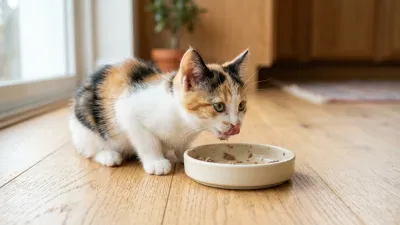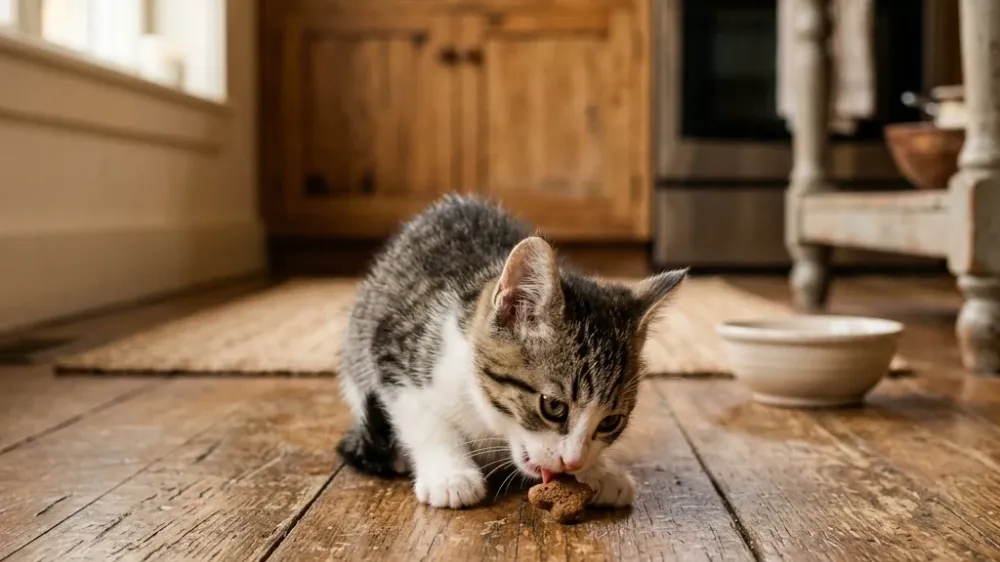
Young kittens under 6 months have sensitive digestive systems, tiny jaws, and rapid metabolic growth requirements, meaning snack choices must support their development without unbalancing their core diet. Treats are valuable tools for early socialization, litter box habits, and desensitization to grooming, but feeding the wrong texture or excessive calories can cause gastrointestinal distress.
Selecting the right rewards helps your kitten receives high-value motivation while keeping their gastrointestinal health intact.
📋 In This Guide
What Makes a Treat Safe for Kittens Under 6 Months?#
During the first 6 months of life, a kitten’s daily diet must primarily consist of complete and balanced kitten food formulated to support rapid muscle, bone, and brain growth. Treats should complement this baseline rather than replace it.
When evaluating snack options for young felines, focus on these key criteria:
- Single or Simple Animal Proteins: Ingredients like pure chicken breast, turkey, or salmon minimize digestive upset and avoid unnecessary fillers.
- Small, Soft, or Breakable Textures: Young kittens possess delicate deciduous (baby) teeth until roughly 4 to 6 months of age. Treats must be soft enough to chew easily or brittle enough to crush into tiny crumbs.
- Low Calorie Density: Because young kittens have small stomachs, high-calorie snacks can quickly spoil their appetite for their main meals.
- No Artificial Preservatives or Additives: Avoid artificial dyes, BHA, BHT, propylene glycol, and excessive sodium.
⚠️ Safety Warning: Avoid feeding hard adult dental treats, jerky intended for adult cats, or thick chew sticks to kittens under 6 months. These present severe choking hazards and can fracture delicate baby teeth.
The Best Healthy Treat Categories for Young Kittens#
Not all treats serve the same function. Matching the treat type to your specific goal, whether it is high-speed clicker training or quiet bonding, creates the best experience for your kitten.
1. Freeze-Dried Single-Ingredient Proteins#
Freeze-dried meats represent the gold standard for healthy kitten snacking. Because they contain only real meat with the moisture removed, they deliver pure animal protein without binders, gums, or grains. They can be broken into microscopic pieces for repetitive training exercises.
PureBites Freeze-Dried Chicken Cat Treats offer an optimal balance of pure animal protein and easy portion control. You can crumble a single piece into tiny specks over wet food or use individual crumbs as rewards during handling exercises.
2. Squeeze Purees and Lickable Pastes#
Lickable kitten treats are smooth purees with high moisture content. They are exceptional tools for distraction during stressful events like nail trims, brushing, or vet examinations. Licking has a natural self-soothing effect on kittens, helping keep anxiety low during handling.
3. Soft-Baked Kitten Nibbles#
Formulated specifically for young mouths, soft-baked kitten treats feature a spongy, moist texture that is easy on developing teeth. Look for formulas fortified with DHA (docosahexaenoic acid) to support cognitive and visual development.
Kitten Treat Comparison Guide#
| Treat Type | Texture | Ideal Use Case | Digestibility | Caloric Impact |
|---|---|---|---|---|
| Freeze-Dried Pure Meat | Crumbly / Airy | Training, clicker work, food topping | Highest | Very Low (when portioned) |
| Lickable Puree / Paste | Smooth Cream | Vet visits, nail trims, bonding | High | Moderate |
| Soft-Baked Nibbles | Spongy / Soft | Daily rewards, basic handling | Moderate to High | Moderate |
| Boiled Whole Meat | Tender / Shredded | High-value jackpot rewards | High | Low |
The 10% Calorie Rule for Growing Kittens#
Kittens experience rapid physical development, doubling or tripling their weight in the first few months. Their primary nutrition should come from age-appropriate wet or dry formulas designed for growth. If you are balancing their daily meal plan, review our guide on wet vs dry food for kittens to support their base diet meets developmental standards.
Treats should never account for more than 10% of a kitten’s total daily caloric intake. In practical terms, for an 8-week to 16-week-old kitten, this often equals no more than 10 to 15 calories worth of treats per day.
💡 Pro Tip: Calculate your kitten’s treat allowance at the start of each day. Place that day’s allotted treats in a small container on the counter. Once the container is empty, switch to using individual pieces of your kitten’s regular kibble as training rewards to prevent overfeeding.
Using Treats for Socialization and Training#
Treats are key communication tools in early kitten training. Between 2 and 16 weeks of age, kittens undergo critical socialization windows where positive experiences shape lifelong behaviors.
- Handling and Grooming: Offer a lickable puree while gently touching paws, inspecting ears, and lifting lips to check teeth. This creates positive associations with future grooming and medical care.
- Teething Redirection: When teething kittens attempt to bite fingers or furniture, redirect them to safe toys or offer a soft treat as a reward once they engage with appropriate chews. For teething management, check out our guide on the best types of toys for teething kittens.
- Carrier and Space Exploration: Place small freeze-dried crumbs inside an open carrier to encourage voluntary exploration without fear.
Fresh Whole Food Treat Alternatives#
You do not always need commercial packages to reward your kitten. Safe, freshly prepared whole foods can serve as clean, single-ingredient treats in moderation:
- Plain Boiled Chicken: Cooked without salt, butter, oil, onions, or garlic, finely shredded chicken breast is gentle on young stomachs.
- Plain Scrambled or Hard-Boiled Eggs: An easily digestible source of protein and key fatty acids. Serve in pea-sized bites.
- Canned Pure Pumpkin Puree: A tiny dab of plain canned pumpkin (not pie mix) provides soluble fiber and helps regulate stool consistency.
For a complete breakdown of safe and unsafe table foods, consult our detailed list of safe human foods for kittens. If you are considering raw meat treats, review the key guidelines in our article on whether kittens can eat a raw food diet safely.
Frequently Asked Questions#
At what age can a kitten start eating treats?#
Kittens can begin having tiny, soft treats once they are fully weaned onto solid food, typically around 6 to 8 weeks of age. Introduce treats one at a time in very small quantities to observe how their digestive system tolerates the new ingredient.
Can treats cause diarrhea in young kittens?#
Yes. Introducing new proteins too quickly, feeding rich fatty treats, or offering too many treats in one day frequently triggers loose stools in kittens. If your kitten develops diarrhea, stop all treats and feed only their standard kitten growth diet until digestion stabilizes.
Can I give adult cat treats to a kitten under 6 months?#
It is best to avoid standard adult cat treats until your kitten reaches at least 6 to 12 months. Adult treats are often too hard for baby teeth, present choking risks, and lack the clean, simple ingredient profiles required for young digestive systems.
Summary: Healthy Kitten Treat Action Plan#
To keep treat time safe, rewarding, and nutritionally sound for your kitten under 6 months, follow these core principles:
- Choose Simple Ingredients: Stick to single-protein freeze-dried meats or moisture-rich purees formulated without artificial additives.
- Keep Bites Tiny: Break treats into pieces no larger than a grain of rice to avoid choking and prevent early fullness.
- Respect the 10% Limit: Make sure treats never displace complete kitten growth nutrition.
- Reward Good Behavior: Use treat moments strategically to support carrier desensitization, gentle handling, and positive socialization habits.