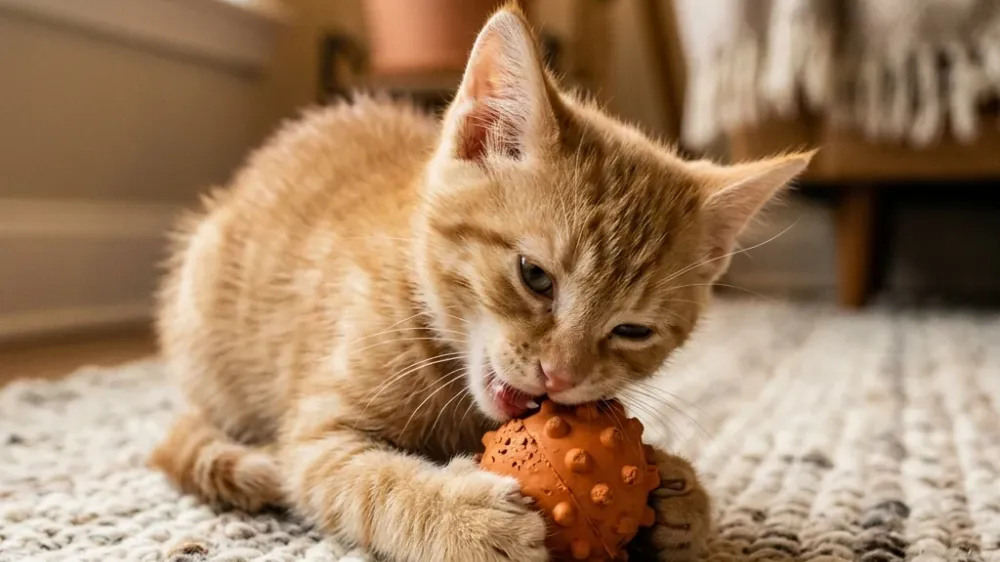
Teething kittens experience continuous gum irritation as their deciduous teeth fall out and permanent adult teeth break through. Providing appropriate chew outlets during this phase protects household furniture, wire cords, and human hands from sharp young teeth.
Selecting the right toys requires understanding how feline jaws work and what textures offer effective relief. In training sessions, we frequently see kittens switch from destructive nipping to targeted play once owners introduce toys specifically designed for oral stimulation and comfort.
📋 In This Guide
Why Kittens Need Specialized Teething Toys#
Kittens begin developing baby teeth around three weeks of age, but the true teething process happens between three and seven months. During this window, thirty adult teeth push through the gums. To understand this timeline better, read our detailed guide on when do kittens lose their baby teeth.
As teeth move through the tissue, kittens feel persistent aching and pressure. Chewing provides natural pain relief by massaging the gums and helping loosen baby teeth that are ready to shed. Standard plush mice or lightweight plastic balls rarely offer the structural resistance needed to soothe tender oral tissues.
Without targeted teething outlets, young cats explore their environment using their mouth. This often leads to chewing on dangerous electrical cords, leather shoes, or furniture corners. Offering durable, kitten-safe chew items establishes good habits early.
The Best Types of Toys for Teething Kittens#
Not all cat toys support teething needs. The ideal chew toy balances structural firmness with soft flexibility to support it massages gums without damaging fragile developing teeth.
1. Flexible Rubber and TPE Chew Toys#
Thermoplastic Elastomer (TPE) and soft natural rubber are top choices for young chewers. These materials yield slightly under bite pressure, offering resistance without risking tooth fractures.
Look for rubber toys featuring built-in nubs, grooves, or ridges. These textured surfaces press gently against sore gum lines as the kitten bites down, promoting local circulation and numbing uncomfortable pressure points.
2. Fabric and Dental Mesh Toys#
Dental mesh toys use tough, woven netting over a soft core. As your kitten bites down, the mesh material gently scrapes against the surface of the teeth, removing soft plaque while satisfying the urge to crunch.
Many mesh toys include lightweight ribbons, feathers, or catnip fillings. These added elements keep energy levels directed toward appropriate chew items rather than household objects.
3. Chilled and Cooling Toys#
Cold temperatures reduce swelling and numb tender gum tissue naturally. Soft rubber or fabric toys designed to hold moisture can be placed in the freezer for short periods before play sessions.
💡 Pro Tip: Lightly wet a cloth-based teething toy or a small washcloth tied in a tight knot, then freeze it for 20 minutes. The cold moisture provides fast relief for severely swollen gums.
4. Natural Wood and Matatabi Sticks#
Matatabi (silvervine) sticks offer a firm, natural chewing surface that appeals to a kitten’s instincts. Silvervine contains natural compounds similar to catnip that stimulate playful interest in most felines.
Make sure any wood or stick toy is explicitly manufactured for young cats. Raw twigs from outdoors can splinter into sharp shards, causing internal blockages or mouth punctures.
Teething Toy Comparison Matrix#
The table below compares common teething toy materials, highlights their key benefits, and rates their overall durability for active chewers.
| Toy Type | Primary Benefit | Target Need | Durability Rating |
|---|---|---|---|
| Soft Rubber / TPE | High resistance, easy to clean | Sore gum relief & deep biting | High |
| Dental Mesh | Cleans teeth, massages tissue | Mild aching & plaque control | Medium |
| Chilled Fabric | Instant numbing action | Severe swelling & acute inflammation | Low to Medium |
| Matatabi Sticks | Natural scent engagement | Instinctive gnawing & focus | Medium |
Safety Hazards: What to Avoid#
Safety is the top priority when choosing gear for young pets. Kittens possess sharp needle-like teeth that can tear low-quality materials into dangerous swallowable pieces.
Avoid these unsafe items during the teething stage:
- Strings, Yarn, and Ribbons: Linear foreign bodies present severe gastrointestinal risks if ingested.
- Small Plastic Parts: Toys with glued-on plastic eyes or beads pose choking hazards.
- Hard Nylon Bones: Dog chew bones made of rigid nylon can fracture delicate kitten baby teeth.
- Low-Density Foam: Foam items break down easily under sharp teeth and cause intestinal blockages.
Always inspect chew items daily for signs of wear. If a toy shows fraying seams, cracking rubber, or loose pieces, discard and replace it immediately.
Supporting Your Teething Kitten Beyond Toys#
Chew toys form the core of a solid teething plan, but overall daily care plays an important role in keeping your pet comfortable. Adjusting diet textures can provide extra relief during peak soreness periods.
Offering soft wet meals reduces stress on tender gums when teeth are actively shedding. For balanced feeding ideas, review our guide comparing wet vs dry food for kittens.
Maintaining consistent hydration is equally critical when kittens feel reluctant to eat or drink due to mouth pain. Watch for warning indicators by checking signs of dehydration in kittens.
Pairing structured play sessions with consistent routines prevents stress-induced chewing. Keep litter box training on track by selecting the best cat litter for kittens, and channel excessive energy constructively by learning how to harness train a kitten for controlled outdoor exploration.
⚠️ Safety Warning: Never give your kitten human pain medications or topical numbing gels. Many over-the-counter human products contain ingredients like acetaminophen or benzocaine, which are toxic to cats.
Frequently Asked Questions#
How do I stop my teething kitten from biting my hands?#
Never use your hands or fingers as play objects. When your kitten attempts to bite your fingers, immediately pull back your hand, say a firm ‘no’, and redirect their jaw directly onto a soft rubber or mesh teething toy.
Are catnip toys safe for teething kittens?#
Catnip is safe for kittens, but most felines do not react to its active compounds until they reach 6 to 9 months of age. While catnip-stuffed toys will not harm a younger kitten, non-scented textured rubber or chilled fabric toys are often more effective for early teething relief.
Can I give my teething kitten human baby toys?#
Plastic or rubber human baby toys are generally too large and rigid for small feline jaws. Some infant toys also contain liquid gel centers that can leak toxic chemicals if punctured by sharp kitten teeth. Stick exclusively to toys designed for cats.
Summary: Kitten Teething Action Plan#
Managing kitten teething requires proactive effort, proper gear, and constant safety monitoring. Follow this quick action plan to navigate the teething window smoothly:
- Provide Material Variety: Offer a mix of soft rubber, dental mesh, and chilled fabric toys to address different stages of gum discomfort.
- Redirect Bad Behavior: Keep appropriate chew toys within arm’s reach in every room to redirect inappropriate biting instantly.
- Inspect Gear Daily: Routinely audit chew items for cracks, torn mesh, or loose elements to prevent accidental ingestion.
- Adjust Daily Care: Serve soft foods during severe flare-ups and maintain high hydration levels to keep your growing kitten healthy and comfortable.