Kitten dehydration is a life-threatening condition that can escalate in a matter of hours due to their small body mass and high metabolic rate. Because kittens are over 70 percent water, even a small loss of fluids disrupts vital organ functions and electrolyte balance. Recognizing the early physical markers of fluid loss allows for immediate intervention before the situation becomes a medical emergency. Animal behavior experts monitor these signs daily to ensure young felines remain on a healthy growth trajectory.
📋 In This Guide
Physical Signs of Dehydration#
Identifying dehydration requires a hands-on approach. You cannot always rely on seeing a kitten drink from a bowl, as many kittens are picky about water sources or may be losing fluids faster than they can ingest them.
1. Loss of Skin Elasticity (Skin Tenting)#
This is the most common test used by pet care experts. Gently pinch the skin between the kitten’s shoulder blades and pull it upward, then release it. In a hydrated kitten, the skin snaps back into place instantly. In a dehydrated kitten, the skin remains peaked or returns to its flat position slowly. This is often called skin tenting and indicates a significant loss of subcutaneous fluid.
2. Tacky or Dry Gums#
A healthy kitten’s gums should be pink, slippery, and moist. Carefully lift the kitten’s lip and touch the gum tissue with your finger. If the gums feel sticky, tacky, or completely dry to the touch, the kitten is likely dehydrated. This often occurs alongside a drop in saliva production, which can also make their breath smell more concentrated than usual.
3. Sunken Eyes#
When a kitten loses a high volume of fluid, the fat pads behind the eyes begin to shrink. This causes the eyes to appear dull, dry, and sunken into the sockets. In severe cases, the third eyelid may become visible, partially covering the eye. This is a sign of advanced dehydration and requires immediate professional attention.
Behavioral Shifts and Systemic Indicators#
Beyond physical touch, the way a kitten moves and interacts with its environment provides clues about its internal hydration levels. Monitoring normal kitten weight gain is also a vital part of tracking overall health, as a sudden drop in weight often coincides with fluid loss.
4. Lethargy and Muscle Weakness#
Water is essential for transporting oxygen and nutrients to the muscles. A dehydrated kitten will appear sluggish, sleep more than usual, and may show little interest in play. You might notice them struggling to jump onto low surfaces or walking with a wobbly, uncoordinated gait. If a kitten stops following you or hides in a dark corner, their energy reserves are likely depleted.
5. Panting or Heavy Breathing#
Unlike dogs, kittens do not usually pant to cool down. If you notice a kitten breathing with its mouth open, it may be a sign of heat exhaustion or severe dehydration. This is the body’s desperate attempt to regulate temperature when there is not enough water to facilitate normal cooling processes. This symptom often appears when a kitten is sneezing frequently or suffering from a respiratory infection that has caused a fever.
6. Cold Paws and Poor Circulation#
Dehydration leads to a decrease in blood volume. To protect the core organs, the body restricts blood flow to the extremities. If a kitten’s paws feel unusually cold to the touch or their nail beds look pale instead of pink, their circulation is being compromised by low fluid levels.
Why Kittens Dehydrate Quickly#
Kittens lack the physical reserves of adult cats, making them vulnerable to rapid changes. Several common factors contribute to fluid loss, and understanding these can help you prevent a crisis.
| Cause | Impact on Hydration |
|---|---|
| Diarrhea | Rapid loss of water and electrolytes through the digestive tract. |
| Vomiting | Prevents the kitten from keeping any fluids down. |
| High Heat | Causes fluid loss through the paw pads and increased respiratory rate. |
| Fever | Increases the metabolic demand for water to cool the body. |
| Weaning Issues | Kittens may struggle to transition from milk to water. |
One frequent mistake is offering inappropriate liquids. While it might seem helpful, many owners ask can kittens drink cow milk when they see a kitten is thirsty. In reality, cow milk often causes diarrhea in kittens, which actually worsens dehydration. Sticking to a proper kitten vaccination schedule is also key, as it prevents diseases like panleukopenia that cause extreme vomiting and fluid loss.
Advanced Hydration Testing: The Capillary Refill Test#
You can perform a Capillary Refill Time (CRT) test at home to check a kitten’s circulatory status. This provides a more objective look at how well the blood is flowing through the body.
- Press your finger firmly against the kitten’s gums until the spot turns white.
- Lift your finger and count how many seconds it takes for the pink color to return.
- Result: In a well-hydrated kitten, the color returns in under 2 seconds. If it takes longer than 2 seconds, the kitten is likely dehydrated and has low blood pressure.
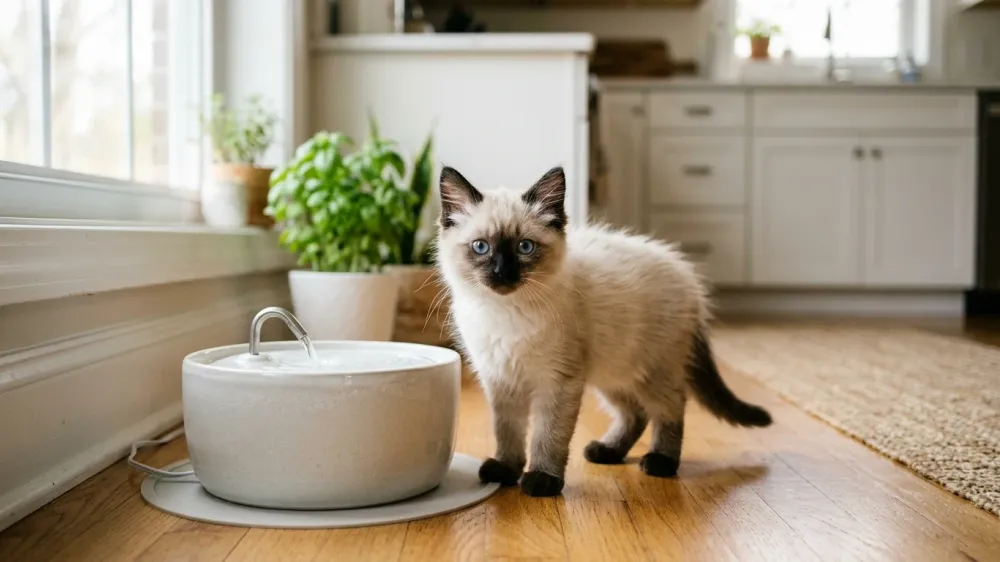
💡 Pro Tip: Kittens are often more attracted to moving water than still water. Using a fountain can increase their daily intake by appealing to their natural instinct that running water is fresher and safer to drink.
💡 Related Guide: In fragile newborns, severe dehydration accompanied by sudden hypothermia can indicate fading kitten syndrome warning signs, demanding immediate veterinary care.
💡 Related Guide: Learn the step-by-step technique on how to check kitten gums for signs of illness to evaluate capillary refill time and moisture levels.
FAQ: Common Hydration Questions#
How much water should a kitten drink?#
A kitten generally needs about 2 to 4 ounces of water per 5 pounds of body weight. However, kittens eating wet food will naturally drink less water because their food is approximately 75 to 80 percent moisture. If your kitten eats only dry kibble, their water intake must be significantly higher.
Can I give my kitten Pedialyte for dehydration?#
While unflavored Pedialyte is sometimes used in emergencies to restore electrolytes, it should only be done under the guidance of a professional. Kittens have a very specific electrolyte balance, and human products may contain salt or sugar levels that are not ideal for a small feline’s kidneys.
How long can a kitten go without water?#
A kitten should never go more than 12 hours without fluids. Because of their small size, they can enter a state of shock much faster than an adult cat. If a kitten refuses both food and water for a full day, it is a critical situation.
Summary: Action Plan for Dehydrated Kittens#
If you suspect your kitten is losing too much fluid, follow these steps immediately to stabilize them and determine the severity:
- Perform the tests: Check the skin scruff, the gums, and the capillary refill time.
- Offer wet food: Mix a tablespoon of warm water into a high-quality wet kitten food to encourage moisture intake.
- Lower the temperature: If the kitten is warm, move them to a cool, shaded area and provide a cool (not ice-cold) water bowl.
- Monitor output: Check the litter box. A lack of urine or very dark, concentrated urine is a sign that the kidneys are struggling.
- Contact an expert: If the kitten is lethargic, has sunken eyes, or refuses to drink, seek professional help immediately. Dehydration is often a symptom of an underlying issue that requires treatment beyond just providing water.