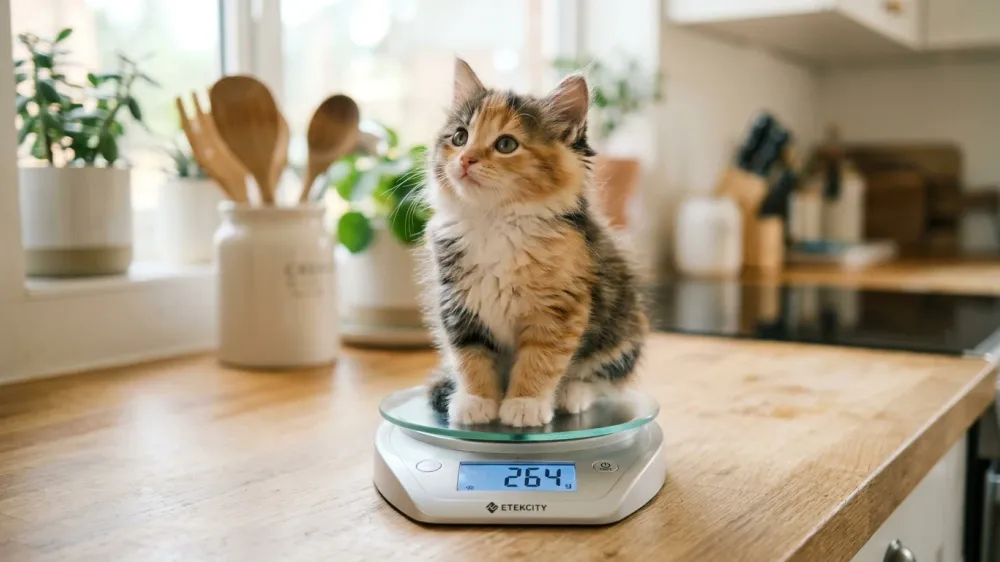
Monitoring a kitten’s weight daily is the most effective way to ensure they are thriving during the first critical weeks of life. For newborn kittens, weight gain is the primary indicator of health, as they are too young to show many other clinical signs of wellness. A healthy kitten should gain weight steadily and predictably every single day. If a kitten stops gaining or begins to lose weight, it is often the first sign that an underlying health issue needs attention.
Pet care experts use weight as a baseline for development, nutrition, and medical readiness. From birth to about six months, a kitten undergoes a staggering amount of growth. Understanding the milestones for each week helps you provide the right support, from choosing the proper food to knowing when it is time for professional care. This guide provides a detailed breakdown of what to expect as your kitten grows from a helpless newborn into a vigorous juvenile.
📋 In This Guide
Normal Kitten Weight Gain Chart#
The following table outlines the average weight ranges for kittens from birth through six months of age. While individual kittens may vary based on breed and litter size, these figures represent the standard growth curve for most domestic kittens.
| Age | Average Weight Range | Growth Milestone |
|---|---|---|
| Birth | 3 - 4 ounces (85 - 115g) | Nursing every 2 hours |
| 1 Week | 7 - 9 ounces (200 - 250g) | Eyes beginning to open |
| 2 Weeks | 10 - 12 ounces (280 - 340g) | Crawling and ear canals opening |
| 3 Weeks | 13 - 15 ounces (370 - 425g) | First teeth appearing |
| 4 Weeks | 1 lb (450 - 550g) | Beginning to explore and play |
| 8 Weeks | 2 lbs (900g - 1kg) | Fully weaned and ready for first shots |
| 4 Months | 4 lbs (1.8kg) | Rapid growth continues |
| 6 Months | 5 - 6 lbs (2.3 - 2.7kg) | Reaching 75% of adult weight |
Week 1: The First Milestones#
At birth, a kitten typically weighs between 3 and 4 ounces. During the first 24 hours, it is normal for a kitten to lose a tiny amount of weight as they adjust to nursing, but they should begin gaining immediately after. A healthy newborn kitten should gain approximately 10 to 15 grams (about half an ounce) every day. At this stage, they are entirely dependent on their mother or a bottle for warmth and nutrition.
By the end of the first week, the kitten should have doubled its birth weight. If you notice a kitten is not gaining weight or feels cold to the touch, this is a serious concern. During this time, ensure the environment is warm and the mother is allowing all kittens to nurse equally. If you are hand-rearing, precise measurement is even more vital.
Weeks 2 to 4: The Transition Phase#
During weeks two and three, growth remains rapid. Kittens will start to become more mobile, though they are still quite wobbly. Their eyes will fully open, and they will begin to respond to sounds. By the end of week three, you may notice the tiny tips of kitten baby teeth emerging through the gums. Weight gain should remain steady at about 100 grams per week.
At week four, many kittens reach the one-pound mark. This is a significant milestone because it often coincides with the start of the weaning process. They will begin to show interest in their mother’s food and may start to lap water. This is also the ideal time to learn how to litter train a kitten as they gain better control over their bodily functions.
💡 Pro Tip: Always weigh your kitten at the same time every day, preferably in the morning before their first feeding. This provides the most consistent data and helps you spot trends rather than minor fluctuations caused by a full belly.
Weeks 5 to 8: Weaning and Independence#
From five to eight weeks, kittens transition from a liquid diet to solid food. This transition can sometimes cause a temporary slowing of weight gain as their digestive systems adapt. However, they should never lose weight. During this phase, you should provide high-quality kitten food that is calorie-dense to support their high energy levels.
If you find that your kitten’s growth is stalled or if you notice issues like kitten sneezing frequently, it could indicate a respiratory infection or parasites which can divert nutrients away from growth. Keeping them on a steady growth track is essential for their immune system development. By eight weeks, most kittens should weigh approximately two pounds. This is the standard weight required for many rescue organizations to consider a kitten ready for their first round of kitten vaccinations.
Measuring Growth Accurately#
To track weight gain effectively, you need a scale that measures in grams or half-ounces. A standard bathroom scale is not sensitive enough for a small kitten. Instead, use a digital scale designed for food or small packages. Place a small bowl or box on the scale, tare it to zero, and then place the kitten inside to keep them still while you get a reading.
Recording these numbers in a log or a dedicated app allows you to see the growth curve. If the line on your graph goes flat for more than 24 to 48 hours, it is time to consult a professional. Healthy kittens are growth machines: they eat, sleep, and grow. Any deviation from this cycle usually suggests an underlying issue such as fleas, which can cause anemia in small kittens. If you suspect pests, follow a guide on safe kitten flea removal to protect their health.
Factors That Affect Kitten Weight#
Not every kitten will follow the chart perfectly. Several factors influence how quickly or slowly a kitten puts on weight:
- Genetics: Larger breeds like Maine Coons will naturally be heavier than a Siamese of the same age.
- Litter Size: Kittens from very large litters may be smaller at birth and take longer to reach milestones due to competition for milk.
- Nutrition: The quality of the mother’s milk or the kitten milk replacer (KMR) used for bottle feeding significantly impacts development.
- Health Status: Issues like intestinal parasites or infections can significantly stunt growth if not addressed quickly.
As the kitten reaches the four to six-month mark, their growth rate will naturally start to slow down. They are no longer doubling their weight every few weeks. This period is often when owners look into timing for spaying and neutering. Usually, a weight of at least two to five pounds is required depending on the specific protocol used by your local clinic.
Breed-Specific Growth & Weight Charts#
While domestic shorthairs follow standard growth curves, specific purebred and hybrid breeds develop at different rates. Explore our dedicated monthly growth guides for exact breed weight expectations:
- Abyssinian Growth Chart
- American Shorthair Growth Chart
- Balinese Growth Chart
- Bambino Growth Chart
- Bengal Growth Chart
- Birman Growth Chart
- Bombay Growth Chart
- British Shorthair Growth Chart
- Burmese Growth Chart
- Chartreux Growth Chart
- Chausie Growth Chart
- Cheetoh Growth Chart
- Cornish Rex Growth Chart
- Devon Rex Growth Chart
- Egyptian Mau Growth Chart
- Exotic Shorthair Growth Chart
- Highlander Growth Chart
- Japanese Bobtail Growth Chart
- Lykoi Growth Chart
- Maine Coon Growth Chart
- Manx Growth Chart
- Minuet (Napoleon) Growth Chart
- Munchkin Growth Chart
- Norwegian Forest Growth Chart
- Oci Growth Chart
- Oriental Shorthair Growth Chart
- Persian Growth Chart
- Pixie-bob Growth Chart
- Ragamuffin Growth Chart
- Ragdoll Growth Chart
- Russian Blue Growth Chart
- Savannah Growth Chart
- Scottish Fold Growth Chart
- Scottish Kilt Growth Chart
- Selkirk Rex Growth Chart
- Siamese Growth Chart
- Siberian Growth Chart
- Singapura Growth Chart
- Somali Growth Chart
- Sphynx Growth Chart
- Tonkinese Growth Chart
- Toyger Growth Chart
- Turkish Angora Growth Chart
Frequently Asked Questions#
What if my kitten doesn’t gain weight for one day?#
While a 24-hour plateau is not always an emergency for an older kitten, it is concerning for a newborn under three weeks old. For older kittens, monitor their energy levels and appetite closely. If they don’t resume gaining within the next 24 hours, seek advice from a pet care expert.
Can a kitten gain too much weight?#
It is very rare for a growing kitten under six months to become overweight. They require massive amounts of energy for bone and muscle development. Unless a professional tells you otherwise, let your kitten eat as much high-quality kitten food as they want during their first six months.
How much should a 12-week-old kitten weigh?#
Most kittens at 12 weeks (3 months) weigh between 3 and 4 pounds. A general rule of thumb used by many trainers and experts is that a kitten should gain about one pound per month after the first few weeks of life.
Summary: Healthy Growth Action Plan#
To ensure your kitten reaches their full potential, follow these structured steps throughout their first few months:
- Daily Weighing: Use a digital scale to track weight every morning for the first 8 weeks.
- Documentation: Keep a log of weights to identify the growth curve and share with a professional if concerns arise.
- Quality Nutrition: Provide food specifically formulated for kittens, which contains the higher protein and fat levels they need.
- Monitor Milestones: Watch for the transition to solid food, the appearance of teeth, and increased activity levels.
- Schedule Care: Use weight milestones to time vaccinations and spay/neuter procedures correctly.
By staying proactive and keeping a close eye on the scale, you can ensure your kitten stays on the path to a healthy, vibrant adulthood.