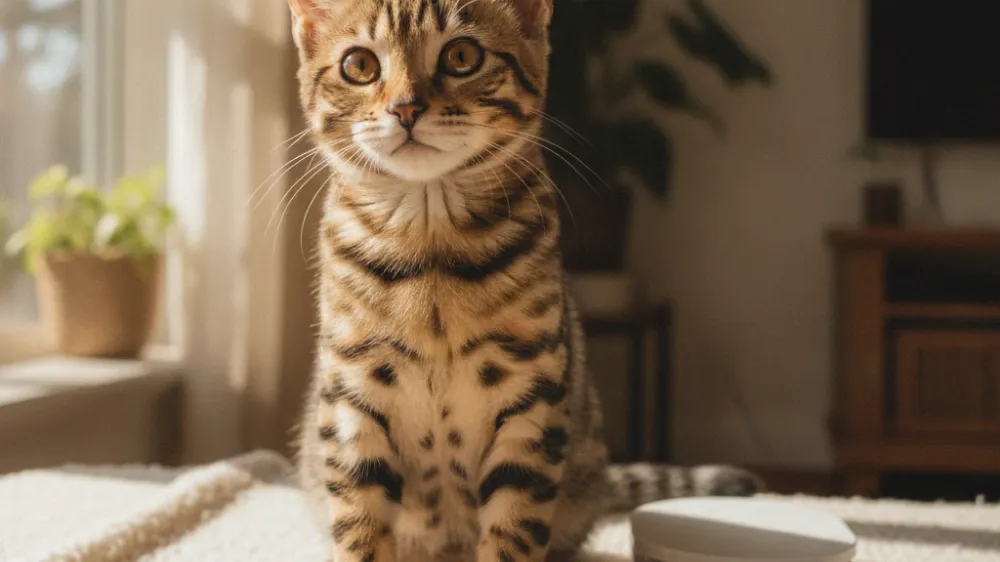
The Cheetoh is celebrated for its gentle designer giant created by crossing the Bengal and Ocicat for a wild look with sweet temperament. Whether you are welcoming a young kitten into your home or monitoring an adolescent growth spurt, tracking month-by-month physical milestones ensures your companion develops on a healthy, balanced trajectory.
💡 Development Note: For general week-by-week weight targets during early kitten development, compare your milestones with our normal kitten weight gain by week guide.
📋 In This Guide
Cheetoh Weight Chart by Month#
Quick Answer: Healthy adult Cheetoh cats typically reach full physical maturity between 2 and 3 years, with an overall adult weight range of 10.0 - 22.0 lbs (4.5 - 10.0 kg). Adult males average 15.0 - 22.0 lbs (6.8 - 10.0 kg), while adult females are slightly lighter at 10.0 - 15.0 lbs (4.5 - 6.8 kg).
Below is a month-by-month guideline for male and female Cheetoh kittens from early weaning through adult maturity.
| Age | Male Weight Range | Female Weight Range | Physical & Developmental Milestones |
|---|---|---|---|
| 8 Weeks (2 Months) | 2.2 - 3.2 lbs (1.0 - 1.5 kg) | 1.8 - 2.6 lbs (0.8 - 1.2 kg) | Velvety spotted baby pelt; playful hunting games |
| 12 Weeks (3 Months) | 3.5 - 5.0 lbs (1.6 - 2.3 kg) | 2.8 - 4.2 lbs (1.3 - 1.9 kg) | High intelligence; learns leash walking and fetch easily |
| 16 Weeks (4 Months) | 5.0 - 7.0 lbs (2.3 - 3.2 kg) | 4.0 - 5.5 lbs (1.8 - 2.5 kg) | Deep chest widens; low-shedding glittering coat sets |
| 6 Months | 7.5 - 10.5 lbs (3.4 - 4.8 kg) | 6.0 - 8.5 lbs (2.7 - 3.9 kg) | Broad athletic shoulder build; very sweet with children |
| 9 Months | 10.0 - 14.0 lbs (4.5 - 6.4 kg) | 8.0 - 11.0 lbs (3.6 - 5.0 kg) | Heavy bone density builds; wild spots shine brightly |
| 12 Months (1 Year) | 12.5 - 17.5 lbs (5.7 - 7.9 kg) | 9.0 - 13.0 lbs (4.1 - 5.9 kg) | Baseline adult length established; gentle giant personality |
| 2 - 3 Years (Full Adult) | 15.0 - 22.0 lbs (6.8 - 10.0 kg) | 10.0 - 15.0 lbs (4.5 - 6.8 kg) | Full mature muscular build and wild leopard-like appearance |
The Best of Bengal and Ocicat#
The Cheetoh was deliberately created to achieve the glorious rosettes of the Bengal and the solid size of the Ocicat while maintaining an exceptionally gentle, child-loving nature.
Healthy Body Condition Scoring for Growing Kittens#
Because individual genetics, frame size, and bloodlines cause natural variations in weight, hands-on body condition checks are the best way to evaluate healthy growth:
- The Rib Feel: You should easily feel your kitten’s ribs beneath a light layer of tissue without applying firm pressure.
- Waist Contour: Looking down from above, there should be a gentle, visible taper behind the ribcage before the hips begin.
- Abdominal Tuck: When viewed from the side, the lower stomach should slope cleanly upward toward the hindquarters.
Feeding & Nutrition Guidelines#
- High-Quality Protein First: Choose kitten recipes that list named real meats (such as chicken, turkey, or salmon) as the first ingredient to build sturdy muscle tone.
- Support Proper Hydration: Offer wet canned food daily alongside clean, fresh water fountains to promote lifelong urinary tract and kidney health.
- Portion Calibration: Avoid leaving massive bowls of dry food out at all times once your kitten approaches adolescence to prevent excess fat accumulation.
[!NOTE] Breed Regulations: Although Cheetohs are bred from domestic crosses (Ocicat and Bengal), some municipal ordinances group them under exotic breed rules. Review exotic cat ownership laws and banned breeds to ensure local legality.