Kittens begin losing their baby teeth around 12 to 14 weeks of age (approximately 3 to 3.5 months old). By the time a young cat reaches 6 to 7 months of age, all 26 baby teeth are typically replaced by 30 permanent adult teeth.
Understanding the cat teething timeline helps owners distinguish normal developmental behavior from underlying dental issues. During this stage, your kitten will experience gum sensitivity, an increased urge to gnaw on household objects, and subtle behavioral shifts.
📋 In This Guide
The Complete Kitten Teething Timeline#
Kitten dental development occurs rapidly within the first half-year of life. Kittens are born completely toothless. Their milk teeth (deciduous teeth) erupt during nursing, only to fall out shortly after weaning.
| Age Range | Dental Stage | Total Teeth Present |
|---|---|---|
| 0-2 Weeks | Gums only, no teeth visible | 0 |
| 3-4 Weeks | Deciduous incisors and fangs erupt | 12-16 |
| 5-8 Weeks | Deciduous premolars appear; fully weaned | 26 (Full baby set) |
| 12-16 Weeks (3-4 mos) | Baby incisors fall out; adult incisors emerge | Transitioning |
| 4-6 Months | Baby fangs and premolars shed; adult fangs emerge | Transitioning |
| 6-7 Months | Adult molars fully erupt | 30 (Full adult set) |
Weeks 3 to 8: Baby Teeth Eruption#
Around 3 to 4 weeks old, tiny front teeth (incisors) and sharp fangs (pointed teeth) pierce through the gums. By week 6, the premolars emerge. During this phase, mother cats naturally begin weaning their litter due to nursing discomfort. This is an ideal time to transition to a proper diet as outlined in our first kitten care guide.
Months 3 to 4: The Shedding Begins#
The middle incisors are the first deciduous teeth to loosen and fall out. Owners rarely find these tiny front teeth because kittens almost always swallow them during meals or grooming.
Months 4 to 7: Adult Teeth Take Over#
Between 4 and 6 months, the large baby fangs fall out to make way for permanent adult fangs. Adult molars, which have no deciduous precursors, also erupt in the back of the jaw. By 7 months, your kitten will have a full set of 30 permanent adult teeth.
Common Signs Your Kitten Is Teething#
Teething is a natural physiological process, but it can cause mild discomfort. Daily pet care routines reveal several classic signs that indicate baby teeth are actively shedding:
- Intense Chewing: Kittens gnaw on furniture legs, cardboard, baseboards, and electrical wires to relieve gum pressure.
- Mild Drooling: Increased saliva production often accompanies gum irritation.
- Food Hesitation: A kitten that previously devoured crunchy kibble may eat slower or prefer soft textures. Reviewing wet vs dry kitten food options helps keep calorie intake steady.
- Mild Halitosis: A slight metallic or sour mouth odor can occur as gums bleed minimally when roots dissolve.
- Pawing at the Mouth: Kittens may occasionally rub their cheeks against carpet or swipe at their face.
💡 Pro Tip: To prevent your kitten from chewing dangerous electrical cords during the peak teething window (3 to 6 months), wrap cables in protective split tubing and redirect chewing behavior to approved rubber or fabric toys.
How to Comfort a Teething Kitten#
Active teething requires a combination of behavioral redirection and physical relief. Do not scold a kitten for chewing during this phase, as the behavior is driven by physical discomfort.
Provide Safe Teething Toys#
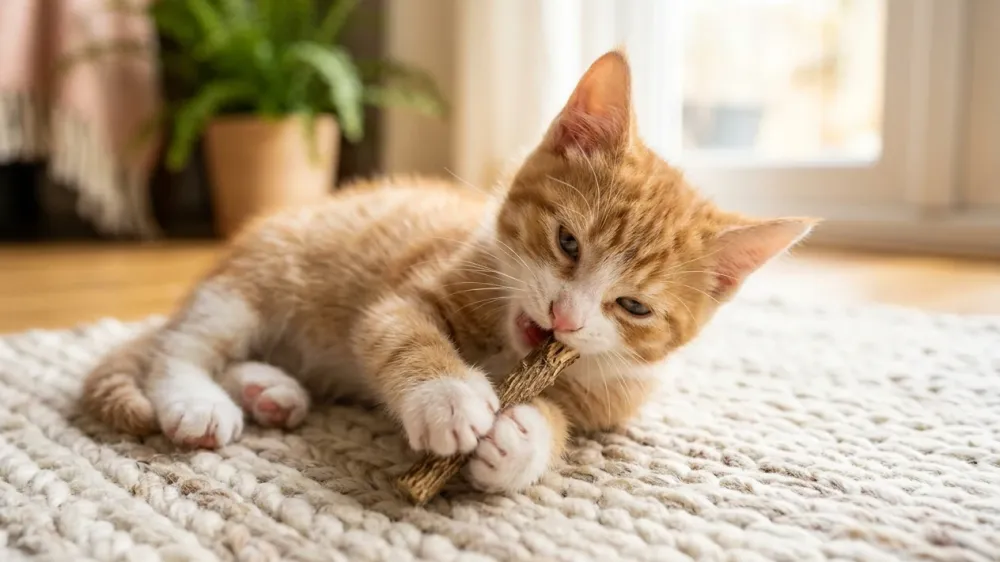
Provide textured toys made specifically for kitten mouths. Pliable mesh, natural rubber, and soft catnip-filled fabric toys allow kittens to sink their teeth into forgiving materials without cracking delicate enamel.
Adjust Food Consistency#
If your kitten shows reluctance to bite hard kibble, soften dry meals with warm water or offer quality canned food for a few weeks. Never offer cow’s milk to soften food, as explained in our guide on safe alternatives to cow milk for kittens, because lactose frequently triggers digestive distress.
Chill Their Toys#
Cold temperatures reduce inflammation in irritated gums. Place a damp washcloth or a cat-safe rubber toy in the freezer for 20 minutes before offering it for supervised play.
Potential Teething Complications#
While kitten teething usually proceeds without incident, monitor the mouth weekly for specific issues.
Retained Deciduous Teeth#
A retained baby tooth happens when the permanent adult tooth erupts alongside the milk tooth without pushing it out. This is most common with the upper fangs, resulting in a “double fang” appearance. Retained teeth trap food debris, accelerate tartar buildup, and can displace adult teeth. If a baby tooth has not shed by 6 to 7 months, a veterinarian should examine the mouth during routine checkups or at the time of spay/neuter surgery.
Excessive Bleeding or Inflammation#
A tiny streak of blood on a chew toy is normal. However, profuse bleeding, bright red swelling that covers the tooth crowns, or severe lethargy warrants professional medical evaluation. Aligning these checks with your routine kitten vaccination schedule ensures oral health issues are caught early.
⚠️ Safety Warning: Avoid giving teething kittens hard plastic toys, cooked bones, or dense dog chews. Kitten jaws are delicate, and overly rigid materials can fracture emerging adult teeth.
💡 Related Guide: Ease inflamed gums and sore mouths with our expert tips on how to soothe a teething kitten with home remedies.
💡 Related Guide: Excessive saliva can occur during tooth eruption or oral irritation; check our guide on why is my kitten drooling causes and when to see a vet.
Frequently Asked Questions#
Do kittens swallow their baby teeth?#
Yes, kittens swallow most of their shed baby teeth while eating, grooming, or playing. This is harmless and does not damage their digestive tract. Finding a baby tooth on the floor or in bedding is rare.
How many teeth do kittens and adult cats have?#
Kittens have 26 deciduous (baby) teeth: 12 incisors, 4 fangs, and 10 premolars. Adult cats have 30 permanent teeth: 12 incisors, 4 fangs, 10 premolars, and 4 molars.
Why does my teething kitten have bad breath?#
A mild change in breath odor is normal during teething. When baby tooth roots dissolve and teeth loosen, minor tissue breakdown and trace amounts of blood create a temporary smell. If the bad odor persists with yellow discharge or refusal to eat, consult a veterinarian.
Summary: Kitten Teething Care Action Plan#
- Monitor the Timeline: Expect shedding to start around 12 weeks and conclude by month 7.
- Redirect Chewing: Protect household items and supply dedicated, textured kitten chew toys.
- Offer Soft Nutrition: Moisten dry kibble or switch to wet kitten food if gum tenderness slows down eating.
- Inspect the Mouth Weekly: Check for retained double teeth, severe redness, or misaligned adult fangs.
- Start Toothbrushing Early: Gently massage your kitten’s gums with a soft silicone finger brush once adult teeth settle to build lifelong dental hygiene habits.