Between 10 weeks and 7 months of age, every growing kitten passes through an active teething phase. As 26 sharp baby teeth loosen and 30 permanent adult teeth pierce through the gumline, kittens experience mild gum tenderness, inflammation, and a strong instinctive drive to gnaw on anything within reach.
While teething is a normal milestone, intense chewing can lead to frayed electrical wires, damaged furniture, and painful nips during playtime. Fortunately, simple home remedies and safe chew items can comfort your kitten’s sore mouth while protecting your household belongings.
For an in-depth developmental schedule, review our detailed guide on when do kittens lose their baby teeth.
📋 In This Guide
1. Common Signs Your Kitten Needs Teething Relief#
Kittens cannot tell us when their mouth hurts, but their daily habits provide clear clues:
- Relentless Chewing: Gnawing on table legs, cardboard boxes, shoe laces, and blanket corners.
- Mild Drooling: Saliva production often increases when new molars push through sensitive gum tissue.
- Paw Touching the Mouth: Gently rubbing or pawing at the jaw to relieve localized pressure.
- Temporary Eating Hesitation: Reluctance to crunch hard kibble due to sore gums.
- Red, Swollen Gums: Mild pinkness or slight swelling where adult fangs and molars are erupting.
2. Safe Home Remedies to Soothe Sore Gums#
Cold temperatures provide gentle numbing relief to inflamed oral tissue. Here are simple, practical remedies you can prepare at home:
1. Chilled Wet Food Bites#
Warm or room-temperature dry kibble can rub against tender gums. Offer wet kitten food chilled slightly in the refrigerator, or freeze spoonfuls of pate into small bite-sized mounds on parchment paper. The cool texture numbs sensitive gums while providing needed hydration. For guidance on optimal wet formulas, consult our breakdown on wet vs dry food for kittens.
2. Frozen Wet Washcloth#
Take a clean, small washcloth made of untreated cotton. Dampen it with clean water (or low-sodium kitten-safe bone broth), twist it into a firm rope, and freeze it for 30 minutes. Let your kitten gnaw on the chilled cloth under close supervision. The cold fabric soothes gum irritation without posing a choking risk.
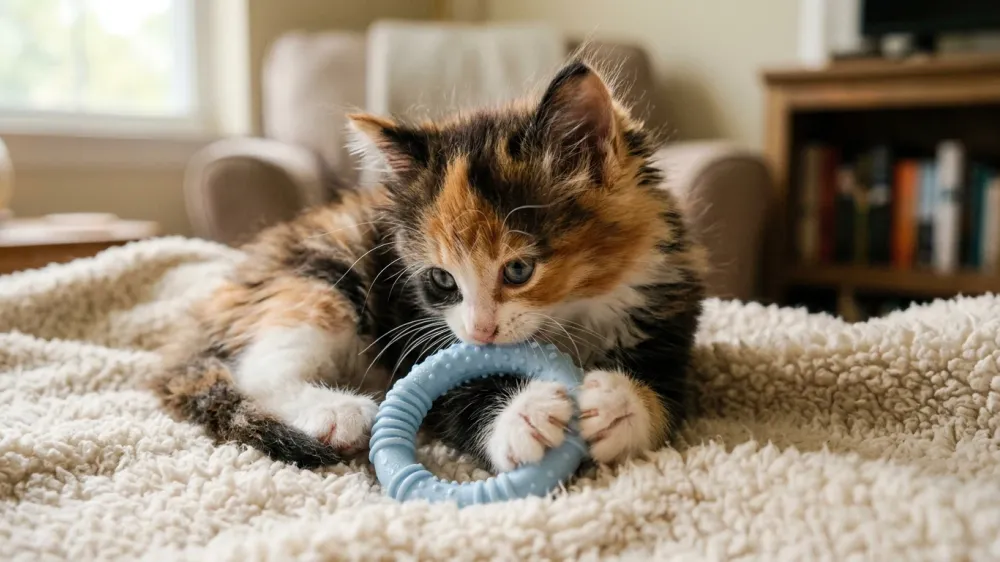
3. Textured Silicone Chew Rings#
Soft silicone cat teething toys with nubs or ridges massage inflamed gums effectively. Place the toy in the refrigerator for 20 minutes before offering it to your kitten for enhanced comfort.
3. What to Avoid: Common Teething Hazards#
Not all chew items are safe for curious kittens with sharp, fragile teeth:
- Ice Cubes: Solid ice is too hard for developing milk teeth and can cause painful enamel fractures.
- Cooked Bones: Cooked animal bones splinter easily and present severe puncture hazards.
- Human Teething Gels: Many over-the-counter human teething gels contain benzocaine or lidocaine, which are toxic to felines and can induce methemoglobinemia (a serious blood disorder).
- String, Ribbons, and Rubber Bands: Kittens readily swallow linear foreign objects, which can cause life-threatening intestinal blockages requiring surgical removal.
For safe toy alternatives designed specifically for this developmental stage, check our curated recommendations on the best types of toys for teething kittens.
4. How to Redirect Biting Away from Hands#
When gums throb, kittens frequently test their bite on human fingers, toes, and wrists. Never allow your kitten to treat your hands as chew toys:
- Freeze and Disengage: If your kitten latches onto your hand, stop all movement immediately. Pulling away triggers predatory chase instincts.
- Offer an Immediate Substitute: Keep a soft chew plush or kicking toy within arm’s reach. Swap your hand for the toy the moment biting begins.
- Praise Chew Redirection: Reward your kitten with praise or a dental treat when they chew appropriate items.
- Learn Gentle Play Habits: Discover proven training techniques in our step-by-step tutorial on how to stop kitten biting and scratching.
5. When to Seek Professional Guidance#
While teething discomfort is normal, certain symptoms warrant an evaluation by a veterinary specialist:
- Retained Baby Teeth: If an adult fang erupts alongside a baby fang without the baby tooth falling out, a “double tooth” occurs. Retained baby teeth can trap food and misalign adult bite structure.
- Complete Loss of Appetite: If your kitten refuses food for more than 12 hours, underlying mouth pain or fever may be present.
- Severe Bleeding or Foul Breath: While tiny specks of blood on toys are common, continuous bleeding or strong bad breath indicates a possible gum infection.