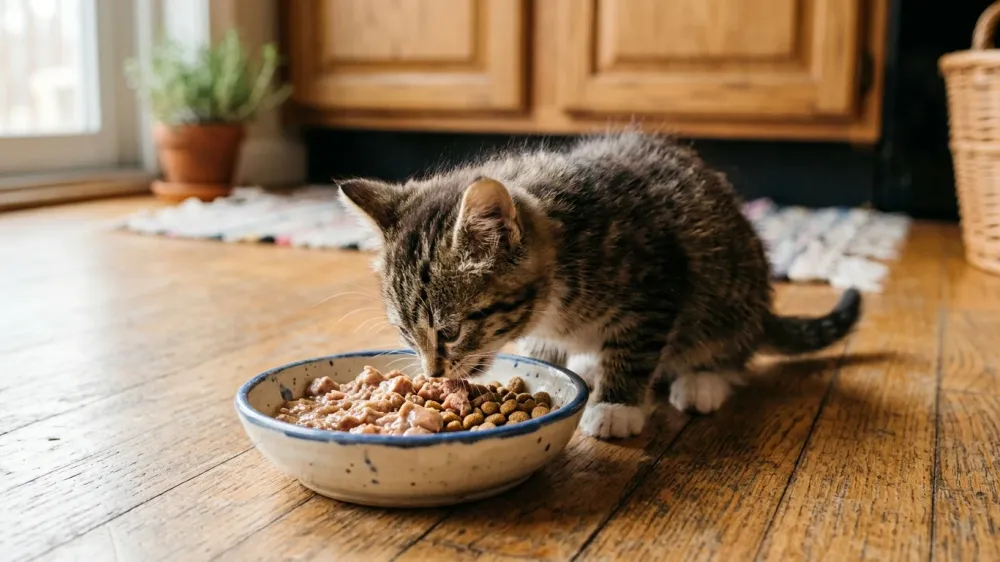
Choosing between wet and dry food is one of the most important decisions you will make during your kitten’s first year of life. This choice impacts their hydration, dental health, and overall growth rate during a period of rapid development. While both options provide essential nutrients, they serve different functional purposes in a daily feeding routine.
Kittens require significantly more protein and fat than adult cats to support their building bones and muscles. Most experts recommend a diet that balances convenience for the owner with the biological needs of a growing feline. Understanding the specific advantages of each food type allows you to create a feeding plan that prevents future health issues.
📋 In This Guide
The Benefits of Wet Kitten Food#
Wet food is often considered the gold standard for hydration in felines. Cats have a naturally low thirst drive and often do not drink enough water from a bowl to stay fully hydrated. Wet food typically contains 75 percent to 80 percent moisture, which helps support kidney function and urinary tract health from a young age.
Texture and aroma are also significant factors for young kittens. The strong scent of canned food is highly appealing to picky eaters or kittens transitioning from their mother’s milk. Because kittens have small teeth and developing jaws, the soft texture of pate or morsels in gravy is much easier for them to chew and swallow than hard kibble.
💡 Pro Tip: Serve wet food at room temperature or slightly warmed to enhance its aroma. This mimics the temperature of prey and is often more appetizing for a hesitant eater.
The Advantages of Dry Kitten Food#
Dry food, or kibble, is highly valued for its convenience and calorie density. Because it has a low moisture content, it is packed with concentrated energy. This is beneficial for kittens who have tiny stomachs but require a high amount of calories to fuel their constant play and growth.
Kibble is also more cost-effective for many households and can be left out for longer periods without spoiling. While we do not recommend unlimited “free feeding” for all pets, having dry food available allows a kitten to graze throughout the day. This aligns with a cat’s natural preference for eating multiple small meals rather than one or two large ones.
For owners managing a multi-pet household, kibble is often the easier logistical choice. If you are also raising a young dog, you might find similarities in how you manage their meals when selecting diets for other pets.
Comparing Wet vs Dry Kitten Food#
Deciding between the two often comes down to specific lifestyle needs and the kitten’s individual health. The following table highlights the primary differences to help you decide which fits your routine.
| Feature | Wet Kitten Food | Dry Kitten Food |
|---|---|---|
| Moisture Content | 75-80% (High) | 10-12% (Low) |
| Calorie Density | Lower per ounce | Higher per ounce |
| Storage | Requires refrigeration after opening | Shelf-stable in a cool, dry place |
| Ease of Use | Messier, requires cleaning bowls | Easy to portion and serve |
| Dental Impact | Minimal mechanical scraping | Provides some mechanical cleaning |
Why a Hybrid Feeding Approach Works Best#
Many pet experts suggest a “mixed feeding” strategy. By offering wet food in the morning and evening and providing dry kibble for grazing during the day, you give your kitten the benefits of both. This approach ensures they receive ample hydration while still benefiting from the energy density of dry food.
Mixing diets also helps prevent food fixations. Kittens who are only exposed to one texture early in life may become extremely picky as adults. Introducing a variety of textures and flavors before they reach six months of age makes them more adaptable to dietary changes later in life.
If your kitten experiences any digestive upset during these transitions, it is important to monitor their stools. Certain dietary fibers can assist kittens, though you should consult a professional before adding supplements. Consistency is key when blending two different types of food to avoid stomach upset.
Essential Nutrients for Growing Kittens#
Regardless of whether you choose wet or dry, the food must be labeled specifically for kittens. Adult cat food does not contain the concentrated levels of calcium, phosphorus, and protein required for growth.
Key nutrients to look for include:
- DHA (Docosahexaenoic Acid): An omega-3 fatty acid vital for brain and vision development.
- Taurine: An essential amino acid that supports heart health and vision.
- High Protein: At least 30 percent or more on a dry matter basis.
- Animal-Based Fats: Kittens require arachidonic acid, which is only found in animal tissues.
If you notice your kitten is scratching excessively or has red skin after eating, they may be reacting to a specific ingredient. Understanding the signs of food allergies early can help you manage your kitten’s comfort.
Transitioning Your Kitten to a New Food#
Sudden changes in diet can lead to vomiting or diarrhea. When switching brands or moving from wet to dry food, use a seven-day transition period. Start by mixing 25 percent of the new food with 75 percent of the old food. Gradually increase the ratio over the week until the transition is complete.
For kittens with particularly sensitive systems, a slower transition might be necessary. Selecting a limited ingredient kitten diet can sometimes alleviate chronic digestive issues. Always ensure plenty of fresh water is available, especially if the diet is primarily dry kibble.
Frequently Asked Questions#
Should I add water to my kitten’s dry food?#
Adding a small amount of warm water or low-sodium broth to dry kibble can help soften the texture and increase hydration. This is especially helpful for kittens who are currently teething and may find hard pellets uncomfortable to chew. It also enhances the flavor of the food.
How many times a day should I feed my kitten?#
Kittens have very high metabolic rates and small stomachs. They generally need to eat three to four times a day until they are six months old. After six months, you can usually move to two or three feedings per day. Wet food should not be left out for more than 30 to 60 minutes to prevent bacterial growth.
Is dry food better for a kitten’s teeth?#
While some dry foods are designed to help scrape plaque, it is a myth that all dry food prevents dental disease. Most kittens swallow kibble whole or shatter it easily, providing little cleaning. The best way to maintain dental health is through regular brushing and professional cleanings, not relying solely on food texture.
Summary: Kitten Feeding Action Plan#
To give your kitten the best nutritional foundation, follow these steps:
- Prioritize Protein: Ensure the first ingredient is a high-quality animal protein like chicken, turkey, or fish.
- Offer Variety: Use a mix of wet and dry food to provide hydration and energy while preventing picky eating habits.
- Monitor Growth: Adjust portions based on your kitten’s body condition. You should be able to feel their ribs but not see them.
- Maintain Freshness: Keep dry food in an airtight container and discard any uneaten wet food promptly to ensure safety and palatability.
By carefully selecting high-quality products and balancing moisture with calories, you set the stage for a long and healthy life for your kitten.