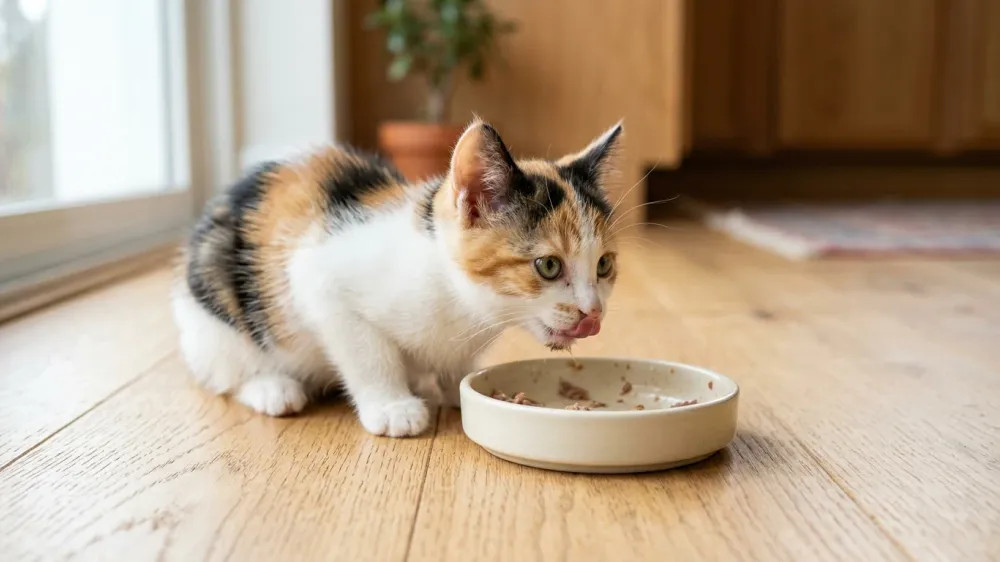
Identifying food allergies in young kittens requires close observation, as their developing digestive and immune systems are notoriously sensitive. Unlike adult cats that develop allergies after months or years of consuming the same protein, young kittens more commonly suffer from food intolerances or sudden reactions to newly introduced proteins and artificial additives. Recognizing the subtle indicators early keeps your kitten comfortable and protects them from nutritional deficits during their most critical growth window.
📋 In This Guide
Recognizing Primary Signs of Food Allergies in Kittens#
Adverse food reactions in kittens generally manifest through dermatological discomfort or gastrointestinal upset. In many cases, an affected kitten displays a combination of both symptom sets.
Dermatological Indicators#
Skin reactions are the hallmark sign of an immune-mediated dietary reaction. Watch for these specific behaviors and physical markers:
- Intense Scratching Around the Head and Neck: Kittens with food allergies frequently scratch their ears, cheeks, and neck until the skin becomes red, inflamed, or raw.
- Over-Grooming and Hair Thinning: Excessive licking, especially along the belly, groin, or forelegs, often leads to patchy hair loss or brittle, broken fur.
- Miliary Dermatitis: Running your fingers along your kitten’s back may reveal tiny, crusty scabs resembling millet seeds beneath the coat.
- Recurrent Ear Inflammation: Persistent ear scratching, head shaking, or recurring waxy buildup without an active ear mite infestation often points to an underlying dietary sensitivity.
Gastrointestinal Indicators#
While skin problems take time to surface, digestive distress often appears within hours after meals:
- Chronic Soft Stools or Diarrhea: Bowel movements that remain consistently unformed, mucous-covered, or unusually foul-smelling.
- Frequent Regurgitation or Vomiting: Expelling undigested food shortly after eating, or throwing up clear liquid and bile between scheduled meals.
- Severe Flatulence and Bloating: A distended, hard belly accompanied by noticeable gas, which indicates poor nutrient breakdown in the intestines.
- Fluid Loss and Lethargy: Chronic loose stools quickly deplete a small body of needed fluids. Monitor your kitten carefully for signs of dehydration in kittens if loose stools persist for more than 24 hours.
| Symptom Category | Food Allergy Signs | Food Intolerance Signs | Parasitic Infection Signs |
|---|---|---|---|
| Skin & Coat | Severe itching, scabs, facial hair loss | Rare or mild flaking | Dull coat, occasional flea dirt |
| Digestion | Vomiting, loose stool with blood or mucus | Gas, liquid diarrhea, loud gut sounds | Chronic diarrhea, potbelly, voracious appetite |
| Onset Speed | Days to weeks of repeated exposure | Hours after consuming the offending food | Gradual decline as parasite load grows |
| Systemic Impact | Secondary skin infections, lethargy | Temporary dehydration, mild cramping | Stunted growth, anemia, weakness |
⚠️ Safety Warning: Kittens have very little metabolic reserve. If your kitten develops watery diarrhea or vomits multiple times in a single day, seek professional veterinary guidance immediately. Rapid fluid loss can become life-threatening for young felines within a matter of hours.
Common Dietary Triggers for Growing Kittens#
A true food allergy occurs when a kitten’s immune system mistakenly identifies a harmless food protein as a foreign threat. Animal proteins are by far the most frequent culprits in feline food allergies:
- Beef and Dairy Products: Cow’s milk and dairy by-products are notorious for triggering digestive distress. Most kittens lose the enzyme lactase after weaning, making dairy a primary trigger for severe intestinal upset.
- Chicken and Turkey: While poultry forms the base of many commercial kitten recipes, chicken is one of the most common feline protein allergens.
- Fish and Seafood: Fish by-products, artificial tuna flavorings, and salmon meals can cause significant skin reactions in sensitive individuals.
- Artificial Preservatives and Gums: Thickeners such as carrageenan, artificial colors, and chemical preservatives can trigger hypersensitivity in young digestive tracts.
When exploring supplementary treats or meal additions, always verify which safe human foods for kittens can be offered without overwhelming their fragile gastrointestinal tract.
Managing Suspected Allergies: Elimination Diets and Food Transitions#
If you suspect an ingredient in your kitten’s bowl is causing adverse reactions, random brand switching will only complicate the problem. You need a systematic, patient approach to identify and eliminate the trigger.
Selecting the Right Dietary Strategy#
Managing a sensitive kitten requires balanced, growth-formulated food that eliminates standard dietary irritants. High-quality limited-ingredient wet diets or targeted sensitive-stomach foods allow the digestive lining to settle while still providing the concentrated calories and calcium-to-phosphorus ratios required for skeletal development.
Before considering alternative or novel feeding styles, understand the risks associated with non-standard rations. For example, knowing whether can kittens eat a raw food diet safely helps you avoid bacterial exposure that can mimic or worsen allergic flare-ups.
The Step-by-Step Transition Protocol#
Never switch a kitten’s diet abruptly, as sudden changes disrupt gut flora and trigger acute diarrhea. Follow these structured steps over 7 to 10 days:
- Days 1 to 2: Mix 75% of the kitten’s current diet with 25% of the new, sensitive-formula food.
- Days 3 to 4: Shift the ratio to an equal 50/50 balance between the two foods.
- Days 5 to 6: Offer 75% of the new formula mixed with 25% of the original food.
- Day 7 onward: Feed 100% of the new diet if stools remain firm and skin issues do not worsen.
For a detailed breakdown on managing delicate stomachs during dietary changes, review our guide on how to transition kitten to new food without upset stomach.
💡 Pro Tip: Pick a single, consistent diet and stick to it exclusively for at least six to eight weeks during an elimination trial. That means pausing all commercial treats, table scraps, and flavored chew toys. Even a single bite of an off-diet treat can reset the inflammatory clock.
Differentiating Allergies from Other Kitten Health Issues#
Young cats are vulnerable to a wide variety of health conditions that mimic allergic responses. Before concluding that food is the sole problem, rule out these common feline ailments:
- External Parasites: Flea allergy dermatitis is far more common than food allergies in young animals. A single flea bite can cause profound itching and scabbing along the tail base and neck.
- Internal Parasites: Giardia, coccidia, roundworms, and hookworms all cause loose, foul-smelling stools and poor nutrient absorption that mimic food intolerance.
- Respiratory Infections: Swollen eyes, sneezing, and facial discharge are rarely food-related; instead, check for signs of upper respiratory infection in kittens caused by viral or bacterial agents.
- Diet Texture Sensitivities: Sometimes the issue is not the ingredient itself, but moisture content. Evaluating wet vs dry food for kittens can help you decide whether a moisture-rich pate is easier on your kitten’s digestive system than dry kibble.
Frequently Asked Questions#
At what age can a kitten develop a food allergy?#
Most true food allergies take time to develop because the immune system must be exposed to an offending protein repeatedly before mounting an allergic defense. While food intolerances can appear as soon as a kitten weans onto solid food (around four to six weeks of age), true immune-mediated food allergies typically emerge between five months and two years of age.
Can kittens outgrow food allergies as they mature?#
Food intolerances related to an immature digestive tract often improve as a kitten’s gut microbiome and enzyme production mature. However, true genetic, immune-mediated food allergies are generally permanent lifelong conditions that require long-term avoidance of the specific protein trigger.
What is the fastest way to relieve an itchy kitten with food allergies?#
A single dietary change takes several weeks to resolve skin inflammation. To provide immediate relief, ask your veterinarian about short-term soothing therapies, such as cool water compresses, topical barrier-repair mousses, or temporary allergy-relief medications while the new diet has time to work.
Summary: Kitten Allergy Action Plan#
Restoring your kitten’s comfort requires methodical attention to detail rather than quick fixes. Use this clear checklist to take control of your kitten’s dietary health:
- Document Every Symptom: Note when itching, vomiting, or loose stools occur in relation to meal times.
- Rule Out Parasites First: Make sure your kitten is up to date on veterinary deworming and parasite prevention treatments.
- Select a Target Formula: Choose a simple, growth-appropriate kitten diet focused on digestible, limited ingredients.
- Conduct a Clean Food Trial: Transition over 7 to 10 days, then feed exclusively for 6 to 8 weeks with zero unapproved treats.
- Consult Your Veterinarian: Work with your veterinarian to assess progress, confirm symptom resolution, and verify your growing kitten hits every developmental milestone.