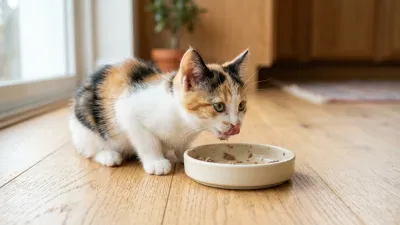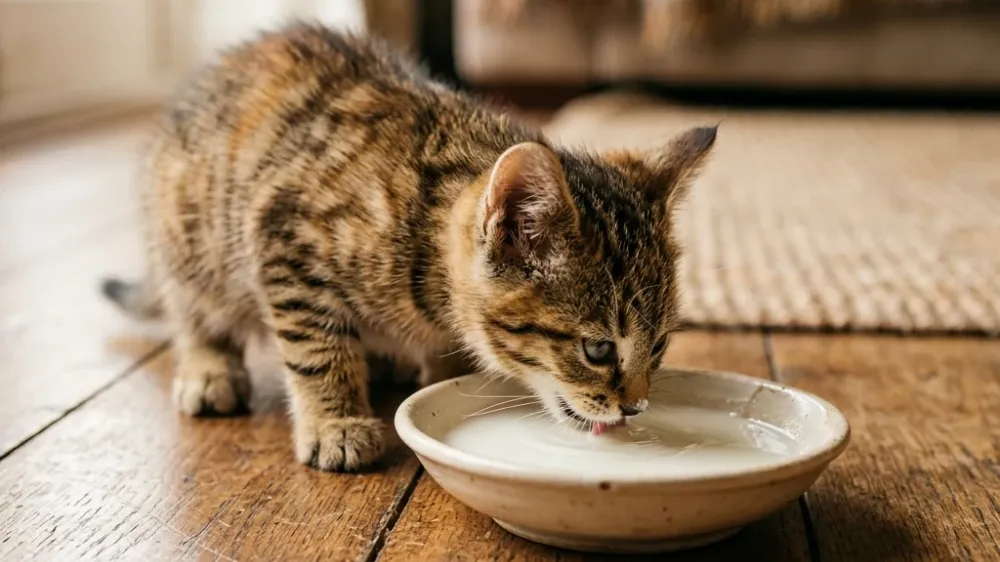
Kittens should not drink cow milk. While pop culture often depicts kittens happily lapping up saucers of fresh dairy, cow milk lacks the essential nutrients young cats need and causes severe digestive distress. Feeding cow milk to a kitten can trigger rapid diarrhea, painful cramping, and dangerous dehydration.
To raise a healthy, thriving pet, understanding feline dietary biology is essential. Here is what happens when kittens consume cow dairy, what to feed them instead, and how to safely meet their hydration and developmental needs.
📋 In This Guide
Why Cow Milk Is Unsafe for Kittens#
The primary issue with cow milk comes down to digestion and nutritional composition. A mother cat’s milk is uniquely formulated for feline growth, containing high concentrations of protein, fat, and specific amino acids, with relatively low amounts of lactose.
In contrast, cow milk contains significantly higher amounts of lactose and far less protein and fat. Kittens lack sufficient digestive enzymes to process large volumes of bovine lactose safely.
The Problem with Lactose Intolerance#
All young mammals produce an enzyme called lactase in their intestines to break down lactose, the sugar found in mother’s milk. However, the lactase enzyme in a kitten’s gut is calibrated strictly for queen (mother cat) milk. Cow milk overwhelms their small digestive tract with excess sugars.
When undigested lactose sits in the intestines, it draws water into the bowel through osmosis and ferments with gut bacteria. This process produces excess gas, bloating, and watery diarrhea. In young kittens, loose stools can lead to fatal dehydration in under 24 hours.
⚠️ Safety Warning: Diarrhea in kittens under eight weeks old is a serious emergency. If your kitten develops watery stools or lethargy after consuming dairy, provide clean fresh water, switch immediately to a species-appropriate formula, and consult a pet care specialist or emergency clinic promptly.
Nutritional Comparison: Cow Milk vs. Cat Milk vs. KMR#
To understand why cow milk fails to support a growing kitten, compare the nutritional breakdown of standard dairy against natural cat milk and commercial milk replacer:
| Nutrient Profile | Whole Cow Milk | Mother’s Cat Milk | Kitten Milk Replacer (KMR) |
|---|---|---|---|
| Protein Content | Low (~3.3%) | High (~8.1%) | High (~8.0% reconstituted) |
| Fat Content | Moderate (~3.5%) | Very High (~9.0%) | Very High (~8.5% reconstituted) |
| Lactose Content | High (~4.8%) | Low to Moderate (~3.0%) | Low (Digestible level) |
| Essential Taurine | Inadequate trace | Abundant | Fortified |
| Risk of Diarrhea | Very High | None (Natural) | Minimal |
| Suitability | Unsafe | Ideal | Safe Mother Substitute |
As shown in the table, cow milk provides neither the concentrated calories nor the vital amino acids (such as taurine and arginine) required for feline brain, muscle, and retinal development.
Safe Alternatives: What Kittens Should Drink#
If you are caring for an orphaned kitten or a litter transitioning from nursing, never offer cow milk, goat milk cartons from the grocery store, or plant-based milks. Instead, use a commercially formulated kitten milk replacer.
Commercial kitten milk replacer (KMR) provides the precise ratio of fats, amino acids, and vitamins that mimic natural queen milk. For feeding intervals, check our detailed Kitten Feeding Schedule by Age to ensure your kitten receives the exact daily volume needed for healthy weight gain.
What About Plant-Based Milks?#
Almond milk, oat milk, soy milk, and coconut milk should never be given to kittens. Cats are obligate carnivores, meaning their digestive systems cannot efficiently process plant sugars, nut proteins, and thickeners found in non-dairy milk substitutes. Many store-bought plant milks also contain added sweeteners, oils, or preservatives that are toxic to young pets.
What About Goat Milk?#
While raw or fresh goat milk contains slightly smaller fat globules and lower lactose than cow milk, it is still not a complete diet for kittens. Plain goat milk lacks sufficient levels of iron, taurine, and vital vitamins. It should only be used as a short-term emergency stopgap (for one or two feedings) while you source proper kitten formula.
Step-by-Step: What to Do If a Kitten Drank Cow Milk#
If a kitten accidentally consumes a small saucer of cow milk, do not panic, but act proactively to minimize digestive upset.
- Remove the Dairy Immediately: Take away the bowl and check around your home to ensure no other dairy products or trash are accessible.
- Offer Clean, Fresh Water: Provide an accessible, low-rim bowl of fresh water. You can also mix a small amount of warm water into high-quality canned kitten food to boost hydration.
- Monitor Stool and Energy Levels: Watch litter box habits closely over the next 12 to 24 hours. For litter box setup tips, consult our guide on choosing safe cat litter for kittens.
- Feed Age-Appropriate Solid Meals: If the kitten is over five weeks old, stick strictly to balanced commercial kitten diets. Review our wet vs dry kitten food guide to build a nutrient-dense menu.
- Look for Warning Signs: If you observe persistent vomiting, watery diarrhea, abdominal bloating, or extreme tiredness, seek hands-on medical attention immediately.
Weaning Kittens: Transitioning to Water and Solid Food#
Between four and eight weeks of age, kittens naturally undergo the weaning process. During this stage, their lactase production drops dramatically, making them permanently lactose intolerant as adults.
During weaning, transition the kitten from liquid formula to a slurry made by mixing warm kitten milk replacer with canned wet kitten food. Gradually reduce the liquid over two to three weeks until the kitten is eating complete solid meals and drinking fresh, clean tap or filtered water from a shallow dish.
Establishing healthy feeding and behavioral routines early sets your kitten up for long-term health. For a complete walkthrough of first-month milestones, read our first kitten care guide and learn how to manage evening energy bursts in our guide on stopping kitten night zoomies. Additionally, keep up with routine preventive visits as outlined in the kitten vaccination schedule.
Frequently Asked Questions#
Can kittens drink 2% or skim cow milk?#
No. Skim, 1%, and 2% cow milk contain just as much lactose as whole milk, but with even less essential fat and protein. Feeding skim dairy causes the same digestive upset, cramps, and diarrhea without providing beneficial calories.
Can kittens drink lactose-free cow milk?#
While lactose-free cow milk removes the primary trigger for diarrhea, it is still nutritionally deficient for kittens. It lacks the elevated protein, fat, and specialized amino acid profile (notably taurine) necessary for feline growth. Only feed specialized kitten formula or complete commercial kitten food.
What is a safe emergency substitute for kitten formula?#
If you find an orphaned kitten late at night and have no kitten milk replacer, do not use dairy milk. In an emergency, you can give boiled and cooled water with a pinch of pediatric electrolytes, or plain whole goat milk for a single feeding. Purchase commercial KMR the first moment pet stores open.
Summary: Safe Hydration and Nutrition Checklist for Kittens#
Raising a kitten requires sticking to species-appropriate nutrition and avoiding common dairy myths. Keep this quick checklist in mind:
- Never feed cow milk: Cow dairy causes diarrhea, dehydration, and nutritional deficits in young cats.
- Use commercial KMR for nursing kittens: Choose a formula specifically balanced to match mother’s cat milk.
- Provide fresh water after weaning: Once kittens transition to solid food at 4 to 8 weeks, plain water is the only beverage they need.
- Avoid plant-based substitutes: Keep soy, almond, oat, and coconut milks away from feline bowls.
- Monitor hydration: Always act quickly if your kitten experiences digestive upset or watery stools.