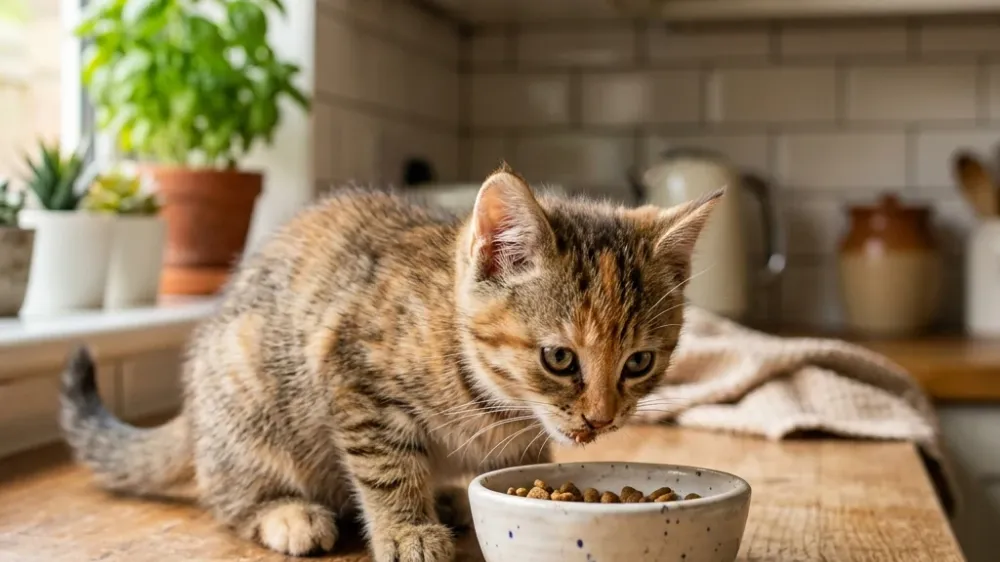
Kittens experience rapid physiological growth during their first year of life, requiring a precise feeding schedule tailored to their changing developmental stages. Providing the correct balance of calories, protein, and feeding frequency ensures proper muscle development, bone growth, and stable daily energy levels. Establishing structured routines early prevents digestive upset and supports healthy weight gain.
📋 In This Guide
Kitten Feeding Schedule by Age (0 to 12 Months)#
0 to 4 Weeks: Newborn Phase#
During the first four weeks, kittens rely entirely on mother’s milk or a specialized kitten milk replacer (KMR). Newborns cannot digest solid food and must feed every two to three hours around the clock. By week three, feeding intervals can stretch to every four hours as stomach capacity increases.
4 to 8 Weeks: The Weaning Transition#
Weaning begins around four weeks of age. Gradually introduce a soft slurry composed of warm milk replacer mixed with high-quality canned kitten food. Offer this mixture four to five times daily. By week eight, the kitten should transition fully to solid wet or softened dry food, eating four distinct meals per day.
Establishing structured meal times at this age builds lifelong healthy eating habits. If you manage a multi-pet home with young animals, maintaining a structured puppy feeding schedule by age alongside your kitten routines keeps total household management organized.
8 to 12 Weeks: High Caloric Demand#
At eight weeks old, kittens are fully weaned and grow rapidly. They require four balanced meals per day to maintain metabolic function and support high activity levels. Similar to determining how often should an 8 week old puppy eat, young kittens benefit from divided daily meals rather than single large feedings to avoid digestive distress.
3 to 6 Months: Juvenile Growth Phase#
As kittens reach three months of age, their digestive systems handle larger meal volumes efficiently. Reduce feeding frequency to three meals per day while increasing portion sizes according to package guidelines and weight gain targets. If your kitten develops gastrointestinal sensitivity during diet changes, review feeding guidelines similar to selecting the best puppy food for sensitive stomachs to ensure easily digestible ingredients.
6 to 12 Months: Transitioning to Adulthood#
At six months, a kitten’s growth rate begins to slow down. Transition the feeding routine to two balanced meals per day. Maintain growth-formula kitten food until twelve months of age, as young animals still require higher energy density and amino acid levels than adult pets.
| Age Range | Daily Meals | Primary Food Type | Feeding Interval |
|---|---|---|---|
| 0-3 Weeks | 6-8 meals | Kitten Milk Replacer (KMR) | Every 2-4 hours |
| 4-8 Weeks | 4-5 meals | Milk replacer & wet food slurry | Every 4-5 hours |
| 8-12 Weeks | 4 meals | Canned wet food / moistened dry kibble | Every 4-5 hours |
| 3-6 Months | 3 meals | High-protein kitten canned / dry kibble | Every 6-8 hours |
| 6-12 Months | 2 meals | High-protein kitten kibble / wet food | Every 10-12 hours |
💡 Pro Tip: Always serve wet food at room temperature. Cold food straight from the refrigerator can cause stomach upset in young kittens and make the meal less appealing to their sense of smell.
Wet Food vs. Dry Kibble for Growing Kittens#
Canned wet food offers critical hydration and high protein density, supporting urinary tract health and proper muscle growth. Dry kibble helps promote dental health and provides a convenient option for structured feeding. A combination diet featuring both wet and dry food delivers balanced nutrition while acclimating your kitten to different textures.
When feeding both dry and wet diets, monitor total caloric intake carefully. Free-feeding dry kibble all day can lead to rapid weight gain or irregular appetite patterns. Scheduled meal times allow pet owners to monitor exact food intake, making it easier to notice early signs of appetite loss.
Managing Multi-Pet Feeding Schedules#
Running a household with multiple young pets requires clear boundaries during mealtime. Never allow kittens to consume food formulated for puppies, as species-specific nutritional balances differ significantly. For homes raising both puppies and kittens simultaneously, review when to switch puppy to adult dog food and follow strict raw or cooked diet precautions like those in our best raw diet guide for puppies to prevent cross-contamination or nutritional deficiencies.
Maintaining routine wellness checkups and health protocols across all house pets is equally critical. For instance, coordinated parasite control measures, such as following a puppy deworming schedule by age for young dogs in the home, protect both kittens and puppies from shared health risks. Keeping pets in separate feeding areas during scheduled times ensures every animal receives their full portion undisturbed.
Step-by-Step Food Transition Guidelines#
When moving your kitten from weaning slurry to dry kibble, or from kitten food to adult maintenance food at one year, execute changes gradually over 7 to 10 days to prevent loose stool:
- Days 1 to 3: Serve 75% current food mixed with 25% new food.
- Days 4 to 6: Serve 50% current food mixed with 50% new food.
- Days 7 to 9: Serve 25% current food mixed with 75% new food.
- Day 10: Serve 100% new food formula.
Essential Tools for Automated Kitten Feeding#
Consistency is key when raising a young pet on a rigorous feeding schedule. Using automated tools ensures your kitten never misses a scheduled meal, even during busy work hours or early mornings.
Automated feeders allow owners to set exact portion controls and timed intervals, maintaining a consistent feeding schedule through every stage of development.
Key Takeaways: Kitten Feeding Reference Checklist#
- Weaning Target: Ensure your kitten is fully weaned onto solid food by 8 weeks of age.
- Meal Frequency: Feed 4 meals daily from 8 to 12 weeks, 3 meals daily from 3 to 6 months, and 2 meals daily from 6 to 12 months.
- Hydration Control: Always provide clean, fresh water alongside both wet and dry food dishes.
- Portion Accuracy: Measure food weight or cup volume accurately rather than guessing portions.
- Weight Monitoring: Weigh your kitten weekly to track steady weight gain and adjust meal portions accordingly.
💡 Related Guide: When introducing healthy rewards during feeding routines, compare freeze-dried vs wet meat treats for kittens for clean single-ingredient protein options.
💡 Related Guide: To ensure your kitten is satisfied without overfeeding, check our practical cues on how to tell if a kitten is still hungry after feeding.
💡 Related Guide: Gulping air while nursing or eating quickly can trigger mild spasms; read kitten hiccups causes and when to worry for symptom timelines.
💡 Related Guide: For orphaned kittens or supplemental bottle feeding, follow our comprehensive kitten milk replacer feeding guide for proper mixing ratios.
Frequently Asked Questions#
How often should an 8-week-old kitten eat?#
An 8-week-old kitten should eat four meals per day distributed evenly across waking hours. Their small stomach capacity requires frequent, energy-dense feedings to maintain normal blood sugar levels and fuel rapid growth.
Can you leave dry food out all day for a kitten?#
Free-feeding dry food is generally not recommended for growing kittens. Free-feeding makes it difficult to track exact food intake and can lead to overeating or missed warning signs of reduced appetite. Scheduled meal times foster better routine and behavior management.
When should you transition a kitten to adult food?#
Most kittens should transition to adult food at 12 months of age. Larger breeds may require kitten growth formula up to 18 months under specific nutritional guidelines. Always transition food gradually over 7 to 10 days to prevent digestive upset.
Summary: Actionable Kitten Feeding Plan#
Establishing an age-appropriate kitten feeding schedule lays the foundation for healthy development and lifelong nutrition habits. Start with frequent, nutrient-dense meals during early weeks, gradually consolidating into two structured daily feedings by 12 months. Pair regular portion monitoring with clean hydration and consistent routines to support your pet’s growth every step of the way.