Kittens possess an innate instinct to dig and bury their waste, but transitioning that instinct into reliable household habits requires the right setup and consistent guidance. Whether you just brought home an orphaned four-week-old or an energetic eight-week-old, teaching your pet where to eliminate prevents frustrating accidents and sets up lifelong hygiene habits.
In animal training sessions, we find that most kittens master the litter box within just a few days when owners provide an accessible box, clean substrate, and a predictable schedule. Follow this step-by-step training method to achieve smooth, stress-free results.
📋 In This Guide
Step 1: Select the Right Box and Kitten-Friendly Location#
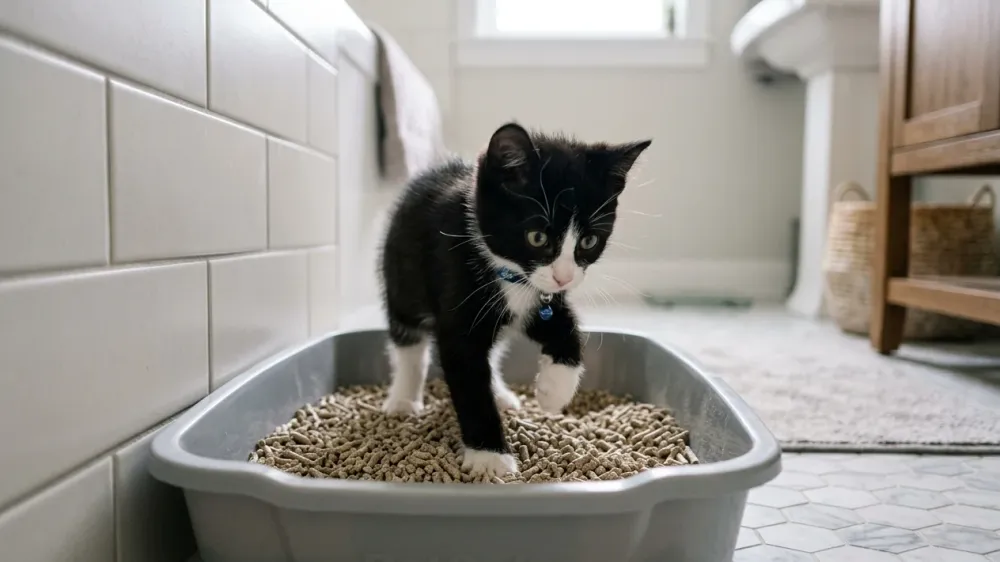
Adult cat boxes with high walls or top entries present physical obstacles for small kittens. Choose an open pan with low sides (no higher than two to three inches) so tiny legs can step inside without jumping.
Position the box in an accessible, low-traffic area away from loud appliances like washing machines or furnaces. Kittens feel vulnerable when eliminating, so placing the box in a quiet corner of a designated starter room gives them the security they need. If you are preparing your home for a new arrival, review our First Kitten Care Guide: Essential Tips for Bringing Home a Kitten for full room setup advice.
💡 Pro Tip: Keep food and water bowls at least five feet away from the litter pan. In feline behavior, separating feeding and elimination zones is essential for encouraging natural hygiene habits.
Step 2: Choose the Correct Litter Substrate#
Very young kittens explore their environment through taste and may attempt to ingest litter grains during early training sessions. For kittens under eight weeks old, use an unscented, non-clumping paper pellet or fine natural substrate to avoid intestinal blockages if swallowed.
For kittens older than eight weeks, specialized attractant litters provide ideal texture and scent cues that draw kittens directly to the box.
Choosing the right texture prevents surface aversion early on. For a detailed breakdown of safe materials, read our guide on the Best Cat Litter for Kittens: Safety & Training Guide.
Step 3: Introduce the Litter Box on a Set Schedule#
Kittens naturally need to eliminate after specific daily triggers. Rather than waiting for accidents to happen, proactively place your kitten into the box during these key transition moments:
- Immediately upon waking up from naps.
- Within 15 to 20 minutes after finishing a meal.
- Directly after high-energy play sessions.
Aligning your training cues with your kitten’s digestion is the fastest route to success. Following a consistent Kitten Feeding Schedule by Age: Daily Care Guide makes predicting bathroom breaks simple and reliable.
Step 4: Demonstrate the Digging Motion#
Once you gently place your kitten inside the box, let them sniff and explore the surface. If they do not immediately begin digging, take their front paw and make a gentle, slow scratching motion in the clean litter.
This physical motion stimulates their natural instinct to scrape and bury. Once the kitten eliminates, allow them to sniff and attempt to bury their waste independently before picking them up.
⚠️ Safety Warning: Never force your kitten into the box roughly or hold them down against their will. Negative experiences in the box can create fear responses that lead to long-term house soiling issues.
Step 5: Reward and Reinforce Success#
Immediate positive reinforcement solidifies the behavior. As soon as your kitten finishes eliminating and exits the pan, offer calm verbal praise, gentle chin scratches, or a tiny treat.
Never punish a kitten for missing the box. Animals do not connect delayed scolding with an earlier accident. Instead, punishment creates generalized anxiety, which often worsens inappropriate elimination.
| Age of Kitten | Box Side Height | Recommended Litter Type | Typical Daily Frequency |
|---|---|---|---|
| 3 - 4 Weeks | 1 - 2 inches | Shredded paper or wood pellets | 4 - 6 times daily (often needs manual stimulation) |
| 5 - 8 Weeks | 2 - 3 inches | Non-clumping paper or natural grain | 4 - 5 times daily |
| 9+ Weeks | 3 - 4 inches | Kitten attractant clay or fine clumping | 3 - 4 times daily |
Troubleshooting Common Litter Training Setbacks#
Even with consistent training, setbacks can happen. Address common issues by adjusting environmental factors quickly.
The Kitten Poops Right Outside the Pan#
This behavior usually indicates one of three things: the pan sides are too tall, the box is too dirty, or the litter depth is incorrect. Kittens prefer a shallow layer of litter (about one to two inches deep). If the litter is too deep, their paws sink, making them feel unstable.
Accidents on Rugs or Potted Plants#
Soft rugs and loose potting soil feel very similar to litter to an untrained kitten. Remove accessible throw rugs during the first two weeks of training, and cover houseplant soil with decorative river stones or aluminum foil to deter digging.
Clean any accidental spots thoroughly with an enzymatic cleaner to destroy scent markers. Standard household cleaners often leave behind urine proteins that draw the kitten back to the same spot.
Changes in Stool or Straining#
If your kitten strains, cries while eliminating, or produces loose stools, monitor their overall condition closely. Parasitic infections frequently disrupt bathroom habits. Check our diagnostic overview on How to Tell if a Kitten Has Worms: Expert Identification to rule out internal issues.
Excess energy can also lead to distracted bathroom breaks. If your pet gets hyperactive around dusk or during the night, learn how to manage routines in our guide on How to Stop Kitten Night Zoomies: Expert Training Guide. For unwanted play biting during handling breaks, refer to our walkthrough on how to Stop Kitten Biting and Scratching: 5 Fast Steps.
💡 Related Guide: Low entry sides prevent accidents for small legs; discover what size litter box does a kitten need based on your kitten’s age and size.
Frequently Asked Questions#
How long does it take to litter train a kitten?#
Most kittens learn within one to three days if confined to a small starter room with a properly placed box. Full reliability throughout an entire home generally takes two to three weeks of consistent supervision.
Why is my kitten suddenly playing or sleeping in the litter box?#
Young kittens often view the fine texture of litter as an inviting play area or a secure nest. If your kitten naps in the box, gently lift them out and place them into a cozy cat bed. Ensure the box stays clean so play does not result in accidental contamination.
How many litter boxes do I need for one kitten?#
The standard animal behavior rule is one box per cat, plus one extra. For a small kitten in a multi-story home, place at least one shallow box on every floor to ensure they can reach a pan in time.
Summary: Daily Action Plan for Fast Training#
To ensure your kitten builds reliable litter habits quickly, follow this simple daily action plan:
- Confine Early: Keep your kitten in a safe, single room containing their bed, food, water, and low-sided pan for the first 3 to 7 days.
- Time the Visits: Place the kitten in the box after every meal, nap, and energetic play session.
- Maintain Cleanliness: Scoop waste twice daily and replace litter weekly so the pan stays fresh and appealing.
- Reward Immediately: Offer calm praise or treats the moment they finish using the pan successfully.