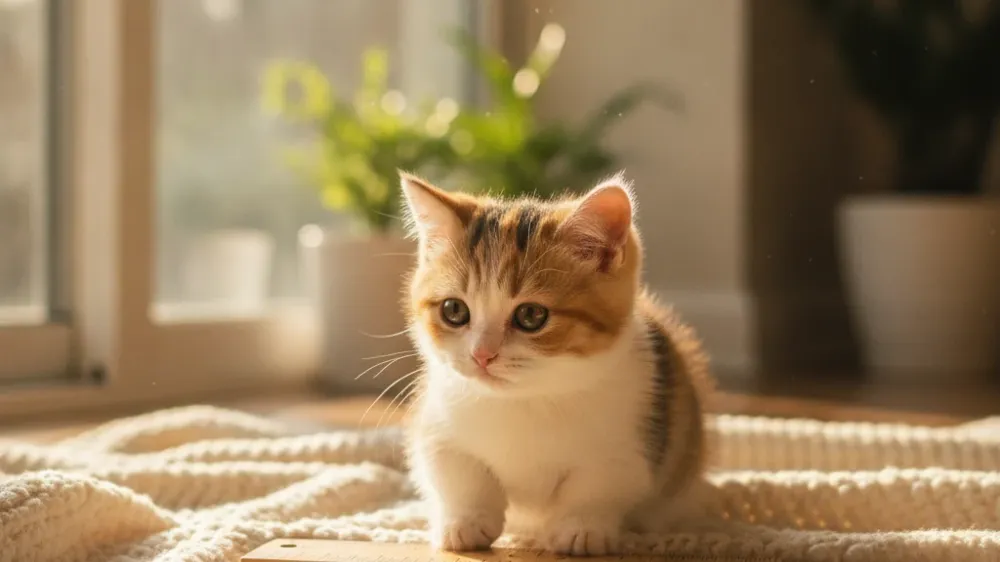
The Munchkin is celebrated for its the dachshund of cats, with short legs, normal-length spine, and speedy sports car agility. Whether you are welcoming a young kitten into your home or monitoring an adolescent growth spurt, tracking month-by-month physical milestones ensures your companion develops on a healthy, balanced trajectory.
💡 Development Note: For general week-by-week weight targets during early kitten development, compare your milestones with our normal kitten weight gain by week guide.
📋 In This Guide
Munchkin Weight Chart by Month#
Quick Answer: Healthy adult Munchkin cats typically reach full physical maturity between 12 and 18 months, with an overall adult weight range of 4.5 - 9.0 lbs (2.0 - 4.1 kg). Adult males average 6.0 - 9.0 lbs (2.7 - 4.1 kg), while adult females are slightly lighter at 4.5 - 7.5 lbs (2.0 - 3.4 kg).
Below is a month-by-month guideline for male and female Munchkin kittens from early weaning through adult maturity.
| Age | Male Weight Range | Female Weight Range | Physical & Developmental Milestones |
|---|---|---|---|
| 8 Weeks (2 Months) | 1.4 - 2.2 lbs (0.6 - 1.0 kg) | 1.1 - 1.8 lbs (0.5 - 0.8 kg) | Short sturdy legs distinct; agile low-center-of-gravity sprint |
| 12 Weeks (3 Months) | 2.2 - 3.4 lbs (1.0 - 1.5 kg) | 1.8 - 2.6 lbs (0.8 - 1.2 kg) | Perches upright on hind haunches like a prairie dog |
| 16 Weeks (4 Months) | 3.2 - 4.6 lbs (1.5 - 2.1 kg) | 2.5 - 3.6 lbs (1.1 - 1.6 kg) | Fast cornering speed; loves chasing rolling ball toys |
| 6 Months | 4.5 - 6.5 lbs (2.0 - 2.9 kg) | 3.5 - 5.0 lbs (1.6 - 2.3 kg) | Normal-sized spine and ribcage reach adolescent length |
| 9 Months | 5.5 - 7.8 lbs (2.5 - 3.5 kg) | 4.0 - 6.2 lbs (1.8 - 2.8 kg) | Healthy muscle mass sets; affectionate lap companion |
| 12 Months (1 Year) | 6.0 - 8.5 lbs (2.7 - 3.9 kg) | 4.5 - 7.0 lbs (2.0 - 3.2 kg) | Baseline adult weight set; playful outgoing nature |
| 18 Months (Full Adult) | 6.0 - 9.0 lbs (2.7 - 4.1 kg) | 4.5 - 7.5 lbs (2.0 - 3.4 kg) | Full mature weight and cheerful low-rider athleticism |
Spine & Weight Health#
Because Munchkins have short legs supporting a standard-length body, keeping them at a lean, healthy weight is vital to prevent unnecessary stress on their back and joints.
Healthy Body Condition Scoring for Growing Kittens#
Because individual genetics, frame size, and bloodlines cause natural variations in weight, hands-on body condition checks are the best way to evaluate healthy growth:
- The Rib Feel: You should easily feel your kitten’s ribs beneath a light layer of tissue without applying firm pressure.
- Waist Contour: Looking down from above, there should be a gentle, visible taper behind the ribcage before the hips begin.
- Abdominal Tuck: When viewed from the side, the lower stomach should slope cleanly upward toward the hindquarters.
Feeding & Nutrition Guidelines#
- High-Quality Protein First: Choose kitten recipes that list named real meats (such as chicken, turkey, or salmon) as the first ingredient to build sturdy muscle tone.
- Support Proper Hydration: Offer wet canned food daily alongside clean, fresh water fountains to promote lifelong urinary tract and kidney health.
- Portion Calibration: Avoid leaving massive bowls of dry food out at all times once your kitten approaches adolescence to prevent excess fat accumulation.