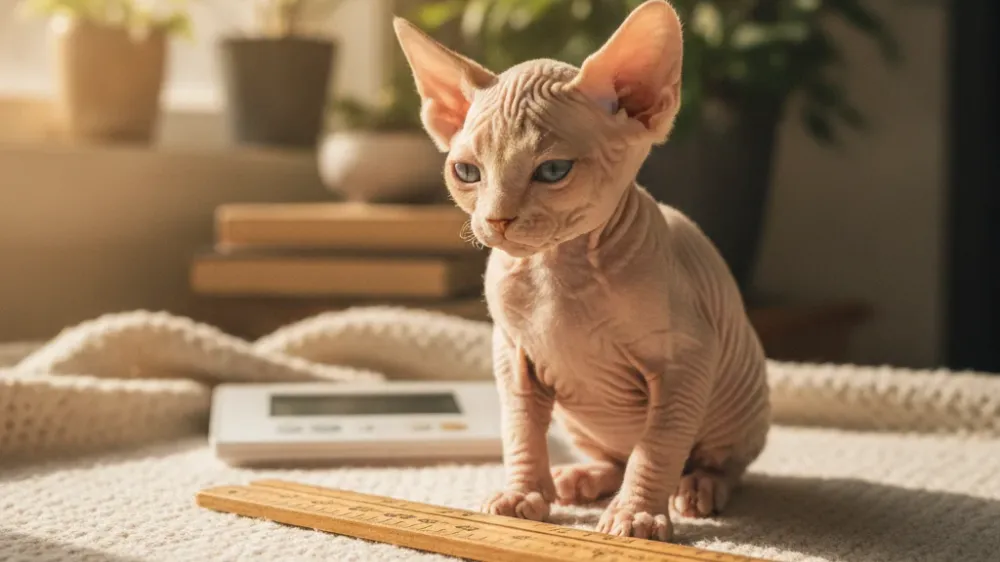
Sphynx cats are renowned for their hairless suede-like skin, oversized bat-like ears, and warm, extroverted personalities. Because they lack a protective fur coat to trap body heat, Sphynx cats possess a uniquely high metabolic rate, burning significantly more calories each day than coated breeds of similar size.
Understanding their monthly growth trajectory and distinct “pot-bellied” body frame helps ensure your Sphynx kitten receives the extra caloric fuel needed for both physical growth and core temperature regulation.
💡 Development Note: For general week-by-week weight targets during early kitten development, compare your milestones with our normal kitten weight gain by week guide.
📋 In This Guide
Sphynx Cat Weight Chart by Month#
Quick Answer: Healthy adult Sphynx Cats typically reach full physical maturity between 18 and 24 months, with an overall adult weight range of 6.5 - 12.0+ lbs (2.9 - 5.4+ kg). Adult males average 8.5 - 12.0+ lbs (3.9 - 5.4+ kg), while adult females are slightly lighter at 6.5 - 9.5 lbs (2.9 - 4.3 kg).
Below is a month-by-month guideline for male and female Sphynx kittens from weaning through adult maturity.
| Age | Male Weight Range | Female Weight Range | Physical & Metabolic Milestones |
|---|---|---|---|
| 8 Weeks (2 Months) | 1.6 - 2.5 lbs (0.7 - 1.1 kg) | 1.3 - 2.0 lbs (0.6 - 0.9 kg) | Soft peach-fuzz down; high body heat production |
| 12 Weeks (3 Months) | 2.8 - 4.0 lbs (1.3 - 1.8 kg) | 2.2 - 3.2 lbs (1.0 - 1.5 kg) | Rapid muscle tone development; athletic jumping surges |
| 16 Weeks (4 Months) | 4.0 - 5.5 lbs (1.8 - 2.5 kg) | 3.2 - 4.5 lbs (1.5 - 2.0 kg) | Natural ‘pot-belly’ contour forms; wrinkles deepen |
| 6 Months | 5.5 - 7.5 lbs (2.5 - 3.4 kg) | 4.5 - 6.0 lbs (2.0 - 2.7 kg) | Muscular barrel chest broadens; high calorie demand |
| 9 Months | 7.0 - 9.5 lbs (3.2 - 4.3 kg) | 5.5 - 7.5 lbs (2.5 - 3.4 kg) | Frame reaches near-adult length; strong core definition |
| 12 Months (1 Year) | 8.0 - 11.0 lbs (3.6 - 5.0 kg) | 6.0 - 8.5 lbs (2.7 - 3.9 kg) | Baseline adult skeletal size set; firm muscular tone |
| 18 - 24 Months (Full Adult) | 8.5 - 12.0+ lbs (3.9 - 5.4+ kg) | 6.5 - 9.5 lbs (2.9 - 4.3 kg) | Final mature muscle mass and solid body density |
High Metabolism and the Sphynx Diet#
Without fur for insulation, Sphynx cats lose body heat rapidly to the surrounding environment. To maintain their normal internal body temperature (around 102°F / 39°C), their metabolism operates at full throttle.
Feeding Rules for Growing Sphynx Kittens:#
- Calorie-Dense Nutrition: Sphynx kittens often require 20% to 25% more daily calories than a furred kitten of the exact same weight.
- High-Protein, High-Fat Formulas: Look for kitten foods featuring concentrated animal proteins and healthy fats to fuel their internal heat engine.
- Frequent Meals: Divide daily food into 3 to 4 smaller meals to prevent energy dips throughout the day and evening.
The Normal Sphynx “Pot-Belly”#
According to official breed standards, a healthy Sphynx has a rounded, well-filled abdomen often referred to as a “pot-belly” or “pear shape.”
- Why It Exists: This round tummy is a natural breed trait reflecting their hearty digestive capacity and efficient food processing.
- Healthy vs. Overweight: A healthy Sphynx has a rounded abdomen but maintains firm muscle tone along the back, shoulders, and thighs. You should easily feel their spine and ribs beneath their soft skin with gentle pressure.
Essential Warmth Setup for Growing Sphynx Kittens#
- Heated Cat Beds: Provide thermostatically controlled pet heating pads or self-warming thermal fleece caves in every room your kitten frequents.
- Fleece Sweaters: Soft, breathable kitten sweaters provide extra warmth during chilly weather. Rotate and wash sweaters frequently to absorb natural skin oils.
- Sun Protection: Keep your hairless kitten away from harsh, direct midday window sunlight to prevent sensitive skin sunburns.