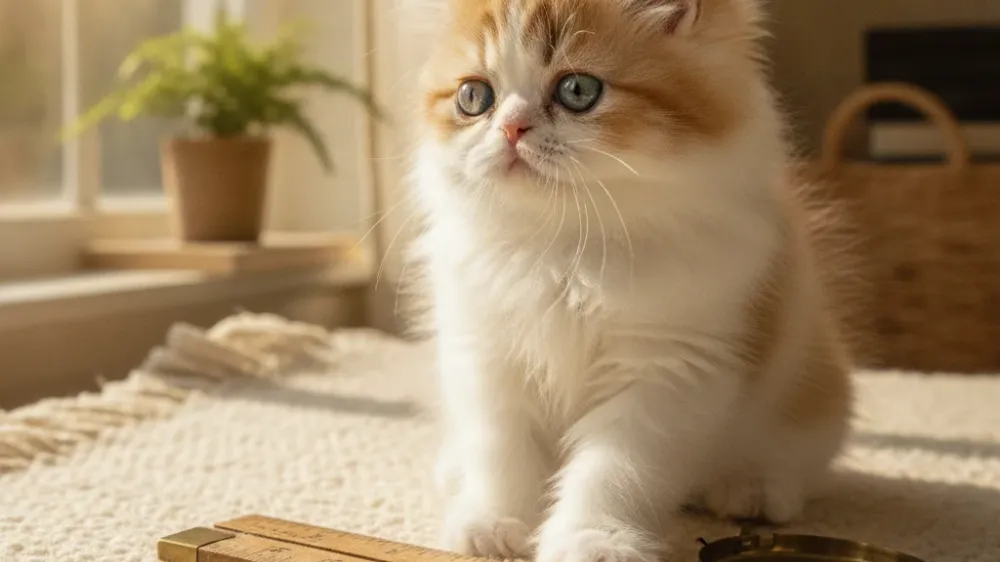
Persians are celebrated for their glamorous flowing coats, sweet pansy-like faces, and tranquil, dignified dispositions. With a compact, heavy-boned “cobby” build, Persians develop a sturdy, muscular frame beneath their voluminous double coats.
Because their thick fur easily conceals physical changes, keeping track of your Persian kitten’s monthly weight and milestones ensures they grow steadily into healthy, regal adult cats.
💡 Development Note: For general week-by-week weight targets during early kitten development, compare your milestones with our normal kitten weight gain by week guide.
📋 In This Guide
Persian Kitten Weight Chart by Month#
Quick Answer: Healthy adult Persian cats typically reach full physical maturity between 18 and 24 months (around 2 years), with an overall adult weight range of 7.0 - 14.0+ lbs (3.2 - 6.4+ kg). Adult males average 9.5 - 14.0+ lbs (4.3 - 6.4+ kg), while adult females are slightly lighter at 7.0 - 11.0 lbs (3.2 - 5.0 kg).
Below is a month-by-month weight guideline for male and female Persian kittens from weaning through full adult maturity.
| Age | Male Weight Range | Female Weight Range | Physical & Coat Milestones |
|---|---|---|---|
| 8 Weeks (2 Months) | 1.8 - 2.5 lbs (0.8 - 1.1 kg) | 1.5 - 2.2 lbs (0.7 - 1.0 kg) | Fluffy down coat; sweet pansy facial contours emerge |
| 12 Weeks (3 Months) | 2.8 - 3.8 lbs (1.3 - 1.7 kg) | 2.4 - 3.2 lbs (1.1 - 1.5 kg) | Guard hairs appear; daily gentle grooming habit begins |
| 16 Weeks (4 Months) | 3.8 - 5.2 lbs (1.7 - 2.4 kg) | 3.2 - 4.2 lbs (1.5 - 1.9 kg) | Broad chest widens; sturdy short legs support frame |
| 6 Months | 5.5 - 7.5 lbs (2.5 - 3.4 kg) | 4.5 - 6.0 lbs (2.0 - 2.7 kg) | Undercoat thickens; neck ruff and ear furnishings lengthen |
| 9 Months | 7.0 - 9.5 lbs (3.2 - 4.3 kg) | 5.8 - 7.8 lbs (2.6 - 3.5 kg) | Skeletal frame reaches near-adult length |
| 12 Months (1 Year) | 8.5 - 11.5 lbs (3.9 - 5.2 kg) | 6.5 - 9.0 lbs (2.9 - 4.1 kg) | Baseline adult weight established; coat length expands |
| 2 Years (Full Adult) | 9.5 - 14.0+ lbs (4.3 - 6.4+ kg) | 7.0 - 11.0 lbs (3.2 - 5.0 kg) | Full flowing coat volume and dense muscular maturity |
Persian Coat Development Milestones#
A Persian kitten’s coat undergoes significant transformation during their first 18 months:
- 2 to 4 Months (Kitten Fluff): The coat is soft, fine, and relatively short. This is the crucial window to introduce stainless steel combs and soft slicker brushes in positive, treat-filled daily sessions.
- 5 to 9 Months (The Transition Coat): As adult guard hairs grow in, the softer baby undercoat sheds. Without daily line combing, this transition stage is prone to sudden mats behind the ears and in the armpits.
- 12 to 24 Months (Full Show Coat): The complete double coat reaches its full flowing length, with a dense woolly undercoat and smooth, silky outer guard hairs.
Whisker & Facial Considerations for Feeding#
Persians have a brachycephalic (flat-faced) skull structure, which impacts how they eat and drink:
- Wide, Shallow Bowls: Standard deep food dishes press against their whiskers and make picking up kibble difficult. Use wide, shallow ceramic or stainless-steel plates.
- Elevated Dishes: Tilting and raising the food dish by a few inches reduces neck strain and encourages comfortable, upright swallowing.
- Moisture & Facial Hygiene: Wipe around your kitten’s face with a warm, damp cloth after wet meals to keep facial folds clean and free of food debris.