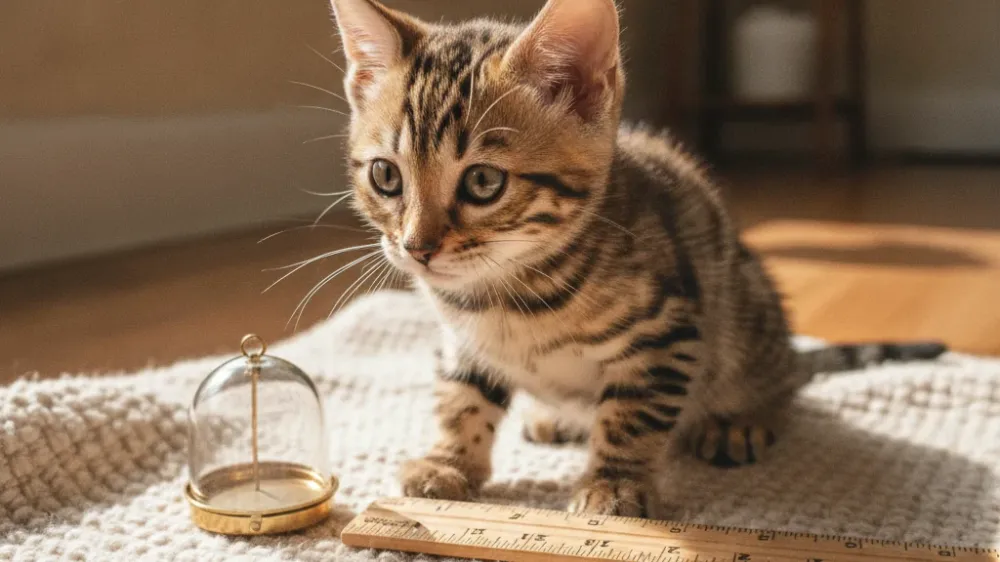
Bengal cats are celebrated for their wild leopard-like rosettes, muscular athleticism, and boundless curiosity. Unlike stocky lap cat breeds, Bengals possess a lean, muscular, and elongated build reminiscent of their Asian Leopard Cat ancestry.
Understanding the unique developmental stages of a Bengal kitten, including the famous “fuzzies” coat transition, helps you provide the right nutrition and exercise to support their high-energy lifestyle.
💡 Development Note: For general week-by-week weight targets during early kitten development, compare your milestones with our normal kitten weight gain by week guide.
📋 In This Guide
Bengal Cat Weight Chart by Month#
Quick Answer: Healthy adult Bengal Cats typically reach full physical maturity between 18 and 24 months, with an overall adult weight range of 8.0 - 15.0+ lbs (3.6 - 6.8+ kg). Adult males average 11.0 - 15.0+ lbs (5.0 - 6.8+ kg), while adult females are slightly lighter at 8.0 - 12.0 lbs (3.6 - 5.4 kg).
Below is a month-by-month guideline for male and female Bengal kittens from early weaning through adult maturity.
| Age | Male Weight Range | Female Weight Range | Physical & Developmental Milestones |
|---|---|---|---|
| 8 Weeks (2 Months) | 1.8 - 2.8 lbs (0.8 - 1.3 kg) | 1.5 - 2.4 lbs (0.7 - 1.1 kg) | Entering the ‘fuzzies’ camouflage stage; intense curiosity |
| 12 Weeks (3 Months) | 3.0 - 4.5 lbs (1.4 - 2.0 kg) | 2.5 - 3.8 lbs (1.1 - 1.7 kg) | High-speed agility develops; jumping ability surges |
| 16 Weeks (4 Months) | 4.5 - 6.2 lbs (2.0 - 2.8 kg) | 3.8 - 5.0 lbs (1.7 - 2.3 kg) | Rosettes sharpen as fuzzy guard hairs clear |
| 6 Months | 6.5 - 8.8 lbs (2.9 - 4.0 kg) | 5.2 - 7.0 lbs (2.4 - 3.2 kg) | Hind legs elongate; distinct muscular definition appears |
| 9 Months | 8.5 - 11.5 lbs (3.9 - 5.2 kg) | 6.8 - 9.0 lbs (3.1 - 4.1 kg) | Near full adult length; glitter effect shines across pelt |
| 12 Months (1 Year) | 10.0 - 13.5 lbs (4.5 - 6.1 kg) | 7.5 - 10.5 lbs (3.4 - 4.8 kg) | Baseline adult weight reached; core strength solidifies |
| 18 - 24 Months (Full Adult) | 11.0 - 15.0+ lbs (5.0 - 6.8+ kg) | 8.0 - 12.0 lbs (3.6 - 5.4 kg) | Peak muscle mass and deep, rich rosette contrast |
The “Fuzzies” Stage Explained#
Between 3 and 16 weeks of age, many first-time Bengal owners worry that their kitten’s striking spotted pattern is fading. This is a completely natural developmental phenomenon known as the fuzzies:
- Wild Evolutionary Purpose: In the wild, Asian Leopard Cat cubs grow long, greyish-white guard hairs to blend into dry grasses and hide from predators.
- The Transition: Around 4 to 6 months, these camouflage guard hairs shed out, revealing the sleek, silky pelt with high-contrast rosettes and gold glitter beneath.
- Full Pattern Maturity: The richest contrast and deepest pelt shine typically peak between 12 and 18 months of age.
Fueling a High-Metabolism Bengal Kitten#
Bengals have exceptionally high metabolic rates compared to calmer domestic breeds. They burn substantial calories each day through vertical climbing, sprinting, and leaping.
Nutrition Priorities:#
- High Animal Protein Content: Look for kitten diets with at least 38% to 45% crude protein sourced from real meat (poultry, beef, fish) rather than plant-based fillers.
- Multiple Daily Meals: Feed young Bengal kittens 3 to 4 smaller meals daily to maintain steady blood glucose levels throughout active play sessions.
- Interactive Feeding: Use puzzle feeders and foraging mats to satisfy their clever hunting instincts during mealtime.
Environment Tips for Growing Bengal Acrobats#
- Vertical Territory is Essential: Bengals love high vantage points. Install sturdy wall-mounted cat climbing shelves, ceiling-height trees, and window perches.
- Running Wheels & Cat Wheels: Many Bengal owners introduce a cat exercise wheel between 4 and 6 months to help channel their boundless sprinting energy indoors.
- Water Play: Bengals are famous for their love of water. Don’t be surprised if your kitten tries to join you in the shower or splashes in their water bowl.
[!NOTE] Legal Ownership Check: Because Bengals descend from Asian Leopard Cats, certain states and municipalities restrict early generation ownership. Review our comprehensive guide on banned cat breeds and exotic pet laws in the US before adopting or bringing home a kitten.