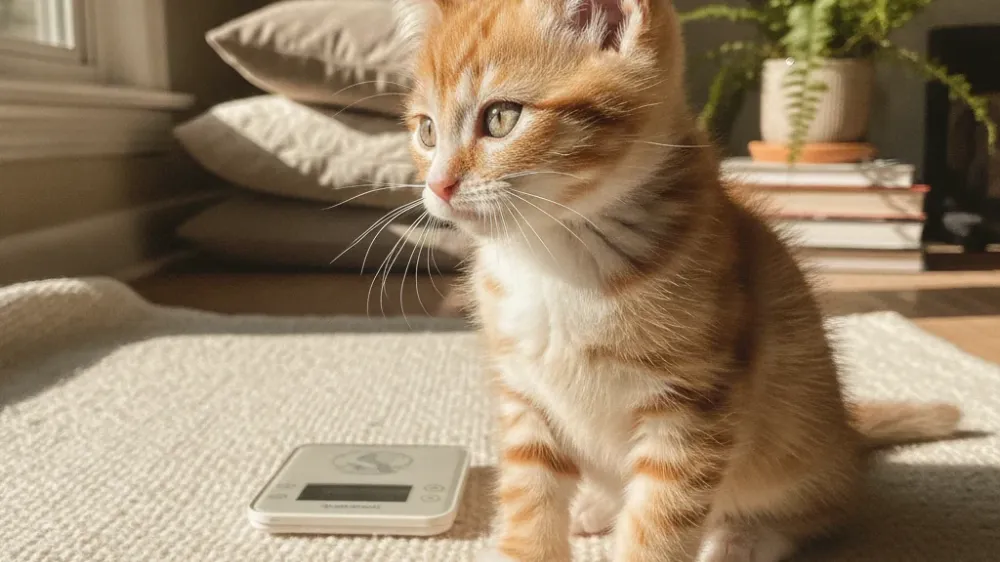
The Manx is celebrated for its historic tailless cat from the Isle of Man, with deep round rump and bowling-ball density. Whether you are welcoming a young kitten into your home or monitoring an adolescent growth spurt, tracking month-by-month physical milestones ensures your companion develops on a healthy, balanced trajectory.
💡 Development Note: For general week-by-week weight targets during early kitten development, compare your milestones with our normal kitten weight gain by week guide.
📋 In This Guide
Manx Weight Chart by Month#
Quick Answer: Healthy adult Manx cats typically reach full physical maturity between 18 and 24 months (around 2 years), with an overall adult weight range of 7.5 - 14.0 lbs (3.4 - 6.4 kg). Adult males average 10.0 - 14.0 lbs (4.5 - 6.4 kg), while adult females are slightly lighter at 7.5 - 11.0 lbs (3.4 - 5.0 kg).
Below is a month-by-month guideline for male and female Manx kittens from early weaning through adult maturity.
| Age | Male Weight Range | Female Weight Range | Physical & Developmental Milestones |
|---|---|---|---|
| 8 Weeks (2 Months) | 1.8 - 2.6 lbs (0.8 - 1.2 kg) | 1.5 - 2.2 lbs (0.7 - 1.0 kg) | Solid round rump; bunny-hop sprinting strides |
| 12 Weeks (3 Months) | 2.8 - 4.0 lbs (1.3 - 1.8 kg) | 2.4 - 3.4 lbs (1.1 - 1.5 kg) | Powerful hind legs develop; high jumping into laps |
| 16 Weeks (4 Months) | 4.0 - 5.5 lbs (1.8 - 2.5 kg) | 3.2 - 4.5 lbs (1.5 - 2.0 kg) | Double coat thickens; spine flexibility checks |
| 6 Months | 5.8 - 8.0 lbs (2.6 - 3.6 kg) | 4.8 - 6.8 lbs (2.2 - 3.1 kg) | Round bowling-ball torso forms; loyal dog-like bond |
| 9 Months | 7.5 - 10.5 lbs (3.4 - 4.8 kg) | 6.0 - 8.5 lbs (2.7 - 3.9 kg) | Heavy bone density builds; strong core strength |
| 12 Months (1 Year) | 9.0 - 12.5 lbs (4.1 - 5.7 kg) | 7.0 - 9.8 lbs (3.2 - 4.4 kg) | Baseline adult weight reached; calm family guardian |
| 2 Years (Full Adult) | 10.0 - 14.0 lbs (4.5 - 6.4 kg) | 7.5 - 11.0 lbs (3.4 - 5.0 kg) | Full mature weight and iconic rounded tailless rump |
Tailless Classifications#
Manx cats range from ‘Rumpy’ (completely tailless with a hollow dimple at the spine base) and ‘Rumpy Riser’ (a tiny cartilage rise) to ‘Stumpy’ (a short partial tail) and ‘Longy’ (full normal tail).
Healthy Body Condition Scoring for Growing Kittens#
Because individual genetics, frame size, and bloodlines cause natural variations in weight, hands-on body condition checks are the best way to evaluate healthy growth:
- The Rib Feel: You should easily feel your kitten’s ribs beneath a light layer of tissue without applying firm pressure.
- Waist Contour: Looking down from above, there should be a gentle, visible taper behind the ribcage before the hips begin.
- Abdominal Tuck: When viewed from the side, the lower stomach should slope cleanly upward toward the hindquarters.
Feeding & Nutrition Guidelines#
- High-Quality Protein First: Choose kitten recipes that list named real meats (such as chicken, turkey, or salmon) as the first ingredient to build sturdy muscle tone.
- Support Proper Hydration: Offer wet canned food daily alongside clean, fresh water fountains to promote lifelong urinary tract and kidney health.
- Portion Calibration: Avoid leaving massive bowls of dry food out at all times once your kitten approaches adolescence to prevent excess fat accumulation.