Kittens possess an instinctual drive to scratch starting around eight weeks of age. Scratching serves essential biological purposes: it sheds dead outer claw sheaths, stretches shoulder and back muscles, and marks territory through scent glands located between their paw pads. Teaching your kitten where to scratch early on prevents costly damage to furniture and builds reliable habits for life.
Redirecting natural scratching behaviors requires the right materials, strategic post placement, and consistent positive reinforcement. With a systematic approach, most kittens learn to use their post exclusively within just a few days.
📋 In This Guide
Why Kittens Scratch#
Understanding why your kitten scratches makes training far more intuitive. Scratching is not a destructive spite habit; it is a vital physical and emotional maintenance routine.
- Claw Conditioning: Scratching removes the loose outer husk of the nail, revealing sharp, healthy new claws underneath.
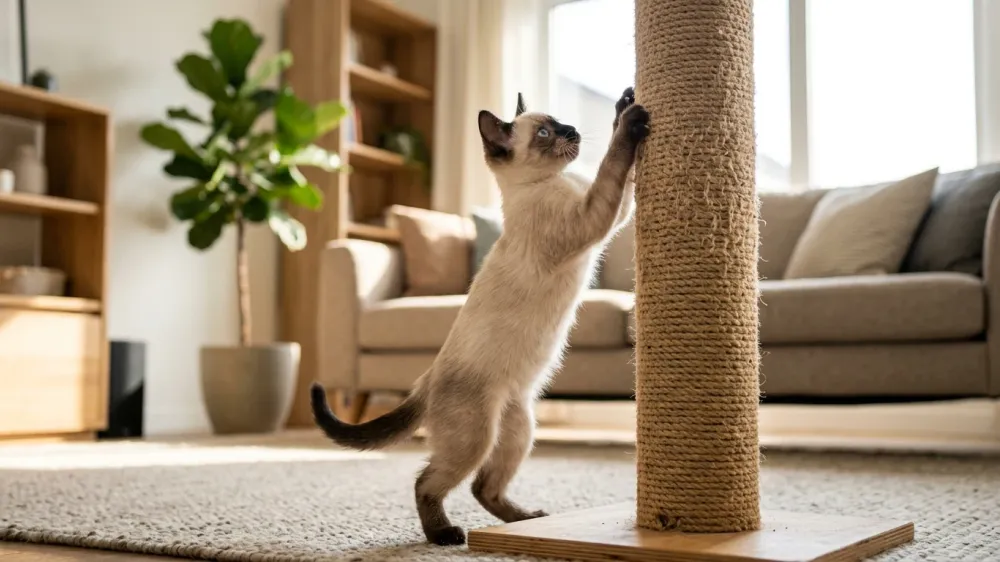
- Muscle Conditioning: When kittens reach high up on a post, they pull against the resistance, stretching their spine, back legs, and shoulder girdle.
- Scent and Visual Marking: Paw pads contain interdigital scent glands. When a kitten drags their paws down a surface, they leave behind visual slash marks and invisible pheromones that signal comfort and ownership.
- Emotional Release: Kittens often scratch when excited, after waking up, or to burn off excess energy between play sessions.
💡 Pro Tip: Never physically grab your kitten’s paws and drag them across the scratching surface. Cats dislike forced restraint, and this negative association can cause your kitten to avoid the post entirely.
Choosing the Right Scratching Post#
Not all scratching posts satisfy feline preferences. If a post is flimsy or uses the wrong texture, your kitten will quickly seek out sturdy alternatives like your sofa frame or carpet.
Height and Stability#
Your kitten will grow rapidly. A post should stand at least 30 to 32 inches tall so an adult cat can achieve a full vertical stretch. The base must be broad and heavy. If a post wobbles or tips over while your kitten is climbing or scratching, the scare can create a lasting aversion to that post.
Material Textures#
Kittens prefer materials that shred satisfyingly under their claws. Woven sisal fabric is the industry standard because it catches the claw without snagging, allowing clean downward pulls. Avoid carpet-covered posts; they teach kittens that household carpets and rugs are acceptable scratching surfaces.
| Post Material | Pros | Cons | Best For |
|---|---|---|---|
| Woven Sisal Fabric | Durable, shred-friendly, long-lasting | Higher initial cost | All-around everyday use |
| Sisal Rope | Readily available, easy to replace | Can snag claws if wrapped unevenly | Active scratchers |
| Corrugated Cardboard | Inexpensive, highly attractive texture | Leaves shred debris, wears out fast | Horizontal scratchers |
| Carpet | Soft on paws, blends with decor | Teaches bad habits on home rugs | Not recommended |
Step-by-Step Guide to Scratching Post Training#
Setting up good scratching habits is just as essential as following a first kitten care guide or learning how to litter train a kitten step by step. Follow these four steps to train your kitten successfully.
Step 1: Strategic Placement#
Location determines success. Kittens instinctively want to mark prominent social areas and scratch immediately after waking up. Place posts in these high-value spots:
- Next to your kitten’s favorite sleeping area or cat tree.
- Near room entryways or high-traffic pathways.
- Directly in front of the furniture corner they currently attempt to scratch.
Step 2: Make the Post Attractive#
Draw your kitten’s curiosity toward the post using interactive toys. Dangle a feather wand or drag a piece of string up the side of the post. As your kitten pounces and reaches up to catch the toy, their claws will naturally hook into the sisal fiber. Once they feel the satisfying texture, instinct takes over.
Step 3: Reward the Behavior Instantly#
Keep high-value treats near every scratching station. The second your kitten begins scratching the post voluntarily, offer calm verbal praise and immediately deliver a treat. Kittens respond best to rewards delivered within two to three seconds of the desired action.
Step 4: Calm Redirection#
If you catch your kitten scratching a chair or sofa, interrupt them gently without yelling, clapping, or using spray bottles. Harsh reactions cause anxiety and lead to hidden destructive behavior. Pick your kitten up calmly, carry them to the scratching post, and run an interactive toy up the surface to engage them. If your kitten scratches when overly hyperactive, combine redirection with regular play to help resolve kitten night zoomies.
Protecting Your Furniture During Training#
While your kitten learns appropriate habits, make unauthorized targets unappealing. Cats dislike sticky or slick textures on their paws.
- Double-Sided Sticky Tape: Apply dedicated pet training tape to couch corners. The tacky sensation discourages paws instantly.
- Aluminum Foil or Smooth Plastic: Wrap exposed wooden table legs temporarily during the early learning phase.
- Regular Claw Trims: Clip the sharp, hook-shaped tips off your kitten’s claws every two weeks using dedicated pet nail clippers. Blunt nails cause far less damage while your kitten builds consistent post habits.
💡 Related Guide: Different kittens favor different scratching textures; compare cardboard vs sisal scratching posts for kittens to discover your pet’s favorite scratching surface.
💡 Related Guide: Reinforcing good behavior with a clicker accelerates learning; explore how to clicker train a kitten with basic commands to teach foundational cues.
Frequently Asked Questions#
At what age do kittens start using a scratching post?#
Kittens begin experimenting with scratching between six and eight weeks of age. Introduce sturdy vertical and horizontal scratchers as soon as your kitten begins exploring their environment to establish positive routines right from the start.
Why is my kitten ignoring the vertical scratching post?#
Some kittens prefer horizontal or angled scratching surfaces over vertical posts. Offer a flat corrugated cardboard pad alongside your vertical post to see which angle your kitten prefers. Also check that the vertical post is completely sturdy, as any wobble causes kittens to abandon the post.
Should I use catnip to attract my kitten to the post?#
Most kittens under six months of age do not have mature olfactory receptors for catnip and may not react to it. Instead of catnip, rely on interactive feather toys, treat rewards, and honeysuckle spray to entice young kittens.
Summary: 5-Day Scratching Post Action Plan#
Follow this simple roadmap to establish reliable scratching habits in your home:
- Day 1: Setup and Placement. Set up a heavy, non-wobbling sisal post directly beside your kitten’s main resting spot and living room furniture.
- Day 2: Toy Association. Use a feather wand to lead your kitten’s paws up the sisal post during every scheduled play session.
- Day 3: Treat Reinforcement. Reward every spontaneous post-scratch with a treat within two seconds of the action.
- Day 4: Furniture Proofing. Place double-sided pet tape over vulnerable sofa corners to block unwanted scratching attempts.
- Day 5: Routine Maintenance. Trim nail tips and keep scratching stations accessible across all primary living areas.