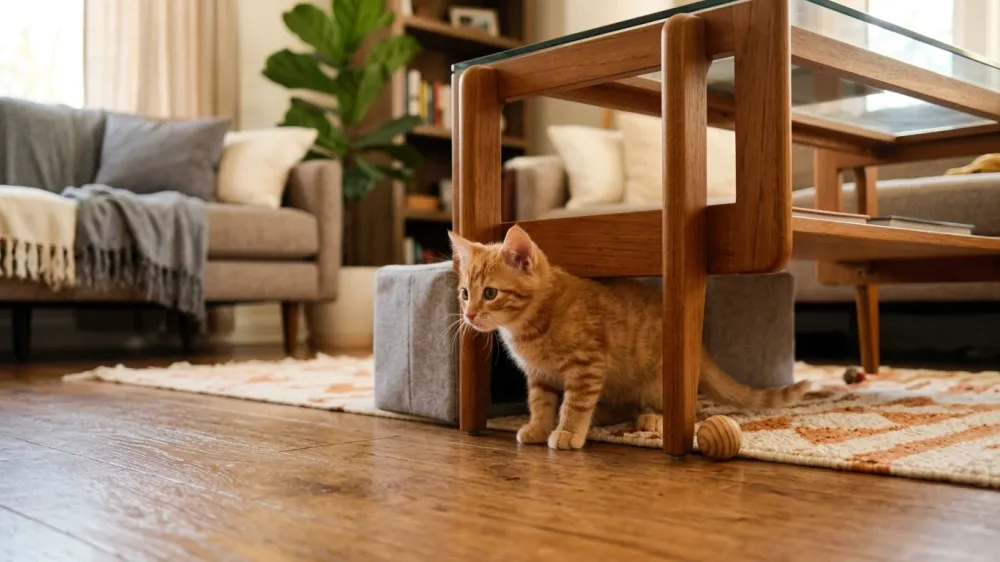
Kittens view your home as a massive playground where every dangling cord is a toy and every small gap is a cave to explore. Successful kitten proofing requires looking at your living space from a height of six inches and anticipating how a curious, high-energy animal might interact with everyday objects. While following a comprehensive first kitten care guide is helpful for general preparation, physical safety within the home is the most immediate concern for new owners.
Training experts emphasize that kittens do not understand the concept of danger. Their natural instincts drive them to chew, climb, and squeeze into tight spaces. By implementing a systematic room-by-room safety plan, we can prevent common accidents and provide a secure environment for growth.
📋 Free Interactive Tool: Preparing your home or heading to the pet store? Use our Interactive New Kitten Checklist & Printable 1-Page PDF to track supplies, litter setup, and kitten-proofing gear on your phone.
📋 In This Guide
Securing Electrical Hazards and Wires#
Electrical cords represent one of the most significant risks to a young kitten. The thin, flexible nature of wires mimics the feel of prey or grass, which triggers a kitten’s natural chewing instinct. Biting through a live wire can cause severe burns, internal injuries, or fatal shocks.
We recommend bundling loose wires using plastic cord protectors or split-sleeved tubing. For wires that cannot be hidden behind furniture, applying a taste deterrent is a highly effective training strategy.
This specific deterrent uses a bitter flavor to teach the kitten that wires are not toys. In training sessions, we find that consistent application during the first few weeks of a kitten’s arrival helps establish long-term safe habits. Check under desks, behind televisions, and near bedside tables for any exposed cables that might look tempting.
Kitchen and Bathroom Safety Protocols#
Kitchens and bathrooms contain numerous hazards, from toxic cleaning chemicals to small spaces where a kitten could become trapped. Most kittens are surprisingly agile and can easily jump onto counters or squeeze behind appliances like refrigerators and dishwashers.
Ensure all cabinets containing cleaning supplies, medications, or chemicals are secured with child-proof latches. Kittens are often adept at pawing open lightweight cabinet doors. Keep trash cans covered with heavy, secure lids to prevent the kitten from consuming discarded food scraps or plastic wrappers.
As you decide between wet vs dry kitten food, ensure all pet food is stored in airtight, cat-proof containers. Some kittens may attempt to chew through plastic bags to reach kibble. Additionally, remember that while safe human foods for kittens exist, many common kitchen items like onions, garlic, and chocolate are highly toxic.
When setting up the bathroom, choosing the best cat litter for kittens is only one part of the safety process. Always keep the toilet lid down, as small kittens can fall in and struggle to get out. Keep all hair ties, dental floss, and cotton swabs in closed drawers, as these items are frequent causes of intestinal blockages if swallowed.
⚠️ Safety Warning: Always check the inside of the washing machine and dryer before starting a cycle. Kittens often seek out warm, dark places for naps, and these appliances can be deadly if not checked.
Identifying and Removing Toxic Houseplants#
Many common houseplants are extremely dangerous if ingested by a cat. Because kittens explore with their mouths, even a small nibble on a leaf can lead to a medical emergency. Lilies are particularly dangerous, as even a small amount of pollen can cause severe kidney issues.
Common toxic plants include:
- Lilies (all varieties)
- Sago Palms
- Azaleas and Rhododendrons
- Dieffenbachia (Dumb Cane)
- Aloe Vera
- Philodendrons
Replace these with cat-safe alternatives such as Spider Plants, Boston Ferns, or Oat Grass. If you are unsure if a plant is safe, it is best to move it to a room that is completely inaccessible to your pet.
Managing Small Objects and Choking Hazards#
Kittens are attracted to small, shiny, or stringy objects. Items that seem harmless to us can become life-threatening hazards for a five-pound animal. Sewing kits, craft supplies, and holiday decorations are common culprits.
Pay close attention to window blind cords. These should be tied up high out of reach, as kittens can easily become tangled in the loops while playing on window sills. Similarly, avoid using tinsel or long ribbons during holiday seasons, as these are frequently swallowed and cause linear foreign body obstructions in the digestive tract.
The Kitten Proofing Master Checklist#
| Room | Hazard to Check | Action Required |
|---|---|---|
| Living Room | Electrical cords | Cover with protectors or apply bitter spray |
| Living Room | Heavy furniture | Anchor bookcases or tall lamps to the wall |
| Kitchen | Lower cabinets | Install child-proof safety latches |
| Kitchen | Trash cans | Use a bin with a locking or heavy lid |
| Bathroom | Toilet | Keep the lid closed at all times |
| Bathroom | Small items | Store hair ties and floss in closed drawers |
| Laundry | Washer/Dryer | Keep doors closed and check before use |
| Bedrooms | Closets | Keep doors shut to prevent trapping |
| Windows | Screens | Ensure screens are securely locked in frames |
Creating a Dedicated Safe Space#
When you first bring your kitten home, we recommend starting them in a single, fully proofed room. This ‘home base’ allows the kitten to acclimate without being overwhelmed by the entire house. This room should contain their bed, water, food, and litter box.
💡 Pro Tip: Get down on your hands and knees and crawl through each room. This perspective allows you to see small holes in baseboards, loose staples in the carpet, or forgotten toys under the sofa that you would miss from a standing position.
As your kitten grows and becomes more coordinated, you can gradually grant access to other areas of the home. Always supervise their exploration of new rooms for the first few days to identify any hazards you might have overlooked.
💡 Related Guide: Exposed cables pose serious electrical burn risks; check our safety guide on how to stop a kitten from chewing electrical cords.
Frequently Asked Questions#
How long does a home need to stay kitten proofed?#
Most cats outgrow the most destructive chewing and climbing phases by the time they are 12 to 18 months old. However, safety measures like securing toxic plants and keeping lids on trash cans should remain permanent habits for the life of the cat.
What should I do if my kitten swallows something dangerous?#
If you suspect your kitten has ingested a toxic plant, chemical, or a foreign object like string, contact a veterinarian immediately. Do not wait for symptoms to appear, as early intervention is critical for the best outcome.
Can kittens jump over baby gates?#
While a young kitten may be contained by a standard baby gate, most cats can jump over them by the time they are four or five months old. Gates are best used for temporary containment or for keeping larger dogs away from the kitten’s food and litter area.
Summary: Your Secure Home Action Plan#
Creating a safe environment is a foundational step in responsible pet ownership. By following this systematic approach, you significantly reduce the risk of avoidable injuries. Start by securing all electrical cords and removing toxic plants from the home. Move through the kitchen and bathroom to secure cabinets and toilets. Finally, perform a daily sweep of floors for small objects like pins or rubber bands. Once these physical barriers are in place, you can focus on the rewarding work of bonding and training your new companion.