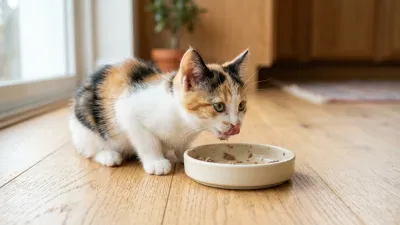
A healthy kitten needs approximately 1 fluid ounce (30 milliliters) of water per pound of body weight each day. A 2-pound kitten requires about 2 ounces (60 ml) of fresh water daily to support organ development, joint health, and smooth digestion. The precise volume varies significantly based on whether your kitten eats wet canned food or dry kibble.
Monitoring daily water intake is a fundamental step in young cat care. Because kittens have small bodies and high metabolic rates, proper hydration helps regulate body temperature, flush cellular waste, and prevent urinary tract issues early in life.
📋 In This Guide
Daily Water Requirements by Age and Weight#
Kittens grow rapidly during their first six months. As their body mass increases, their volumetric fluid needs expand accordingly. The general rule of thumb relies on body weight, but fluid intake also scales directly with daily food consumption.
| Kitten Age | Average Weight | Daily Water Requirement (Fluid) | Main Moisture Source |
|---|---|---|---|
| 4 to 8 Weeks | 1.0 - 2.0 lbs | 1.0 - 2.0 oz (30 - 60 ml) | Weaning gruel, wet food, water |
| 2 to 4 Months | 2.0 - 4.0 lbs | 2.0 - 4.0 oz (60 - 120 ml) | Wet food, dry kibble, fresh water |
| 4 to 6 Months | 4.0 - 6.0 lbs | 4.0 - 6.0 oz (120 - 180 ml) | Balanced adult/kitten diet, fresh water |
| 6 to 12 Months | 6.0 - 9.0+ lbs | 6.0 - 9.0+ oz (180 - 270+ ml) | Standard diet and daily water source |
For growing felines, fluid needs correlate closely with caloric consumption. A good benchmark is 1 milliliter of water for every calorie consumed. When assessing your kitten’s daily routine, make sure to evaluate their hydration alongside tracking how many calories a kitten needs daily to support balanced growth.
Wet Food vs. Dry Kibble: Impact on Water Intake#
Diet is the single largest factor determining how often you will see your kitten visit the water bowl. Wet canned kitten food contains roughly 70% to 80% water. Dry kibble, by contrast, contains only 10% moisture.
A kitten eating exclusively wet food gets most of their daily fluid intake directly from their meals. They may drink very little additional water from a bowl, which is entirely normal. Their body absorbs moisture while digesting the food.
A kitten eating dry kibble must drink almost all their daily water requirement manually. If your kitten consumes dry food, you must make sure constant access to clean, appealing water sources to prevent mild dehydration.
⚠️ Safety Warning: Young kittens can become dehydrated in less than 24 hours if they suffer from diarrhea, vomiting, or appetite loss. Seek immediate guidance from a veterinarian if your kitten stops drinking or shows severe lethargy.
How to Check if Your Kitten is Dehydrated#
Recognizing the signs of dehydration early allows you to correct fluid balance before serious health complications arise. Experienced cat owners and animal care specialists use two quick physical checks:
- The Skin Tent Test: Gently pinch the skin between your kitten’s shoulder blades and release it. In a well-hydrated kitten, the skin snaps back into place instantly. If the skin returns slowly or remains folded in a tent shape, the kitten is dehydrated.
- Gum Inspection: Touch your kitten’s gums with a clean finger. Healthy gums feel slick, pink, and moist. Dry, tacky, or pale gums indicate low fluid levels.
Other visible indicators of poor hydration include sunken eyes, dry mouth, weakness, lack of energy, and loss of skin elasticity.
Effective Ways to Encourage Kitten Hydration#
Cats evolved from desert-dwelling ancestors and naturally have a low thirst drive. To convince a picky kitten to consume enough water, you must make drinking easy and engaging.
Use Running Water Sources#
In nature, standing water often harbors bacteria, while running water is safer. Domestic cats retain this instinct. Running water draws their attention through movement and sound.
Using an automatic pet fountain keeps water continuously circulating and aerated. Fountains also filter out dust, stray fur, and food bits, providing a cleaner taste that entices young cats to drink more frequently.
Choose Wide, Shallow Bowls#
Cats dislike when their sensitive whiskers brush against the steep sides of deep bowls, a condition known as whisker fatigue. Use wide, shallow stainless steel or ceramic dishes. Avoid lightweight plastic bowls, which scratch easily and harbor bacteria over time.
Distribute Multiple Water Stations#
Place multiple water dishes throughout your home. Put bowls away from busy walkways, loud appliances, and household litter boxes. Cats prefer drinking in quiet locations where they feel safe and unthreatened.
Add Flavor to Fresh Water#
If a recovering or stubborn kitten refuses to drink, try adding a few drops of low-sodium chicken bone broth (without onions or garlic) or liquid drained from a can of water-packed tuna into their water dish. This adds aroma and encourages licking.
Linking Hydration to Household Habits#
Proper hydration directly influences elimination habits and litter tray consistency. As you work to litter train a kitten step by step, monitoring urine output helps verify that your kitten is drinking enough water each day. Healthy hydration produces two to three firm, well-formed urine clumps in the litter box daily.
Some kittens like to dip their paws into water bowls or splash water across the floor before drinking. This curious interaction is normal play behavior. If your kitten treats their water dish like a splash pad, you can channel that natural curiosity while you get a kitten used to water and baths in a controlled setting.
Frequently Asked Questions#
Can kittens drink cow milk instead of water?#
No. Kittens should never drink cow milk. Once weaned from their mother, kittens lose the lactase enzymes required to digest lactose. Drinking cow milk causes painful gas, stomach cramps, and severe diarrhea, which rapidly leads to dangerous dehydration.
Can a kitten drink too much water?#
While rare, excessive water intake (polydipsia) can point to underlying health issues such as kidney dysfunction, diabetes, or severe infections. If your kitten drinks excessively without an obvious cause like high room heat or heavy exercise, consult a veterinarian.
Should I leave water out for my kitten overnight?#
Yes. Kittens require constant, uninterrupted access to fresh water 24 hours a day. Their small bodies process fluids rapidly, so water dishes should never be emptied or removed overnight.
Summary: Kitten Hydration Checklist#
Maintaining proper hydration sets the foundation for a healthy, growing cat. Use this simple daily action plan to keep your kitten hydrated:
- Calculate daily target intake based on 1 ounce of water per pound of body weight.
- Offer high-moisture wet food meals daily to boost passive fluid consumption.
- Wash water bowls and change standing water at least once daily.
- Position water dishes away from litter boxes and high-traffic areas.
- Perform weekly skin-tent and gum checks to verify healthy fluid levels.