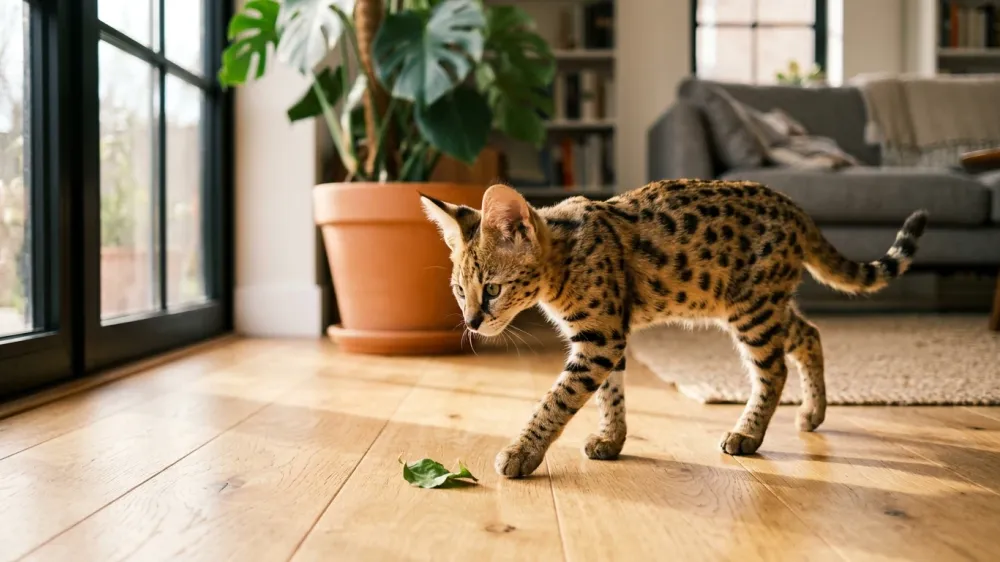
Savannah cats are among the most stunning domestic hybrids in the world, combining the spotted grace of the African Serval with the affectionate companionship of a domestic cat. However, because they descend directly from wild felids, they are subject to complex state statutes, municipal health codes, and housing bans across the United States.
If you are planning to bring home a Savannah kitten, understanding generation levels (F1 through F5+) and local ordinances is necessary before paying breeder deposits. While late-generation Savannahs are widely accepted, early generations face strict containment and permit mandates.
For a broader overview of exotic feline regulations, see our complete guide on banned cat breeds in the US.
📋 In This Guide
1. How Generations Determine Legality (F1 to F5+)#
A Savannah cat’s legal status almost always hinges on its filial (F) generation, which indicates how many steps removed the cat is from its wild Serval ancestor:
- F1 Generation (50% Wild Serval): One wild Serval parent and one domestic cat parent. These cats can stand up to 17 inches tall, weigh over 20 pounds, and possess extreme leaping power. They are legally classified as exotic wildlife in most jurisdictions.
- F2 Generation (25% to 35% Wild): One Serval grandparent. F2 cats retain intense energy and wild behaviors, placing them under restricted wildlife rules in many states.
- F3 Generation (12% to 20% Wild): One Serval great-grandparent. Some states permit F3 cats with wildlife permits and escape-proof enclosure inspections.
- F4 and F5+ Generations (SBT / Stud Book Traditional): These generations are recognized as fully domestic companion cats by major registries such as The International Cat Association (TICA). Most states permit F4 and later generations without special paperwork.
To understand expected size milestones as your kitten matures, check our detailed Savannah cat growth and weight chart.
2. State-by-State Savannah Cat Legality Guide#
Laws regarding wild feline hybrids change periodically. Always verify with your state department of natural resources or local animal control board.
States Where Savannah Cats Are Completely Banned (All Generations)#
In these states, owning any Savannah cat, whether an F1 or an F5+, is illegal for private pet owners:
- Georgia: Georgia Department of Natural Resources classifies all wild felid crosses as wild animals. Ownership requires an exhibition or zoological license.
- Hawaii: Strict island ecosystem preservation laws prohibit the importation of all exotic hybrid cats to protect vulnerable native birds.
- Massachusetts: Massachusetts Division of Fisheries and Wildlife bans hybrid felines unless held under educational or scientific permits.
- Nebraska: Outlaws all generations of wild cat hybrids as domestic pets.
- Rhode Island: Prohibits all Savannah cats without specific exotic animal possession permits, which are rarely granted to private owners.
States That Ban Early Generations but Allow F4 or F5+#
These states draw a clear line between early wild crosses and domesticated generations:
- New York State: F4 and later generations are legal statewide. However, New York City enforces Health Code Section 161.01, which outlaws all feline hybrids regardless of generation across all five boroughs.
- Colorado: F1 through F4 generations are classified as exotic wildlife. F5 and later generations are legal without permits.
- Delaware: F1 through F3 generations require Department of Agriculture exotic permits. F4 and later are legal.
- Indiana: Permits are required for F1 Savannahs. F2 and later generations are treated as domestic cats.
- Texas: Texas leaves exotic pet regulation to counties. Major urban areas like Harris and Dallas counties enforce local permit mandates or bans on early generations.
States Where Savannah Cats Are Fully Legal#
In the majority of US states, late-generation Savannah cats (F4 and F5+) are legal without permits, provided local city ordinances do not impose separate restrictions. States with permissive hybrid laws include Florida (Class III permit for F1, no permit for F4+), California (legal at state level, though local cities may restrict), Pennsylvania, and Ohio.
3. Municipal Bans, HOAs, and Rental Restrictions#
Even if your state permits Savannah cats, municipal ordinances can override state permissions:
- City and County Codes: Cities frequently ban exotic pets regardless of state allowances. Always review municipal animal control codes for wild hybrid definitions.
- Landlord and Rental Leases: Most standard lease agreements prohibit exotic pets and wild animal hybrids. Landlords have the legal right to decline tenants with hybrid cats.
- HOA Covenants: Homeowner associations often enforce pet weight limits or restrict exotic animals. Review your community bylaws before bringing home a kitten.
4. Housing and Enrichment Requirements#
Because Savannah cats possess high intelligence and exceptional athletic drive, responsible ownership involves creating an enriching home setup:
- Escape-Proof Living Spaces: Savannah cats can easily turn door handles and leap 8 vertical feet from a standing position. Screened windows and doors require reinforced pet wire.
- Mental Stimulation: High-energy cats need puzzle feeders, tall cat trees, and interactive games to prevent boredom-based behaviors.
- Harness Walking: Many Savannah owners provide outdoor exercise through leash walks. Review our guide on how to harness train a kitten to introduce gear safely.
- Kitten Proofing: Prepare your living area with our essential kitten proofing checklist to secure cords, toxic plants, and high perches.
5. Travel and Airline Considerations#
Traveling with a Savannah cat requires additional planning:
- Commercial Airlines: Most major US airlines (such as Delta and United) prohibit wild hybrid felines in passenger cabins. If you plan to fly, check airline pet policies beforehand.
- Interstate Transport: Moving across state borders with an early-generation hybrid may require health certificates and transit permits from destination states. Keep TICA pedigree registration papers readily available.
For first-time owners beginning their journey, explore our comprehensive first kitten care guide for practical tips on nutrition, socialization, and early routines.