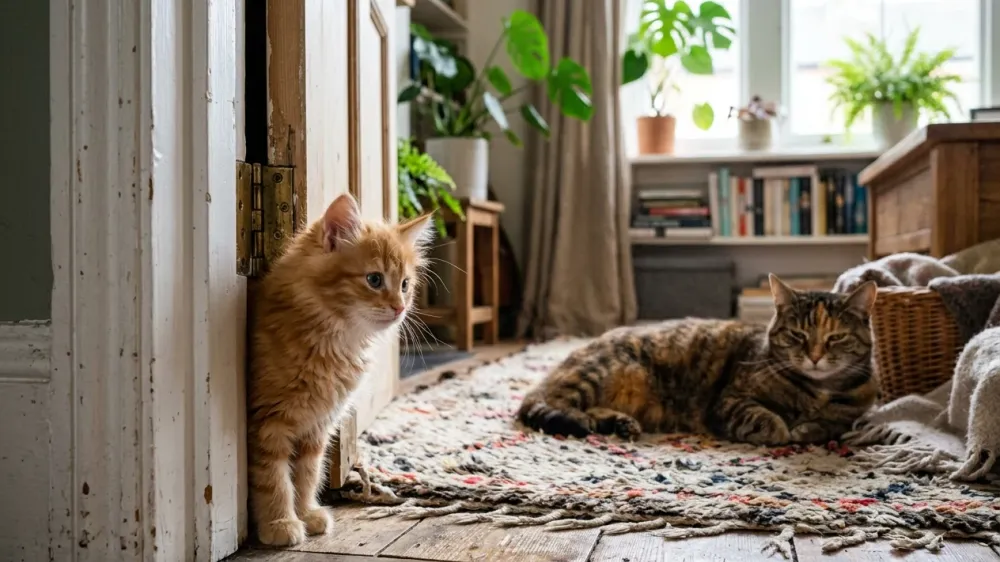
Successfully introducing a kitten to an older cat requires a structured, slow-paced strategy that respects the territorial nature of felines. Rushing the first meeting often leads to hiss-and-spit encounters that can set back their relationship for months. By following a scent-first approach, pet owners can help an adult cat accept a new companion without feeling their territory is under threat.
Setting the stage for a peaceful multi-cat household begins before the kitten even enters the front door. Prepare a dedicated sanctuary room for the new arrival, equipped with a litter box, food, and water. This allows the kitten to decompress while the resident cat gets used to the sounds and smells of a new presence without the stress of a direct confrontation. For more details on setting up your home, refer to our First Kitten Care Guide for essential preparation tips.
📋 In This Guide
Phase 1: The Sanctuary Room and Scent Exchange#
The first 48 to 72 hours should involve zero physical contact. Keeping the kitten in a separate room serves two purposes: it prevents the spread of potential illness and allows for scent-based communication. Felines rely heavily on their sense of smell to identify friends and foes.
We recommend a process called scent swapping. Rub a clean sock or small towel on the kitten’s cheeks and leave it in the older cat’s favorite sleeping spot. Conversely, place an item with the older cat’s scent in the kitten’s room. If the older cat reacts with curiosity rather than hissing at the scented object, reward them with high-value treats to create a positive association with the newcomer’s scent.
Phase 2: Feeding Through the Door#
Once both cats are calm about each other’s scent, begin feeding them on opposite sides of the closed door. Start with the bowls several feet away from the door and move them closer during each meal. The goal is for the cats to associate the presence of the other cat with their favorite food.
If either cat stops eating or shows signs of distress, move the bowls back. This phase builds a foundational positive connection through the door. While the kitten is sequestered, you may also want to begin litter box training to ensure they are fully comfortable in their new environment before they start exploring the rest of the house.
Creating a Calm Atmosphere#
During this transition, the environment plays a major role in how the cats react to one another. Many trainers suggest using synthetic pheromones to lower stress levels. These products can help bridge the gap during the initial weeks of cohabitation.
Using a diffuser like this can help mitigate territorial spraying or hiding behaviors that often occur when an older cat feels displaced by a high-energy kitten.
Phase 3: Visual Introductions Without Physical Contact#
When both cats can eat comfortably right next to the closed door, it is time for visual access. Use a tall baby gate or a screen door to allow the cats to see each other while remaining safely separated. Continue the feeding routine with the gate in place.
During these visual sessions, keep a close eye on body language. A slow blink from the older cat is a fantastic sign of acceptance. If the kitten becomes too boisterous, which often leads to kitten biting and scratching, distract them with a wand toy to keep the interaction calm and focused on play rather than aggression.
💡 Pro Tip: Keep visual sessions short. Five to ten minutes of calm observation is much better than thirty minutes that ends in a staring contest or a growl.
Phase 4: Supervised Interactions and Play#
The final step is allowing both cats to share the same space under strict supervision. Keep these sessions brief and end them on a high note before any tension arises. Use toys to engage both cats in parallel play. This redirects their focus away from each other and toward a common positive activity.
If the kitten is hyperactive, it can overwhelm an older cat. If you find the kitten is most energetic at night, consult our guide on how to stop kitten night zoomies to ensure they are well-exercised before their interactions with the resident cat.
Monitoring Body Language Progress#
| Behavior | Interpretation | Action Required |
|---|---|---|
| Slow Blinking | Comfort and trust | Continue with current phase |
| Sniffing Rear Ends | Natural greeting | Allow it to continue briefly |
| Flattened Ears | Fear or aggression | Separate immediately and go back a step |
| Tail Thumping | Irritation | Redirect with a toy or end the session |
| Grooming Each Other | High level of acceptance | Success: Cats can be left together |
Step-by-Step Action Plan for a Smooth Introduction#
- Days 1-3: Total Separation. Keep the kitten in a sanctuary room. Swap bedding once a day.
- Days 4-7: Door Feeding. Feed meals on opposite sides of a closed door. Increase proximity slowly.
- Days 8-10: Visual Access. Use a baby gate for visual-only meetings during meal times.
- Day 11-14: Site Swapping. Let the kitten explore the house while the older cat spends time in the kitten’s room. This allows the kitten to leave their scent throughout the home.
- Day 15 and Beyond: Supervised Face-to-Face. Short sessions in a neutral room. Use treats and toys to maintain a positive vibe.
Frequently Asked Questions#
Why is my older cat hissing at the new kitten?#
Hissing is a natural communication tool used by cats to set boundaries. It does not always mean the cats will never get along. The older cat is telling the kitten to respect their personal space. As long as the hissing does not escalate into a physical attack, it is usually part of the normal adjustment period.
How long does it take for a cat to accept a kitten?#
The timeline varies significantly based on individual temperaments. Some cats bond within a week, while others may take several months to reach a state of peaceful coexistence. On average, most owners see a significant reduction in tension within two to four weeks if they follow a gradual introduction protocol.
Should I let them fight it out?#
No. Allowing cats to fight it out can lead to serious injury and permanent psychological trauma. If a fight breaks out, do not use your hands to separate them. Use a piece of cardboard or a loud noise to distract them, then move the kitten back to their sanctuary room. Always prioritize safety and return to the previous phase of the introduction process.
Summary: Ensuring Long-Term Success#
The key to a successful introduction is patience. Never force the cats to be in the same room if they are showing signs of stress. If you notice health issues like lethargy or changes in appetite in the kitten, check for common issues by learning how to tell if a kitten has worms or other ailments that could be affecting their behavior.
By following this expert-approved protocol, you provide your pets with the best chance at a harmonious life together. Once they are comfortable sharing space, focus on maintaining a routine that provides both cats with individual attention, plenty of resources, and consistent positive reinforcement. A peaceful home is built on a foundation of security and gradual trust.