Single Kitten Syndrome develops when a young cat grows up without littermates or a feline companion to teach boundaries, bite inhibition, and social regulation. Without a playmate to deliver immediate feedback when claws dig too deep or teeth bite too hard, a solo kitten often develops severe play aggression, excessive vocalization, and high anxiety. Preventing these destructive habits requires deliberate environmental structuring, consistent hands-off play rules, and targeted social training.
📋 In This Guide
What Is Single Kitten Syndrome?#
In natural development, kittens spend their first 12 to 16 weeks wrestling, chasing, and tumbling with their siblings. When one kitten bites too hard, the injured sibling yelps, scratches back, or terminates the play session immediately. This natural social friction teaches young felines key behavioral lessons: how to moderate jaw pressure, retract claws during play, and read feline body language.
When a kitten is adopted alone before completing this stage, humans inadvertently become the surrogate littermates. Human skin lacks protective fur, and humans rarely react the way another kitten would. Over time, an unchecked solo kitten grows into a high-energy adult cat prone to ambushing ankles, biting hands, and displaying intense destructive tendencies.
| Behavioral Area | Solo Kitten (Without Intervention) | Paired Kittens (Natural Dynamic) |
|---|---|---|
| Bite Inhibition | Poor; bites hard during play | High; learns pressure limits via sibling squeals |
| Claw Control | Unretracted during human interaction | Retracted; learned through mutual grooming and tussling |
| Energy Management | Frantic bursts, attacks on furniture | Distributed between kittens through wrestling |
| Separation Anxiety | High vulnerability when left alone | Low; companion provides mutual reassurance |
| Social Confidence | Fearful or territorial toward other animals | Resilient and adaptable to household changes |
The Gold Standard: Adopting in Pairs#
Animal behavior specialists strongly recommend adopting kittens in pairs whenever possible. Raising two kittens simultaneously is almost always easier than raising one. Two young cats run off each other’s surplus energy, groom each other in hard-to-reach places, and self-correct inappropriate biting habits without requiring round-the-clock human management.
If you have already adopted a single kitten and cannot bring a second one into your home, you must actively step into the developmental gap left by the absence of a sibling.
Establish Strict Hands-Off Play Rules#
The most common mistake owners make with a single kitten is using bare hands, wiggling fingers, or feet to engage in play. While a four-week-old kitten nibbling your knuckles feels harmless, this teaches the animal that human flesh is an acceptable prey target. By six months of age, those tiny bites turn into painful, skin-breaking lacerations.
Always maintain a buffer between human hands and kitten teeth. Use wand toys, feather teasers, and long plush toys to direct predatory energy away from your body.
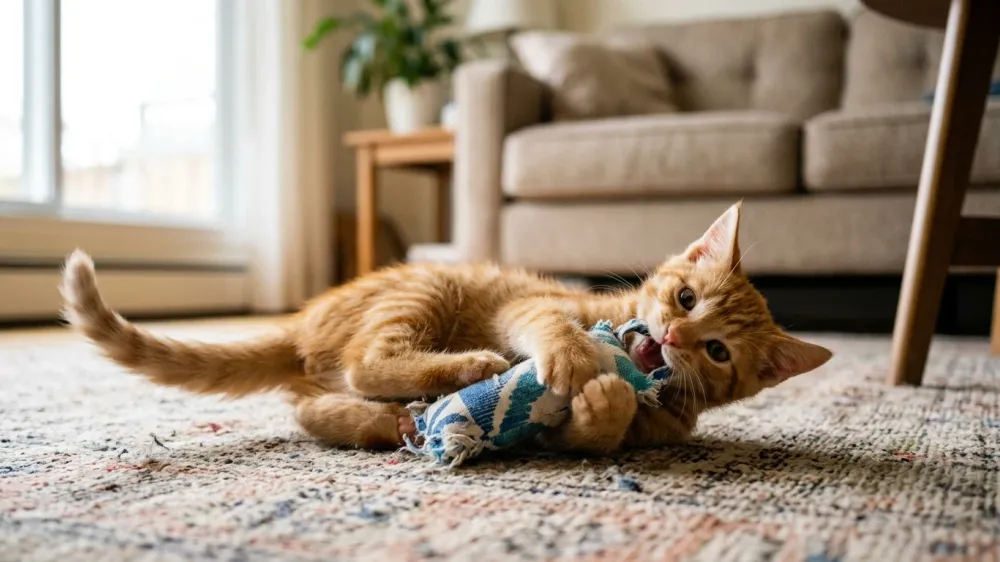
A kitten has an instinctual need to grapple, bite, and kick with its hind legs. The KONG Kickeroo Kitten Toy satisfies this biological urge by offering a textured, padded surface that can absorb rough play without encouraging your kitten to turn your forearm into a scratching post.
💡 Pro Tip: If your kitten latches onto your hand or wrist, do not pull away quickly. Yanking your limb back mimics escaping prey and triggers a harder clamp. Instead, freeze completely or push gently into the bite. The counter-intuitive movement surprises the kitten and encourages an immediate release, allowing you to substitute a plush kicker toy.
Teach Bite Inhibition Without a Sibling#
Because your kitten lacks a brother or sister to squeak and run away, you must replicate that social feedback immediately when play turns rough.
- High-Pitched Verbal Interruption: The moment teeth or claws touch your skin with painful pressure, let out a sharp, high-pitched “Ow!” or yelp. Keep it sharp and sudden, not loud or angry.
- The Complete Freeze: Instantly go limp. Stop all petting, talking, and moving. Cross your arms and turn your body away.
- Total Disengagement: If the kitten continues to swat or lunge, stand up and walk out of the room for 30 to 60 seconds. Closing a door between you and the kitten acts as an immediate social timeout.
- Reward Quiet Demeanor: Re-enter the room neutrally. Offer a wand toy or safe chew toy only when the kitten has calm body language.
Consistency is key. If family members allow the kitten to bite during roughhouse play on the carpet, the animal will never learn that human skin is off-limits.
Drain Surplus Energy on a Schedule#
Single kittens build up immense energy reserves that would normally burn off during hours of sibling wrestling. If you do not provide an outlet, that energy redirects into destructive behaviors. A bored kitten will shred drapery, jump onto forbidden surfaces, or keep you awake all night with hyperactive sprints.
Incorporate dedicated interactive play sessions into your daily routine:
- Run two to three 15-minute high-intensity play sessions every day using a flirt pole or feather wand.
- Mimic natural hunting cycles: let the toy scurry, hide behind furniture, and allow the kitten to stalk, pounce, and complete the catch.
- Finish each intense evening play session with a meal. The natural predatory sequence of “hunt, catch, eat, groom, sleep” helps curb frantic behavior, which is key if you are struggling with kitten night zoomies.
If your kitten directs boundless climbing energy toward household fixtures, learn how to stop a kitten from climbing curtains by providing vertical alternatives like multi-tier cat trees and scratching posts.
Cognitive Enrichment and Environmental Variety#
Physical play burns calories, but mental stimulation prevents the behavioral frustration that fuels Single Kitten Syndrome. Solo cats benefit greatly from structured mental challenges.
- Food Puzzle Feeders: Ditch standard food bowls. Make your kitten work for kibble using rolling puzzle balls, maze bowls, or snuffle mats.
- Cardboard Exploration: Rotate cardboard boxes, paper tunnels, and crumpled paper balls weekly to provide novel tactile experiences.
- Basic Training: Kittens are remarkably fast learners. Begin by teaching a kitten to come when called using small pea-sized treats to build focus and self-control.
- Sensory Leash Outings: For adventurous young cats, start steps on how to harness train a kitten early so you can safely offer secure outdoor enrichment in quiet backyards.
Solo Kitten Behavioral Checklist#
Follow this daily routine to keep your single kitten balanced and well-mannered:
- Zero Bare-Hand Play: Hands are exclusively for gentle petting and feeding; toys are for biting.
- Three Interactive Sessions: Wand toy play scheduled morning, afternoon, and evening.
- Puzzle Feeding: At least 50 percent of daily rations delivered via enrichment toys.
- Immediate Timeouts: Consistent 30-second disengagement every time teeth touch skin.
- Vertical Climbing Outlets: Dedicated cat towers positioned near windows for visual stimulation.
Frequently Asked Questions#
Can an older resident cat teach a single kitten manners?#
An adult cat can help, but it depends heavily on the older cat’s temperament. Many senior or adult cats find a single energetic kitten overwhelming and will hiss, hide, or swat defensively rather than play mentor. If using an older cat as a companion, supervise closely and make sure the kitten does not harass the older resident.
At what age does Single Kitten Syndrome become permanent?#
The critical socialization window for kittens closes around 14 to 16 weeks of age. While adult cats can unlearn aggressive play habits with patient counter-conditioning, correcting bite inhibition issues becomes significantly more difficult once the cat reaches sexual maturity at six to nine months.
Will getting a second kitten fix an already aggressive solo kitten?#
If the solo kitten is still under four to six months old, introducing an energetic, similarly sized peer often resolves play aggression quickly. The kittens will redirect wrestling and rough biting onto each other. Make sure you follow gradual introduction protocols rather than dropping the new kitten directly into the territory.
Summary: Daily Action Plan for Solo Kitten Success#
Preventing Single Kitten Syndrome comes down to structured environmental outlets and zero tolerance for bare-hand roughhousing. By stepping in with wand toys, providing durable kickers, enforcing instant timeouts during rough play, and scheduling daily mental workouts, you can successfully raise a confident, gentle adult cat.