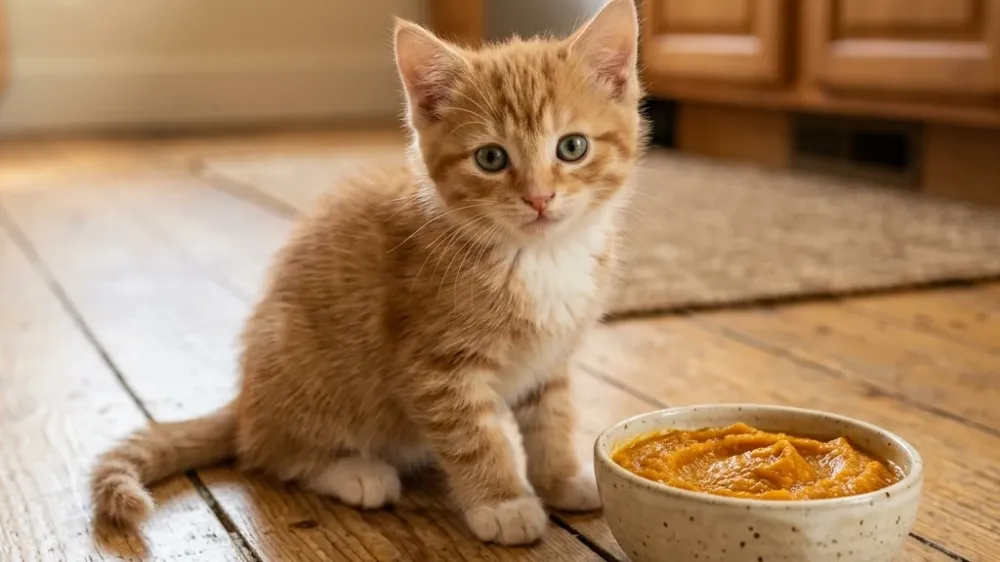
Kittens can safely eat plain pumpkin puree in very small amounts to help relieve mild stomach upset, loose stools, and mild constipation. Plain pumpkin serves as a gentle, natural digestive aid packed with soluble fiber, water, and key nutrients. Because a young kitten has an immature gastrointestinal tract, proper dosage and careful preparation are critical before introducing any supplement to their bowl.
Understanding how to prepare pumpkin correctly, calculating the right portion size, and recognizing when a digestive issue requires medical attention will help you support your kitten safely.
📋 In This Guide
How Pumpkin Supports Kitten Digestive Health#
Pumpkin functions as a dual-action digestive regulator. It contains both soluble and insoluble fiber alongside a high moisture content, allowing it to address both loose stool and mild constipation.
1. Absorbing Excess Intestinal Water#
When a kitten develops mild diarrhea or loose stools, the soluble fiber in pumpkin absorbs excess water within the colon. This process adds bulk to the stool and slows down gut transit time, allowing the kitten’s intestines to absorb fluids and nutrients more effectively.
2. Relieving Mild Constipation#
Insoluble fiber adds physical bulk to fecal matter and stimulates natural peristaltic contractions in the intestines. Combined with pumpkin’s high natural water volume (roughly 90% water), it softens hard stools and lubricates the digestive tract, facilitating comfortable bowel movements.
3. Delivering Key Micronutrients#
Pumpkin contains beneficial micronutrients, including vitamin A, vitamin C, potassium, and beta-carotene. While kittens should receive the bulk of their balanced nutrition from a complete kitten diet, these gentle micronutrients support cellular health during minor recovery periods.
💡 Pro Tip: If your kitten recently developed soft stools after changing their diet, review how to transition kitten to new food without upset stomach to support dietary switches occur over a slow 7-to-10-day period.
Safe Pumpkin Dosage Guide for Kittens#
Because kittens have tiny stomachs and precise nutritional requirements, moderation is key. Excessive fiber can accelerate transit times, leading to worse diarrhea or nutrient malabsorption. Always measure precisely rather than guessing.
| Kitten Age & Weight | Recommended Daily Dosage | Frequency | Administration Method |
|---|---|---|---|
| 8 to 12 weeks (1.5 - 3 lbs) | 1/8 teaspoon | Once daily | Mixed thoroughly into wet kitten food |
| 3 to 6 months (3 - 6 lbs) | 1/4 teaspoon | 1 to 2 times daily | Mixed into meal or licked off spoon |
| 6+ months (6+ lbs) | 1/2 teaspoon | 1 to 2 times daily | Mixed into regular wet or dry meals |
Start with the smallest suggested amount (1/8 teaspoon) for the first 24 hours. Monitor your kitten’s litter box output before offering a second serving.
Safe Forms of Pumpkin vs. Dangerous Varieties#
Not all pumpkin products are safe for feline consumption. Feeding the wrong type can cause severe gastric distress or chemical toxicity.
Safe Options#
- 100% Pure Canned Pumpkin Puree: The ingredient list must state only one ingredient: pumpkin. No added salt, sugar, or preservatives.
- Steamed Fresh Pumpkin: Fresh pumpkin flesh that has been baked or steamed until tender and blended smooth with plain water. Discard all skin, rinds, and stringy guts.
- Feline-Specific Pumpkin Pouches: Commercial pet puree formulas that combine pure pumpkin with water or gut-supporting broth.
Unsafe and Dangerous Varieties#
- Canned Pumpkin Pie Mix: Contains sugar, nutmeg, cinnamon, and allspice. Nutmeg contains myristicin, a compound toxic to cats that causes disorientation and rapid heart rate.
- Sugar-Free Canned Pumpkin: Frequently sweetened with artificial sweeteners such as xylitol (birch bark extract), which is dangerous for household pets.
- Raw Pumpkin Flesh & Rind: Difficult to chew and digest, creating high risks for dental injury and intestinal blockage.
- Seasoned or Salted Pumpkin: Table pumpkin dishes prepared with butter, garlic, onions, or salt are toxic to kittens.
⚠️ Safety Warning: Never feed spiced pumpkin pie filling or any pumpkin product containing garlic or onion powder. Garlic and onion destroy feline red blood cells and cause life-threatening hemolytic anemia.
Step-by-Step: How to Introduce Pumpkin to Your Kitten#
Follow this structured method to offer pumpkin without causing food aversion or digestive rejection:
- Check the Label: Make sure your canned pumpkin contains 100% pure pumpkin with zero additives, spices, or sweeteners.
- Bring to Room Temperature: Kittens dislike cold food from the refrigerator. Warm the measured dose for 5 seconds or mix it with warm water before serving.
- Blend with Wet Food: Blend 1/8 teaspoon into a small portion of your kitten’s favorite canned wet food. Mixing pumpkin with standard canned food is gentler on digestion than pairing it with kibble. For more details on diet types, see our comparison on wet vs dry food for kittens.
- Offer Bland Protein Alternatives if Needed: If your kitten rejects pumpkin, small amounts of plain protein may soothe their gut. You can evaluate options like can kittens eat plain cooked chicken or explore safe human foods for kittens for temporary bland feeding.
- Store Leftovers Safely: Transfer remaining canned pumpkin from the tin can into an airtight glass or plastic container. Keep refrigerated for up to 4 days, or portion into an ice cube tray and freeze for up to 3 months.
When Pumpkin Is Not Enough: Warning Signs#
Pumpkin is a supportive home remedy for mild, non-emergency digestive upset. Because kittens are small and possess minimal fluid reserves, dehydration from gastrointestinal illness can escalate rapidly into a life-threatening emergency.
Seek immediate veterinary assistance if you observe any of the following symptoms:
- Diarrhea or loose stools lasting longer than 24 hours
- Repeated vomiting or inability to keep water down
- Lethargy, weakness, hiding, or unresponsiveness
- Blood or black tarry material in the stool
- Pale or sticky gums (signs of severe dehydration or anemia)
- Straining in the litter box without producing stool or urine
Young kittens frequently develop stomach upset from internal parasites (such as roundworms, coccidia, or giardia), viral infections, or bacterial overgrowth. Pumpkin cannot cure parasites or infections. If symptoms do not improve within 24 hours of starting pumpkin, contact your veterinarian.
Frequently Asked Questions#
How fast does pumpkin work for kitten diarrhea?#
In mild cases caused by dietary indiscretion or minor stress, pumpkin typically produces firmer stools within 24 to 48 hours. If stool quality does not visibly improve after two days, discontinue use and schedule an evaluation with your vet.
Can I give pumpkin to a 5-week-old or 6-week-old kitten?#
Kittens younger than 8 weeks old are still transitioning from mother’s milk or kitten milk replacer to solid food. Their digestive tracts are exceptionally sensitive. Do not feed pumpkin to unweaned kittens unless specifically instructed by a veterinary professional.
Are pumpkin seeds safe for kittens to eat?#
Whole pumpkin seeds present a choking hazard and an intestinal blockage risk for young kittens. While finely ground raw pumpkin seed powder is sometimes used as a natural deworming supplement under professional guidance, whole or roasted salted seeds must never be given to kittens.
Summary: Kitten Stomach Care Checklist#
Use this quick reference action plan whenever your young cat shows mild signs of digestive discomfort:
- Confirm Product Safety: Use only 100% pure canned or steamed pumpkin puree with zero spices, sugars, or preservatives.
- Follow Exact Sizing: Start with 1/8 teaspoon for young kittens; do not exceed 1/2 teaspoon daily.
- Mix Thoroughly: Blend the pumpkin completely into high-moisture canned wet kitten food.
- Track Progress for 24 Hours: Check litter box consistency and monitor energy levels closely.
- Avoid Advanced Diets During Recovery: Postpone feeding raw or complex novel diets; learn more about risks in can kittens eat a raw food diet safely.
- Escalate to Vet Care When Needed: Contact your vet immediately if diarrhea persists past 24 hours, or if you note vomiting, lethargy, or blood.