Socializing a shy or feral kitten requires patience, structured routines, and positive reinforcement. The prime socialization window for kittens occurs between 2 and 7 weeks of age, but kittens up to 12 to 14 weeks can still make remarkable progress with consistent handling. Applying proven behavior techniques early transforms defensive hissing and hiding into trust, affection, and confidence.
Whether you are fostering an outdoor rescue or helping an overly timid domestic kitten adjust to a busy home, the foundation of socialization is building positive associations with human presence, scent, and touch.
📋 In This Guide
Shy vs. Feral: Understanding the Difference#
Before starting your socialization protocol, determine whether the kitten is simply timid or truly feral. A shy kitten was born indoors or around humans but feels overwhelmed by new environments. A feral kitten was born outdoors with zero positive human interaction and views people as potential predators.
| Behavioral Trait | Shy Domestic Kitten | Feral / Unschooled Kitten |
|---|---|---|
| Initial Reaction | Hides, shrinks back, avoids eye contact | Hisses, spits, flattens ears, lunges defensively |
| Response to Food | Eats cautiously while watched | Refuses to eat in human presence initially |
| Vocalization | Soft meows, distress chirps | Low growls, intense defensive hissing |
| Handling Progress | Relaxes within 2 to 5 days | Requires 1 to 3 weeks of structured conditioning |
| Eye Contact | Wide, wary eyes; blinks slowly | Hard, dilated stare or complete head tucked away |
Regardless of their background, early medical screening is vital. Check for common issues like fleas or parasites before starting intensive handling, and learn how to tell if a kitten has worms to ensure they receive prompt care from a local veterinarian.
Phase 1: Setting Up the Socialization Sanctuary#
A scared kitten placed in an open room will dart behind large furniture or under beds, stalling socialization. Confining the kitten to a small, controlled area gives them a secure territory and prevents them from hiding where you cannot reach them.
Choose the Right Space#
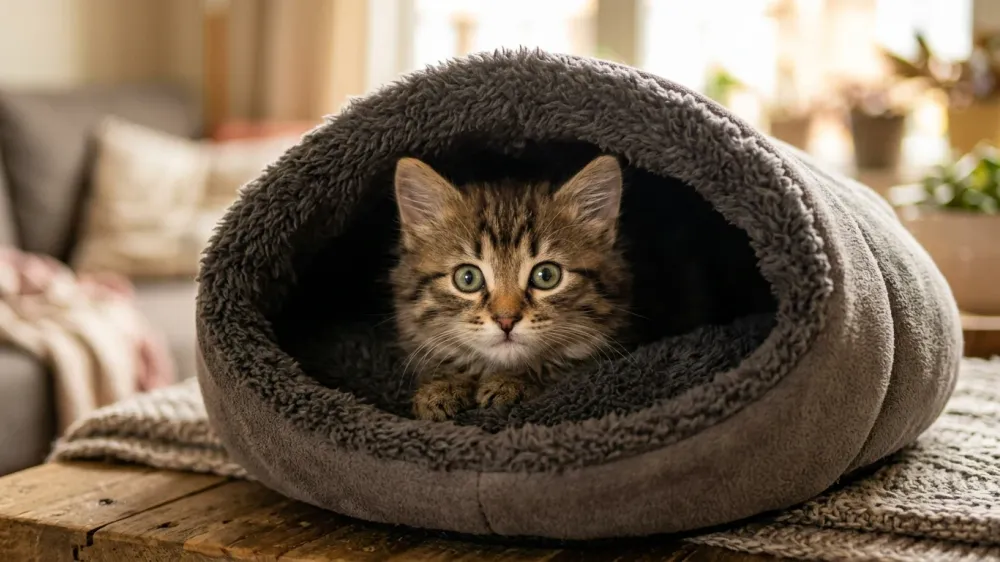
A small bathroom, laundry room, or large puppy playpen works best. Remove access to unreachable hiding spots under cabinets or behind appliances. Provide a covered carrier or cardboard box with a cut-out door lined with warm towels to act as a safe retreat.
Set Up Core Resources#
Place a litter box, food dishes, and a scratching pad inside the room. Keep the litter box as far from the feeding station as possible. While you are setting up this space, review how to litter train a kitten step by step and how to teach a kitten to use a scratching post to establish good habits from day one.
💡 Pro Tip: Leave a worn t-shirt or small towel carrying your scent inside the kitten’s bedding. This helps the kitten connect your natural scent with safety and rest.
Phase 2: Food Association and Trust Building#
Food is the most powerful tool for socializing unsocialized kittens. Never leave dry food out for free feeding during the active socialization phase. When food is freely available, the kitten has no incentive to interact with you. Instead, connect every meal directly to your presence.
Socialization Progression Timeline:
[Days 1-3: Passive Presence] -> [Days 4-7: Spoon Feeding & High-Value Treats] -> [Days 8-12: Gentle Touch & Chin Scratches] -> [Days 13+: Lap Time & Interactive Play]
Step 1: Passive Presence#
Sit quietly on the floor near the kitten’s enclosure for 15 to 20 minutes several times a day. Read a book or speak in a low, gentle voice. Do not attempt to touch the kitten during these early sessions. Avoid direct, unbroken eye contact, which felines interpret as a threat. Instead, offer slow blinks to signal calm intentions.
Using high-value rewards like INABA Churu Lickable Purée Cat Treats keeps the kitten occupied and focused on the food, creating immediate positive associations with your hands and voice. Additionally, plugging in a Feliway Classic Calming Diffuser in the socialization room releases comforting feline facial pheromones that help lower baseline anxiety.
Phase 3: Gradual Physical Touch and Handling#
Once the kitten eats confidently in your presence, transition to physical contact. Never reach over the top of a kitten’s head, as an overhead hand mimics an aerial predator.
- Start with the Chin and Cheeks: While the kitten is licking a treat, gently scratch the side of their cheeks or under the chin with one finger. These areas contain scent glands, and scratching them triggers comforting neurochemicals.
- Move to the Back of the Neck: Progress to gentle strokes down the back of the neck and shoulders. Keep sessions short and always end on a positive note before the kitten becomes overstimulated.
- The Towel Wrap (Purrito Method): If the kitten remains defensive, gently wrap them in a small, soft towel with only their head exposed. Hold them securely against your chest while offering treats. The warmth and gentle pressure reduce panic while allowing safe handling.
- Lifting and Holding: Once the kitten accepts chin scratches, practice lifting them off the floor for two to three seconds, rewarding them immediately, and setting them down gently. Gradually increase hold times.
⚠️ Safety Warning: Never scruff a feral kitten by the back of the neck as a handling shortcut. Scruffing heightens fear, escalates defensive aggression, and damages the trust you are trying to build.
Phase 4: Interactive Play and Expanding Horizons#
Play therapy builds confidence and releases nervous energy. Wand toys with feathers or ribbons allow the kitten to express hunting instincts while maintaining a safe distance from your hands.
- Schedule two to three 10-minute play sessions daily right before feeding.
- Let the kitten successfully “catch” the toy periodically to build confidence.
- Avoid using your bare hands as toys to prevent defensive biting habits from turning into play aggression.
Once the kitten purrs, seeks your attention, and eats freely, begin introducing them to the rest of the household. If you have other pets, read how to introduce a kitten to an older cat for a safe, gradual introduction. If you plan to travel or walk outdoors later, this is also the ideal window to learn how to harness train a kitten.
Additionally, plan ahead with your veterinarian regarding preventive care, including vaccinations and when to get a kitten spayed or neutered.
💡 Related Guide: Solo kittens often miss out on vital bite inhibition lessons from littermates; review how to prevent single kitten syndrome to raise a well-adjusted cat.
Frequently Asked Questions#
How long does it take to socialize a feral kitten?#
Kittens under 8 weeks of age can often be socialized in 3 to 7 days. Kittens between 8 and 12 weeks typically require 2 to 4 weeks of consistent, daily work. Kittens older than 12 weeks require significantly more time and patience, though many adapt into loving companion animals.
What should I do if a kitten hisses or swats at me?#
Do not punish or startle the kitten. A hiss is a fear response expressing discomfort. Pause your movement, lower your hands, speak in a soothing tone, and offer a high-value treat on a spoon to reset the interaction.
Can an older feral cat ever be fully socialized?#
Socializing a fully mature feral cat is challenging and may not always result in a traditional lap pet. While adult feral cats can learn to tolerate and trust their primary caregiver, kittens socialize much faster and integrate more easily into multi-pet homes.
Summary: The Kitten Socialization Roadmap#
Successfully socializing a timid or unsocialized kitten relies on routine, patience, and positive associations:
- Confine Early: Keep the kitten in a quiet, small room without unreachable hiding spots.
- Control the Food: Pair all wet meals and lickable treats directly with human presence.
- Respect Body Language: Move at the kitten’s pace, starting with gentle chin scratches before attempting full handling.
- Engage with Play: Use interactive wand toys daily to build confidence and relieve stress.
- Maintain Consistency: Multiple short, 15-minute sessions throughout the day yield faster results than one long session.